
Decoding The Ramayana! Author Yogesh Puranik Offers a New Lens Through History, Ethics, Psychology, and Spirituality
Sep 23, 2026

In his forthcoming book, author Yogesh Arvind Puranik reimagines the ancient epic as a psychological mirror for the modern mind—one that reveals the battles we fight within ourselves every day.
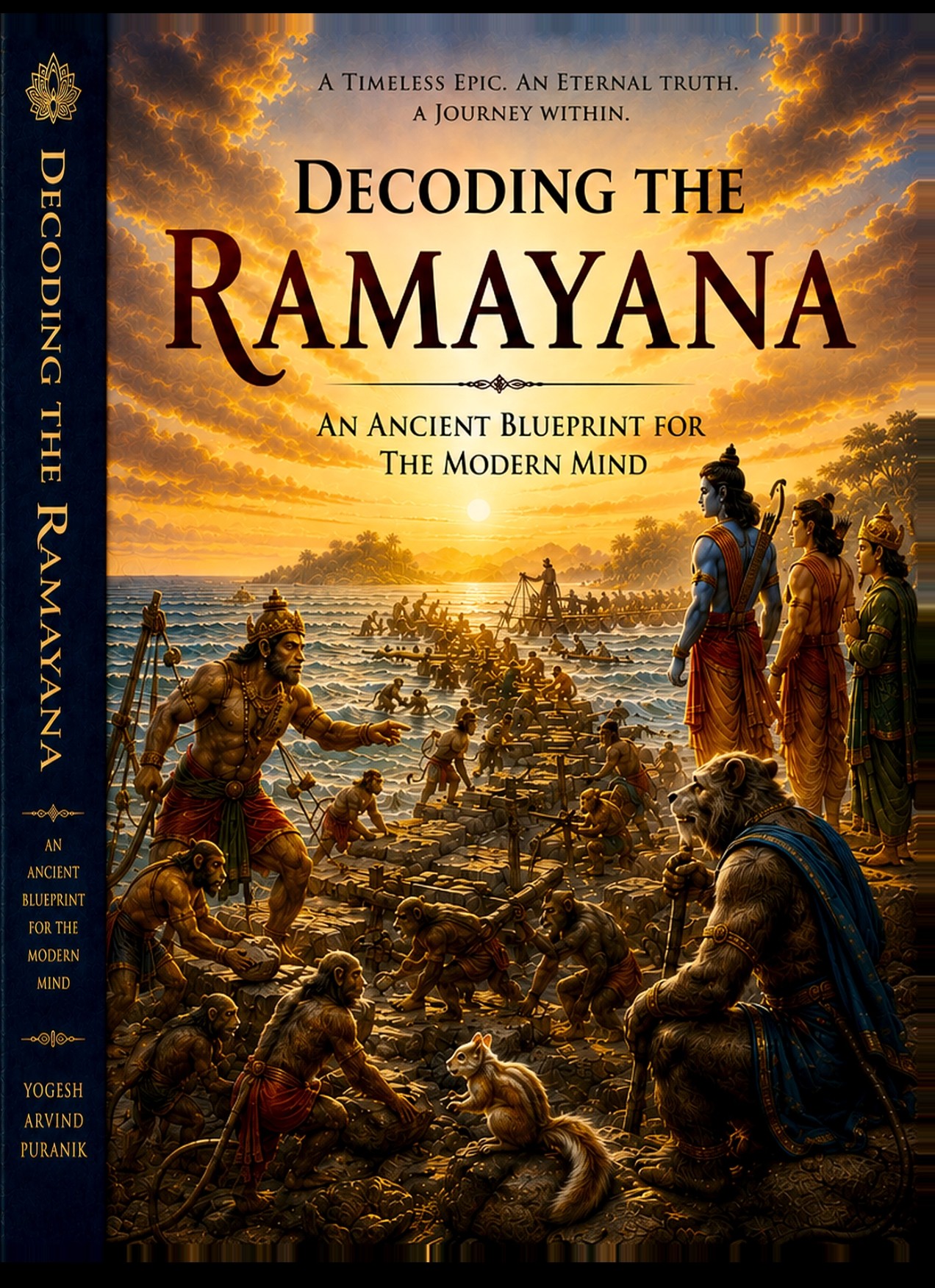
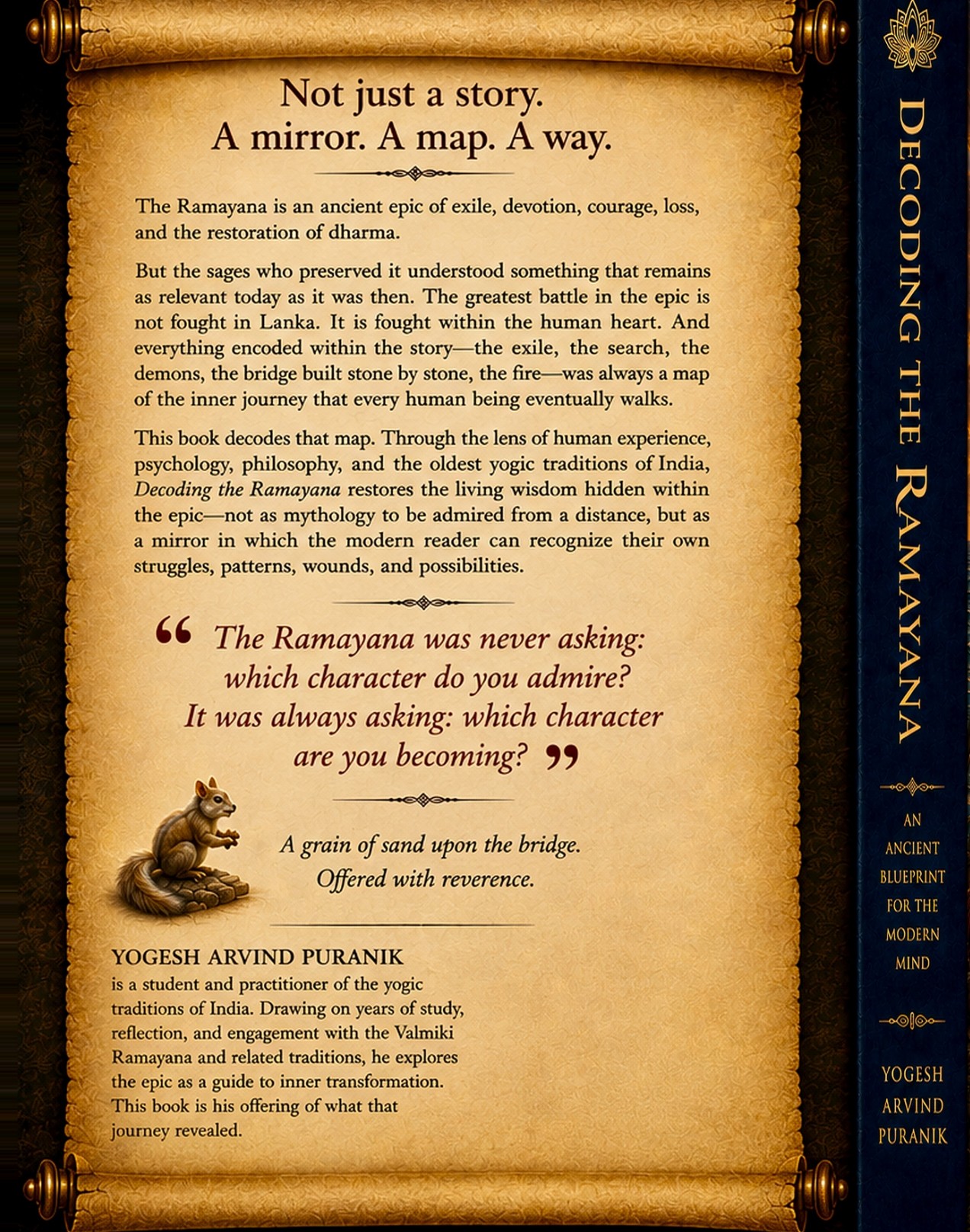
New Delhi, Delhi Sep 23, 2026 (Issuewire.com) - On Vijayadashami, 20 October 2026, award-winning author, poet, educationist and investor Yogesh Arvind Puranik will release Decoding the Ramayana: An Ancient Blueprint for the Modern Mind, an interpretive work that approaches the Ramayana not merely as an ancient epic, but as a living framework for understanding the human mind. Drawing primarily from the Valmiki Ramayana while engaging with wider traditions including Tulsidas, Kamban and folk retellings, the book explores the epic through four interconnected levels: Historical, Ethical, Psychological and Spiritual. Rather than claiming to replace traditional readings, Puranik offers the book as another way of looking at a story that has continued to evolve across centuries and cultures.
"It is not a replacement for the Ramayana. It is a mirror. And like every mirror, it will show you something true." At the heart of the book is a psychological and spiritual decoding of the epic's central figures and landscapes. Rama becomes Pure Consciousness. Sita becomes the living force of Pure Energy. Hanuman becomes awakened Prana. Lakshmana represents focused attention. Lanka becomes the fortified inner fortress of ego, while Ravana represents the wounded brilliance of the human ego. Ravana, in this reading, is not reduced to a simple figure of evil. His brilliance, learning, ambition and capability coexist with craving, validation, control, acquisition and sensory gratification. His fall becomes an exploration of what happens when extraordinary capacity is separated from inner mastery.
The book's central inquiry is therefore intensely contemporary: What happens within us when consciousness, attention, energy, desire and identity move in different directions? Puranik expresses this through a central principle: "Where attention goes, energy follows. Where energy flows, identity forms. And identity eventually shapes destiny."
The women of the Ramayana receive particular attention in the book. Kaushalya, Sumitra, Mandodari, Trijata, Tara, Shabari, Urmila and Kaikeyi are explored not as secondary figures, but as distinct expressions of inner wisdom, sacrifice, devotion, clarity, grief, love and human complexity. Their stories reveal dimensions of the epic that can be missed when the narrative is viewed only through its principal male characters. Among these figures, Shabari occupies a deliberately important position. The book does not simply place her story before the final battle as another episode in the sequence. It deliberately returns to Shabari immediately before the final confrontation in order to explain more deeply what she signifies and why understanding her is necessary before entering the final battle. Shabari becomes a spiritual key: her devotion and inner preparation illuminate something essential about the consciousness required for the conflict that follows.
The book also revisits Ravana after his fall, allowing Lakshmana to receive wisdom from the very figure he has defeated. The fallen enemy becomes a final teacher, offering a lesson in the timing of action: worthy action should not be postponed, while unworthy impulses should be delayed. In this reversal, victory itself becomes an opportunity for learning. Puranik also locates himself within the epic through the humble figure of the squirrel of later tradition. Rather than identifying himself with Rama or Hanuman, he sees in the squirrel an image of service without calculation: contributing what the moment requires, however small the contribution may appear.
Through these interpretations, Decoding the Ramayana asks readers to move beyond the question of what happened in the epic and toward another question: What is happening within us? The book is designed for readers approaching the Ramayana through spirituality, psychology, philosophy, literature or personal reflection. It also maintains a distinction between what belongs to the source tradition, what emerges from later traditions and what constitutes the author's own interpretive decoding.
Decoding the Ramayana: An Ancient Blueprint for the Modern Mind will be available in Paperback and eBook formats in English, published independently, with ISBN 9798184293943.
About the Author
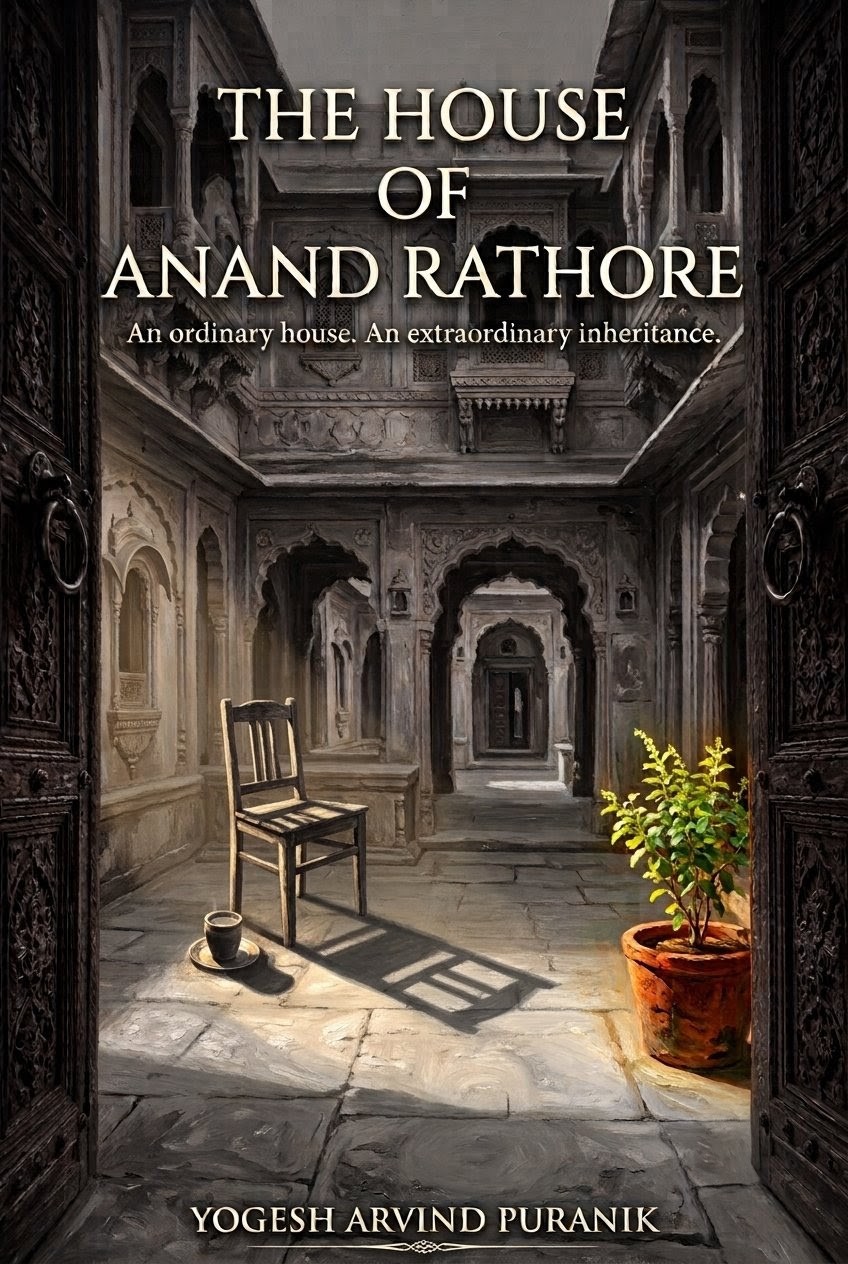
Yogesh Arvind Puranik is an award-winning author, poet, educationist and investor with twenty published books. His works include The Forgotten Name of Kalki, Whispers of the Soul, House of Stories: Mira's Chronicles, No More Almost: The Space Between Breaths, Speak The Names: The Silence Is the Sin, The Smell of Crushed Jasmine, The Curse of the Gatekeeper: A Gödel Investigation, The Eclipse Paradox, The Clockmaker's Delirium, The Void Between Inheritors, The Tides That Remember and The House of Anand Rathore, among others.
His recognitions include the 21st Century Emily Dickinson Award, Tagore Honouree Award 2026, the SahityaKosh Samman Award 2026, and the International Author Excellence Award under The Grand Honours Award 2026, conferred by the Eudoxia Foundation.
Puranik lives in Jabalpur, Madhya Pradesh, with his wife Rashmi and their two sons, Aditya and Atharva.
Book Details
Title: Decoding the Ramayana: An Ancient Blueprint for the Modern Mind
Author: Yogesh Arvind Puranik
Release Date: 20 October 2026 | Vijayadashami
ISBN: 9798184293943
Formats: Paperback and eBook
Language: English

Source :AnuYog Sansthan
This article was originally published by IssueWire. Read the original article here.
More News

9 Senate races that could decide the 2026 midterm elections as Republicans fight to hold their majority and Democrats target key battleground seats
The 2026 Senate race is narrowing around a handful of states where one seat could change the balance in Washington. Republicans hold 53 seats, while Democrats need four net gains for control. From Alaska's unusual ballot to Ohio's comeback fight, these contests offer the clearest look at where the Senate majority could be decided.

US Air Force to shut down research centre focusing on Chinese military
The US Air Force is shutting down a major research centre dedicated to open-source analysis of the Chinese military’s air, space, cyber and missile capabilities. The China Aerospace Studies Institute (CASI) said in a statement on Tuesday that Air University, the US Air Force institution under which it operates, had decided to close the institute, with all of its roles becoming unfunded from October 1. CASI said its employees would continue to work and get paid for now and that it expected to...

Jonathon Brooks heads to injured reserve again, forcing the Panthers to explore a familiar NFL name in Austin Ekeler
Jonathon Brooks will have surgery for a core muscle injury and is expected to miss at least six weeks. This injury occurred after he was regaining form for the Carolina Panthers following previous ACL injuries. Chuba Hubbard is anticipated to take on a larger role in the backfield during Brooks' absence. The Panthers are actively seeking additional running back support, bringing in Austin Ekeler for a workout.

Panthers turn to Veteran Austin Ekeler after Jonathan Brooks lands on injured reserve
The Carolina Panthers are searching for additional running back depth after Jonathan Brooks suffered an injury expected to sideline him for an extended period. Brooks is set to undergo surgery for a core muscle injury and is expected to miss at least six weeks, according to NFL Network’s Ian Rapoport. Carolina worked out veteran running back Austin Ekeler on Wednesday, with NFL insider Aaron Wilson reporting that Ekeler had received medical clearance following his Achilles injury with Washington. Ekeler brings extensive rushing and receiving experience from his time with the Chargers and Commanders.

Manipur CM Yumnam Khemchand Singh interacts with star weightlifter Mirabai Chanu through video conference
While extending his heartiest congratulations to her, the Chief Minister said that Mirabai Chanu has once again made the whole country proud. He said that her hard work, discipline and perseverance are an inspiration for all young sportspersons of the country, especially for the youth of Manipur.
Manipur CM Yumnam Khemchand Singh interacts with star weightlifter Mirabai Chanu through video conference
While extending his heartiest congratulations to her, the Chief Minister said that Mirabai Chanu has once again made the whole country proud. He said that her hard work, discipline and perseverance are an inspiration for all young sportspersons of the country, especially for the youth of Manipur.


‘Our passport is absolutely useless’: Entrepreneur says he pays Rs 1 crore in taxes but gets no international benefit, post goes viral
An X post by Hyderabad entrepreneur Jitendra Emmani has sparked discussion over the international mobility available to Indian passport holders. Emmani criticised visa requirements, documentation and waiting times, while linking the issue to Indians seeking foreign passports. His comments also mentioned his claimed annual tax payments and drew a range of responses from social media users.

IBBI allows liquidators to modify stakeholder list on new information
Under the earlier regime the liquidator could not change this list independently and had to apply to the Adjudicating Authority- usually the National Company Law Tribunal (NCLT)- for modifications.
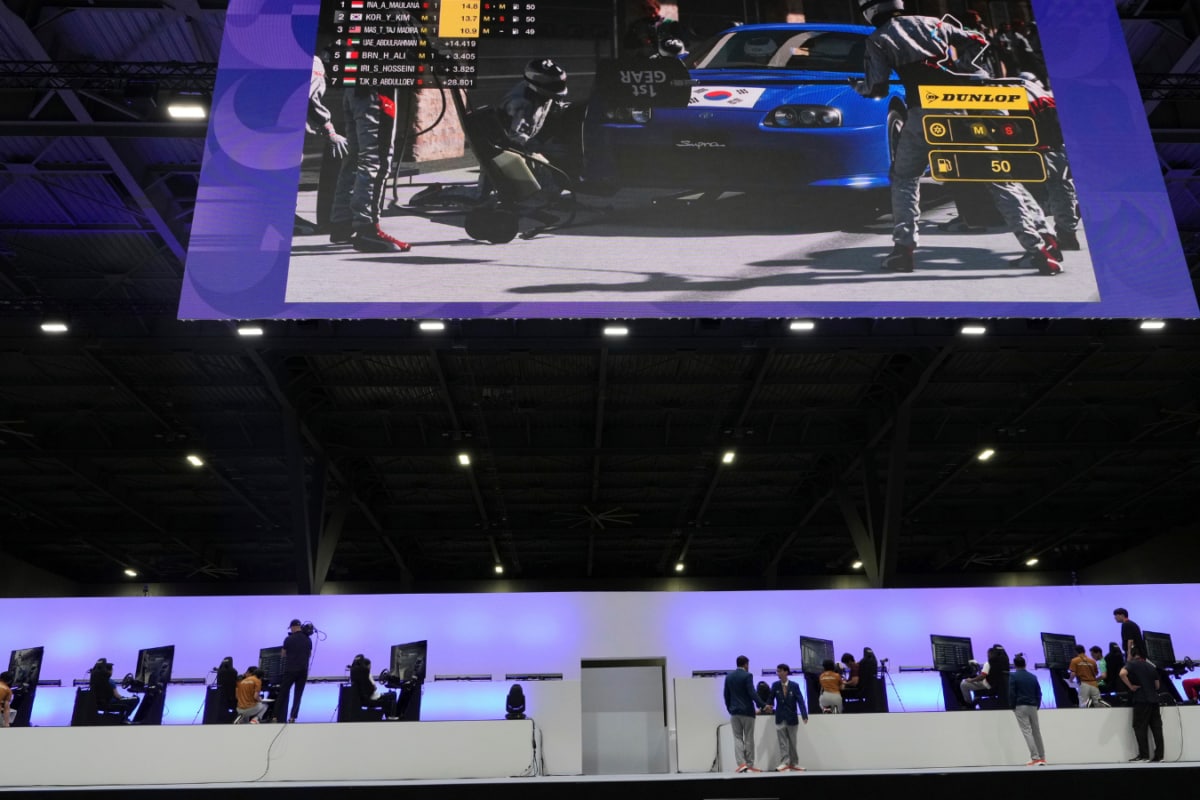
Opponent Comes Late, India Loses Qualification: Bizarre Asian Games Rule Rocks eFootball Team
India's eFootball campaign at the 2026 Asian Games ended in frustration after Mongolia's late arrival led to a forfeit win for India, hindering their qualification chances.

Quote of the Day by Humphrey Bogart: “Everybody has something to… – Timeless lessons on privacy, human nature, secrecy and the hidden sides of people by the American actor
Quote of the Day by Humphrey Bogart: A memorable observation associated with Humphrey Bogart offers a thought-provoking way of looking at privacy, human nature and the things people choose to keep hidden. His striking words, “Everybody has something to conceal,” suggest that every person carries private thoughts, experiences or feelings that may not always be visible to others. The idea raises an intriguing question about why people keep certain parts of themselves concealed and whether having something private necessarily means having something to hide.
YOUR NEWS, OUR NETWORK.
Do you have Great News you want to tell the world?
Be it updates about your business or your community, you can make sure that it’s heard by submitting your story to our network reaching hundreds of news sites across 6 verticals.