
Scalp Care Is The New Skincare: Hairsmart Is Rewriting The Rules Of Hair Wellness In America
Oct 8, 2026

The beauty world has long obsessed over skin, but only the face. Meet the brand that's finally treating your scalp like the skin it actually is, with a ritual built the way Ayurveda intended.
Cleveland, Ohio Oct 8, 2026 (Issuewire.com) - The skincare revolution changed everything. We learned to treat our faces like living ecosystems: pH-balanced, microbiome-aware, layered with intention. And yet, the moment we crossed into haircare territory, that sophistication disappeared entirely. Shampoo. Condition. Repeat. For decades, the scalp, a living, breathing extension of your skin, was reduced to an afterthought. HairSmart is changing that.
Founded by Prerna Khemka, a finance graduate and ayurvedic practitioner turned entrepreneur whose personal encounter with hair loss became the catalyst for something far bigger than a product line. Khemka turned to the wisdom she grew up with, Ayurveda, and found what modern haircare had long overlooked: the scalp itself. Not the strand. Not the follicle in isolation. The scalp, as a skin organ deserving the same intelligence and intention we've learned to give our faces.
Ayurveda has understood this for centuries. While the Western beauty industry fixated on the visible shine, volume, and texture, Ayurvedic tradition quietly kept alive the practice of scalp nourishment as the foundation of hair health, giving generations of men and women long, resilient, lustrous hair. Most haircare solutions available today still talk about the strand, the follicle, or, at best, nutrition. Almost none begin with the scalp.
HairSmart does.
"Hair loss often doesn't begin in the strand," says Khemka. "It begins in the scalp, in the follicle environment, in circulation, in inflammation, in imbalance. That's where we work."
Scalp health plays a huge role in hair health. Imbalance, inflammation, clogged pores, poor circulation, and irritation often play a huge role. That's where we work.
Prerna began advocating the skinification of the scalp long before it became a beauty-industry talking point. That conviction is the foundation of the Ayurvedic Hair & Scalp Spa Experience, a 4-step Ayurvedic hair & scalp spa experience designed to bring the discipline of a professional spa treatment into a daily routine, without ever leaving your home.
The formulations draw on 5,000 years of Ayurvedic wisdom, botanicals like Bhringraj, Ashwagandha, Anantmool, Neem, and Amla, chosen for their documented ability to deeply nourish the scalp, repair, improve follicular circulation, and support the hair growth cycle from Telogen (resting) back into Anagen (active growth).
These are not trending ingredients riding a wellness wave. They are time-tested, clinically validated botanicals, now formulated with the precision of modern trichology.
THE RITUAL: OIL, CLEANSE, CONDITION, SERUM
Where most haircare stops at cleansing and conditioning, HairSmart's 4-step Ayurvedic hair & scalp spa experience treats the scalp with the same layered intention a skincare routine brings to the face, working from the root outward, in four deliberate steps.
Step 1 -- Ayurvedic Therapy Oil: A therapeutic blend of rosemary, neem, tulsi, amla, brahmi, and bhringraj, formulated to deeply nourish and repair hair --from root to tip. It stops shedding, reduces breakage, and supports length retention, while boosting strength and shine from the very first step.
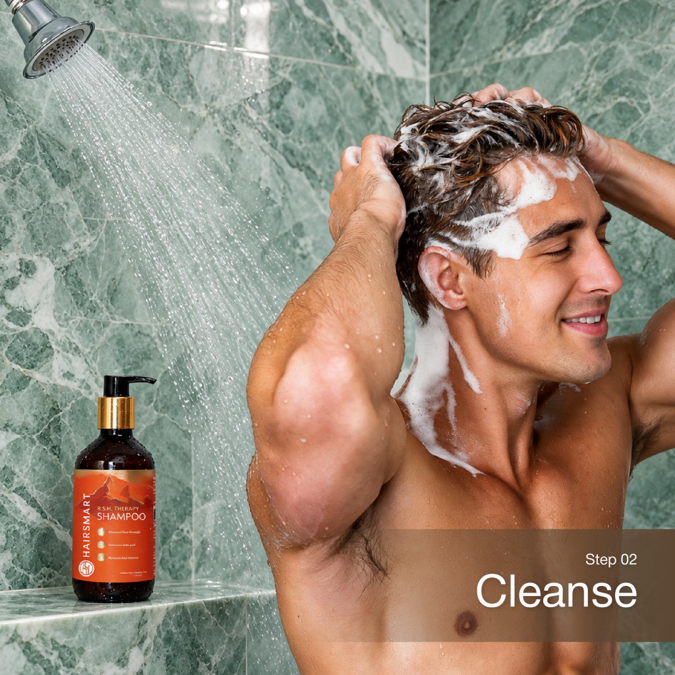
Step 2 -- Shampoo: A gentle, therapeutic cleanse that detoxifies the scalp and resets its pH balance. Rather than stripping the scalp like conventional shampoos, it cleans and balances, creating the kind of environment healthy hair growth depends on.
Step 3 -- Conditioner: An ultra-nourishing, lightweight Ayurvedic formula that restores softness, shine, and elasticity, while keeping frizz and tangles in check.
Step 4 -- Serum: A non-greasy, fast-drying finish that revitalizes the scalp and calms irritation. It also boosts blood circulation, accelerating the conditions the scalp needs for growth.
This is what scalp care as skincare actually looks like. Not a clarifying shampoo repositioned as a "scalp solution." Not a marketing moment. A genuine, multi-step system that lifts away buildup, recalibrates the scalp's microbiome, acknowledges the scalp's full complexity, and meets it with equal sophistication.
For beauty editors tracking what comes next in wellness, the signal is unmistakable: the scalp is having its skinification moment, and consumers are ready. They are asking harder questions about ingredients, ritual, and whether their haircare is actually treating the scalp as the skin it is. HairSmart's answer is rooted in 5,000 years of ancestral wisdom and crafted for anyone who understands that real beauty begins beneath the surface.
The face is not the only part of the skin that deserves a ritual. It's time the scalp got one too.
ABOUT HAIRSMART: HairSmart is a natural hair restoration system founded by Prerna Khemka, rooted in 5,000 years of Ayurvedic wisdom and committed to sustainable, root-cause hair wellness for every scalp, at every stage.
Learn more at myhairsmart.com



Media Contact
HairSmart
675 Alpha Drive, Highland Heights Ohio
Source :HairSmart
This article was originally published by IssueWire. Read the original article here.
More News
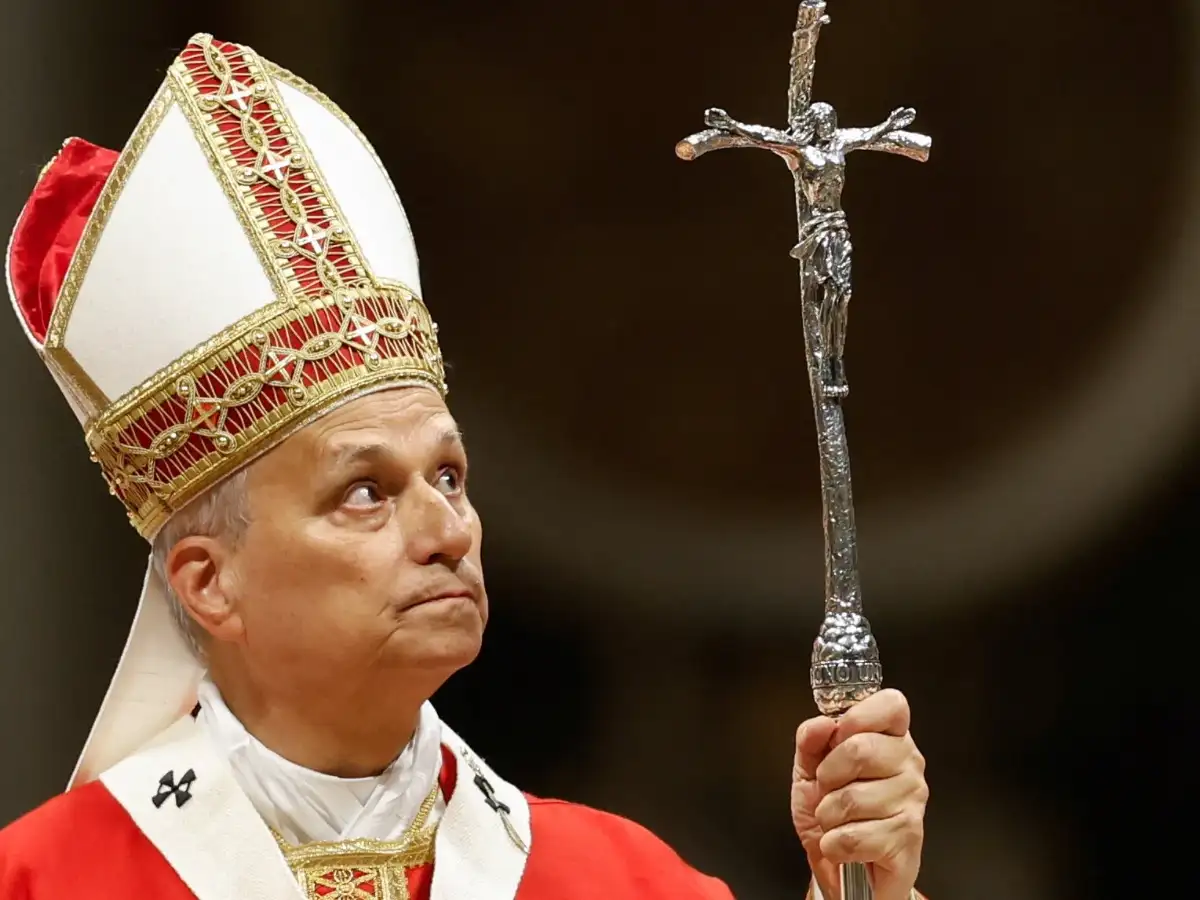
Can AI ever possess a human soul? Pope Leo XIV's remarks and Anthropic's new Claude policy deepen the consciousness debate
Pope Leo XIV recently addressed the distinction between human understanding and AI's data processing capabilities. He emphasized that human experiences cannot be fully captured by mere data compilation. Anthropic's new policy raises moral considerations regarding AI welfare and abusive interactions. Technology leaders remain divided over the consciousness and emotional capacity of AI systems. As discussions continue, experts explore the implications of AI's growing sophistication on human identity and understanding.

Discerning desis ensured that many local products are now on par with the world’s best
The long-held reluctance of Indians to accept locally made "foreign" items as equally good alternatives until well into the 21st century probably stems from the notorious policy of "import substitution", a legacy of the era of socialist scarcity and Five-Year Plans. It was a typical sarkari diktat, supposedly to achieve economic self-reliance and protect domestic industry. But negligible focus on technology and quality benchmarking led to chronic sub-par products.
Discerning desis ensured that many local products are now on par with the world’s best
The long-held reluctance of Indians to accept locally made "foreign" items as equally good alternatives until well into the 21st century probably stems from the notorious policy of "import substitution", a legacy of the era of socialist scarcity and Five-Year Plans. It was a typical sarkari diktat, supposedly to achieve economic self-reliance and protect domestic industry. But negligible focus on technology and quality benchmarking led to chronic sub-par products.
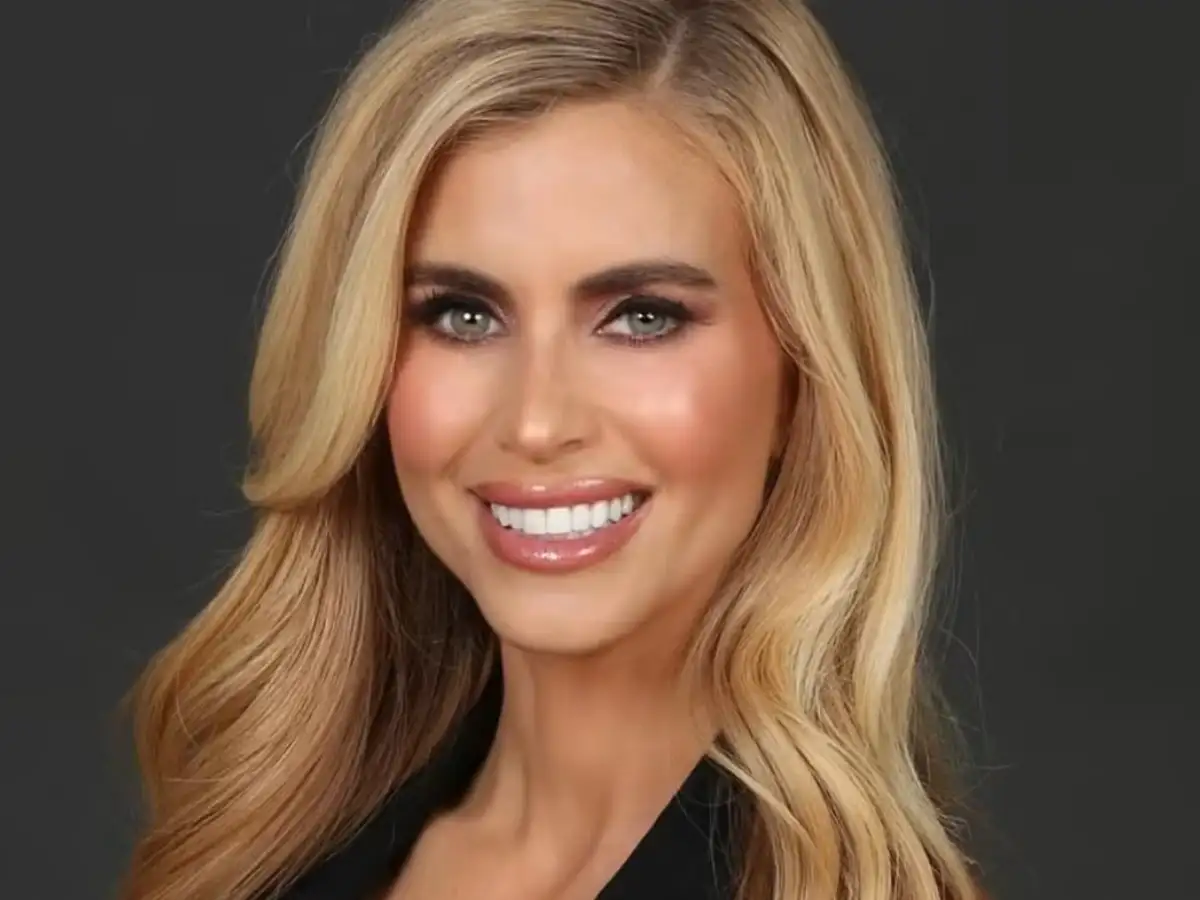
Katie Zacharia’s past in focus: DHS stint, Pepperdine law degree and Truth Social link as Trump picks her for White House press secretary, replacing Karoline Leavitt
Katie Zacharia has been named the new press secretary for the White House, taking over from Karoline Leavitt. With a solid background as a spokesperson for the Department of Homeland Security, she brings experience from the Trump Media and Technology Group, specializing in communications. An alumnus of Pepperdine University, her career reflects a steadfast dedication to conservative principles.

Great civilisations: Built on trade, but wary of traders
China ranked people in four groups: scholar, farmer, artisan, merchant. Shi, nong, gong, shang. The idea is old, found in the Guanzi. The scholar governs. Farmer grows food. Artisan makes things. The merchant makes nothing. He buys low, sells high and keeps the difference. So, he goes to the bottom. The first Han emperor, Gaozu, took this seriously. Sima Qian tells us he banned merchants from wearing silk and from riding in carriages. He taxed them hard. Made them look poor, even if they were rich. Then the state ran short of money.
Great civilisations: Built on trade, but wary of traders
China ranked people in four groups: scholar, farmer, artisan, merchant. Shi, nong, gong, shang. The idea is old, found in the Guanzi. The scholar governs. Farmer grows food. Artisan makes things. The merchant makes nothing. He buys low, sells high and keeps the difference. So, he goes to the bottom. The first Han emperor, Gaozu, took this seriously. Sima Qian tells us he banned merchants from wearing silk and from riding in carriages. He taxed them hard. Made them look poor, even if they were rich. Then the state ran short of money.
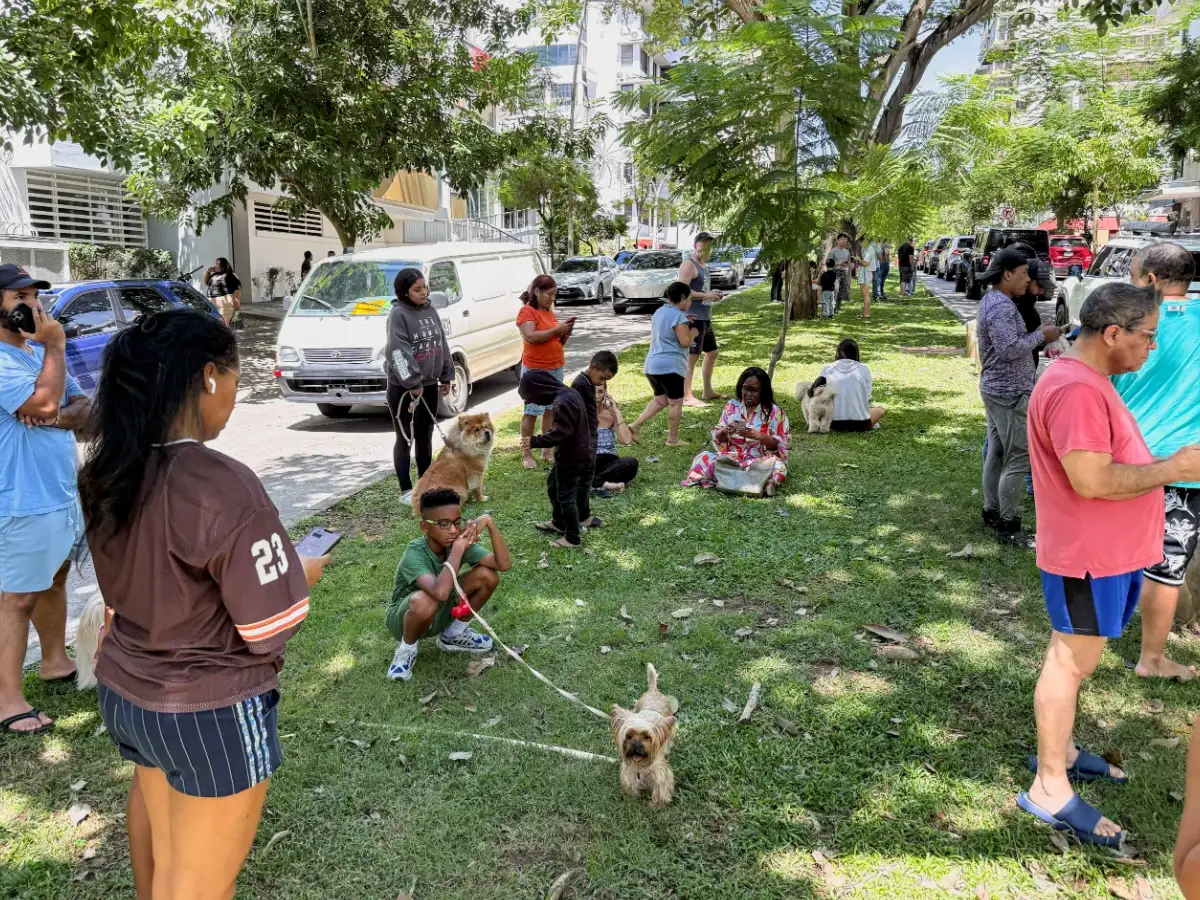
7.6 magnitude earthquake jolts Panama, people evacuate buildings as tsunami threat looms over Pacific coast
A strong earthquake measuring 7.6 in magnitude hit near the southern coast of Panama. Although initially reported as 8.0, the magnitude was later downgraded by the US Geological Survey. Evacuations occurred in Panama City, but no immediate damage reports were available. Tsunami warnings were issued for much of Central America's Pacific coast, including Colombia and Ecuador. The quake was also felt in the capital of neighboring Costa Rica.
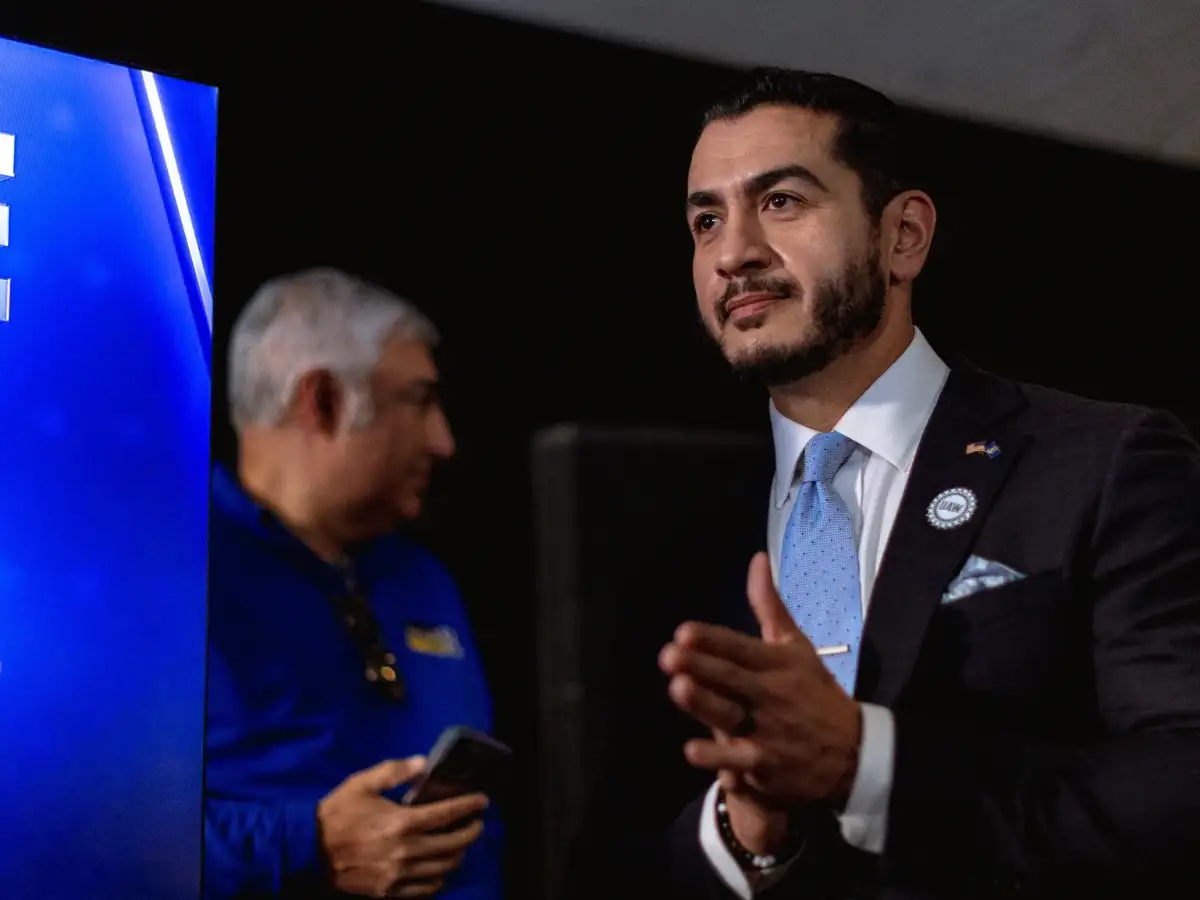
US midterm elections: Who is Abdul El-Sayed? The Egyptian-American Rhodes scholar and public health expert taking on Republicans in Michigan’s Senate race
Abdul El-Sayed took an unusual route to American politics. Trained in medicine and public health, he spent years studying why people get sick and how public systems can improve their lives. Now, the 41-year-old Egyptian-American is running for the US Senate in Michigan after defeating establishment-backed Haley Stevens in the Democratic primary. A Rhodes Scholar and former Detroit health chief, he is campaigning for Medicare for All, tighter campaign finance rules and relief from rising living costs.

NEET candidate above 70, panel seeks age cap, attempt limits
A parliamentary panel has put forth innovative proposals aimed at reforming NEET, JEE (Main), and CUET to enhance examination efficiency and fairness. Key recommendations include a two-stage testing approach and the adoption of computer-based assessments. Additionally, the panel emphasizes the need for greater oversight of the coaching sector to ensure transparency and prioritize students' mental well-being.
NEET candidate above 70, panel seeks age cap, attempt limits
A parliamentary panel has put forth innovative proposals aimed at reforming NEET, JEE (Main), and CUET to enhance examination efficiency and fairness. Key recommendations include a two-stage testing approach and the adoption of computer-based assessments. Additionally, the panel emphasizes the need for greater oversight of the coaching sector to ensure transparency and prioritize students' mental well-being.

Trump says Russia to immediately supply 300,000 tons of diesel fuel
Russia has committed to supply over 300,000 tons of diesel fuel immediately to the global market. Following this, it plans to deliver 3 million tons based on refinery conditions. Additionally, Russia will provide another 500,000 tons in November and 1 million tons shortly thereafter. This agreement emerged from a successful dialogue between Donald Trump and Vladimir Putin. The delivery timeline aims to stabilize fuel availability amidst global demand.
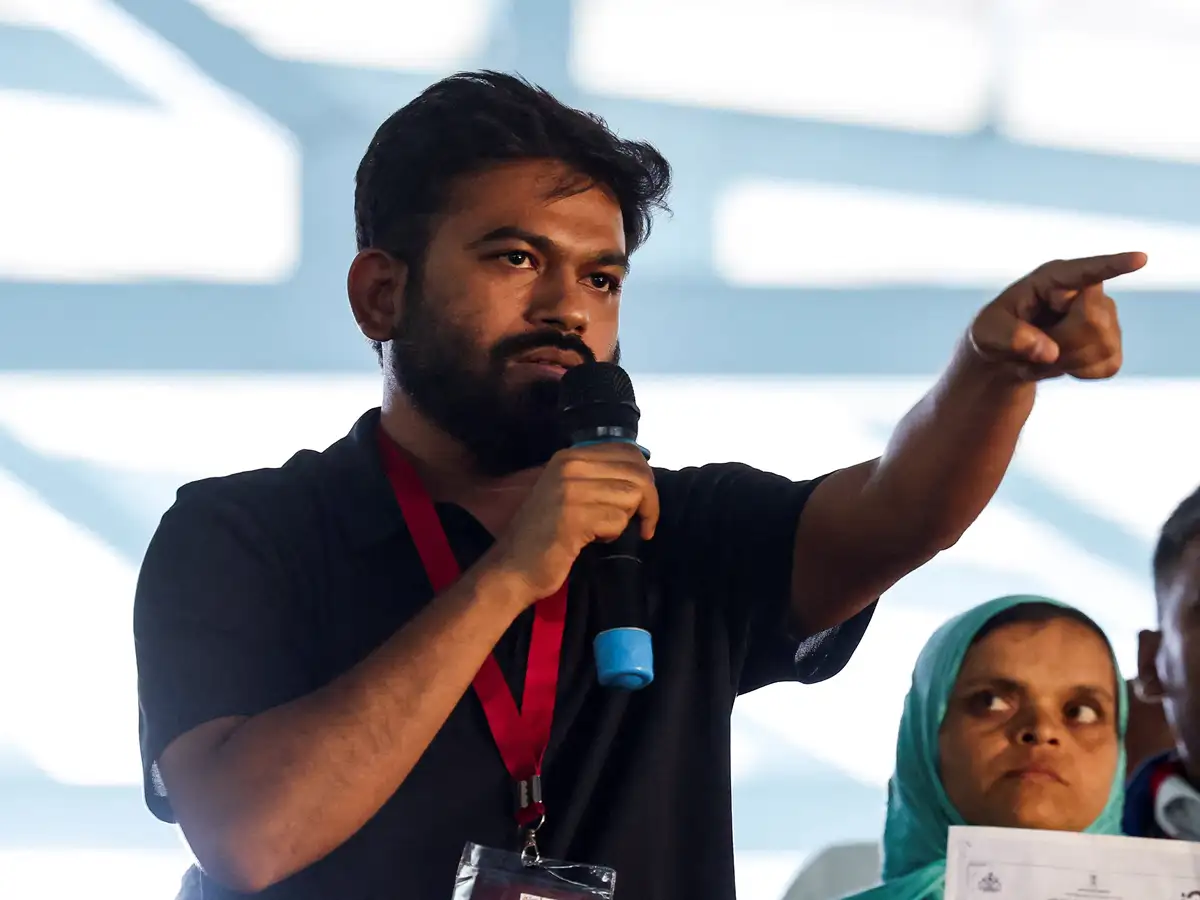
Government scared, protest will go ahead, says Abhijeet Dipke
Abhijeet Dipke, founder of the Cockroach Janata Party, has announced an upcoming protest at Jantar Mantar, Delhi, calling for the resignation of Chief Election Commissioner Gyanesh Kumar. Despite the Delhi Police's restrictions and metro station closures, the protest will continue. Dipke slammed the government for its anxiety over youth-led demonstrations, stating that the current clampdown is reminiscent of the emergency period when dissent was heavily suppressed.
YOUR NEWS, OUR NETWORK.
Do you have Great News you want to tell the world?
Be it updates about your business or your community, you can make sure that it’s heard by submitting your story to our network reaching hundreds of news sites across 6 verticals.