
Offshore Freshwater Replenishment from a Leading Shipboard Seawater Desalination Plant Company, Shanghai Tongjie
Sep 18, 2026
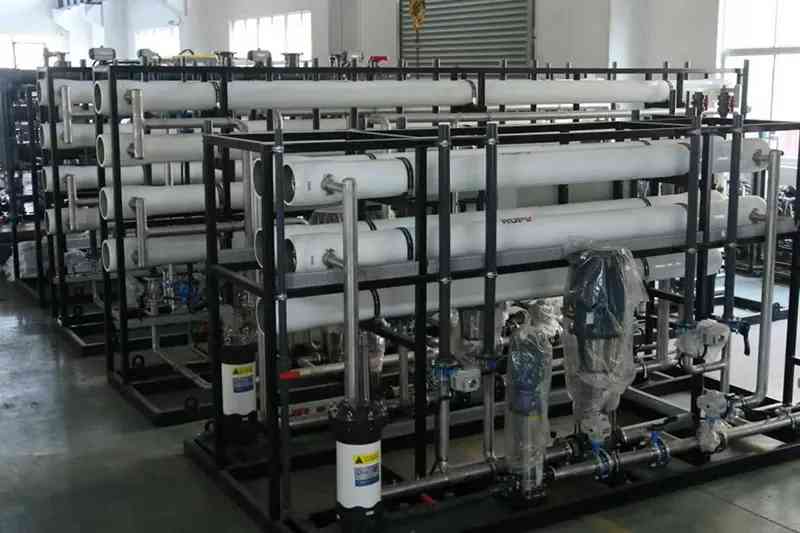
Shanghai, China Sep 18, 2026 (Issuewire.com) - Offshore drilling rigs, floating production storage units (FPSOs), and commercial marine vessels require continuous, high-volume freshwater to sustain crew life and power critical technical operations. Deploying a dedicated shipboard seawater desalination plant frees offshore operators from expensive and weather-vulnerable water supply barges. Through heavy-duty marine plant engineering, Shanghai Tongjie enables offshore operators to generate dependable potable and technical-grade water directly from open-ocean seawater.
For offshore operations managers and marine logistics directors, water security is an operational lifeline. Beyond personnel health, dependable freshwater feeds drilling mud preparation, turbine wash cycles, boiler makeup, and deck sanitation. Moving from logistics-heavy bunkering to onsite desalination stabilizes operating expenditures and eliminates supply delays in offshore blocks.
Offshore Freshwater Replenishment Starts with the Required Water Duty
Managing offshore water supplies begins by establishing chemical and microbiological standards for each intended application. Treating offshore water as a uniform requirement leads either to premature machinery failure from unpolished water or wasteful over-purification for basic utility tasks.
Offshore operations segregate freshwater duties into three primary streams:
- Potable Life-Support Water: Sustains crew across galleys, cabins, and medical bays. Water complies with WHO and MLC standards, maintaining total dissolved solids (TDS) under 500 mg/L, neutral pH, and zero coliforms via reverse osmosis, calcite mineralization, and UV or chlorine disinfection.
- Technical Process & Boiler Makeup: Feeds gas turbine wash circuits, steam boilers, and cooling loops where dissolved silica and chlorides cause thermal scaling. Technical streams require two-pass RO or RO-EDI polishing to achieve conductivity below 1-5 µS/cm and silica under 10 ppb.
- Drilling Mud & Heavy Utility Water: Dilutes drilling fluids, hydrates polymers, and washes deck machinery. Requiring basic de-salting (TDS < 1,000 mg/L) without polishing, this stream maximizes throughput while conserving chemicals.
Defining volumetric demand across these distinct duties allows process engineers to design split-stream treatment systems, avoiding the capital and energy expense of polishing all water to boiler-feed grade.
Choose Between a Shipboard Seawater Desalination Plant and a Compact Marine Watermaker by Installation Context
Procurement teams must distinguish between a compact marine watermaker and a full-scale shipboard seawater desalination plant. While both utilize reverse osmosis, their structural envelopes, duty cycles, and integration requirements differ fundamentally.
Compact marine watermakers deliver 1 to 20 tons daily. Engineered for crew quarters on tugboats, trawlers, and utility craft, they prioritize compact footprints, lightweight frames, and intermittent 8- to 12-hour runtimes.
In contrast, a shipboard seawater desalination plant delivers 50 to 500+ tons daily. Installed on drilling rigs, pipelay barges, and construction vessels, these plants run continuously 24/7. They incorporate multi-stage pre-treatment, industrial high-pressure pumps, duplex stainless manifolds, energy recovery devices, and automated safety interlocks.
Choosing between them depends on vessel class, available deck area, and supply criticality. Where water shortages halt drilling, an industrial shipboard plant provides essential mechanical redundancy.
Define Feedwater, Product-Water Demand, Runtime, and Capacity
Accurate sizing of an offshore desalination asset requires analyzing open-ocean feedwater dynamics alongside operational peak demand profiles.
Open-ocean seawater varies by geography. Equatorial waters exceed 35°C with elevated biofouling risk, whereas sub-arctic waters drop below 4°C, increasing viscosity and requiring higher feed pressures to maintain design flux. Calculations must factor in salinity shifts (from 32,000 ppm in open seas to 45,000 ppm in enclosed gulfs) and contaminants like surface sheens or mud returns.
To ensure uninterrupted replenishment, experienced offshore operators utilize a redundant train architecture. Rather than installing a single 200 m³/day plant, the optimal configuration employs two 100 m³/day trains (2 x 50% design) or three 50 m³/day trains. This redundancy ensures that routine chemical cleaning (CIP), cartridge filter changeouts, or pump maintenance can be executed on one train while remaining units maintain essential freshwater baselines without disrupting platform operations.
Plan Transport, Deck or Platform Integration, and Site Connections
Integrating heavy industrial water treatment equipment onto an offshore deck requires adhering to maritime structural and hazardous zoning standards.
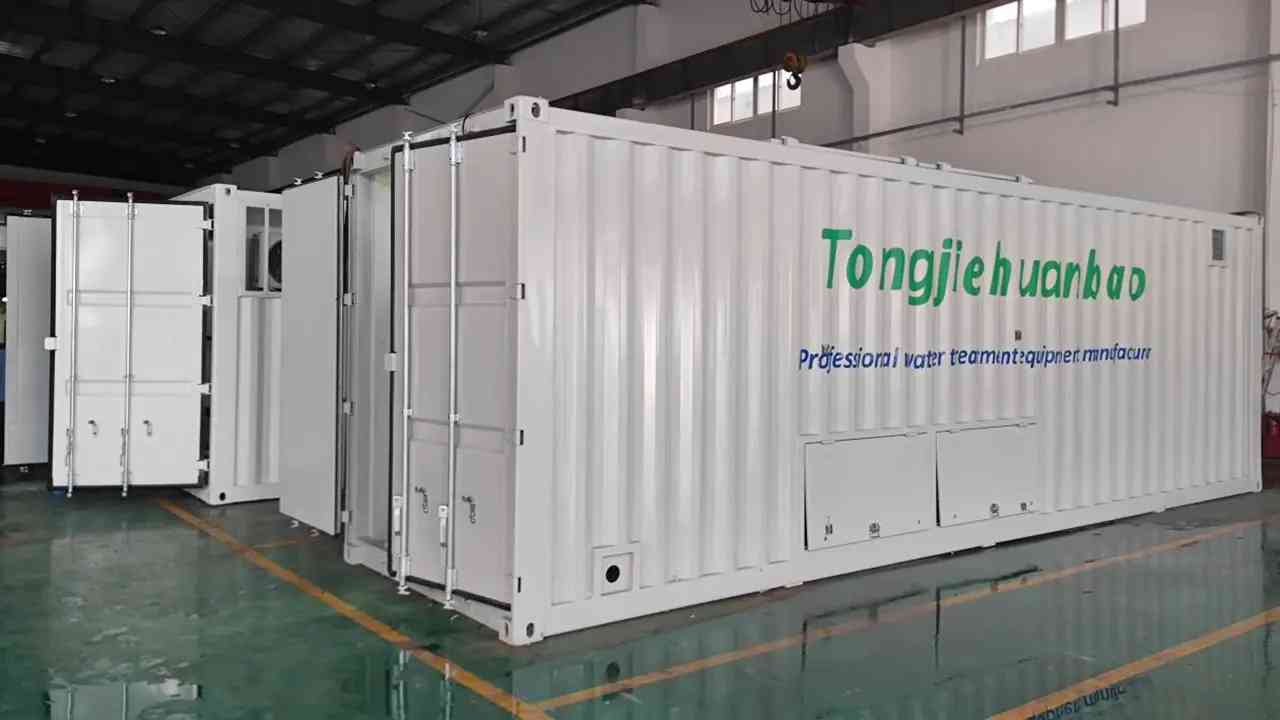
Offshore skids and containerized modules must be certified for offshore maritime lifting in compliance with DNV GL-ST-E271 or ISO 10855 standards, incorporating certified lifting lugs, slings, and internal structural bracing capable of withstanding dynamic acceleration loads during vessel loading and sea transit. Floor loading calculations must verify that deck plates support fluid-filled operating weights.
Furthermore, offshore oil and gas facilities enforce hazardous area classifications:
- Non-Hazardous Machinery Flats: Standard industrial marine skids with IP55/IP65 electrical cabinets and marine-grade switchgear.
- Hazardous Zone 1 & Zone 2 Locations: Skids positioned on open decks near wellheads, drilling floors, or hydrocarbon processing facilities require certified explosion-proof (ATEX or IECEx) construction, flameproof motor enclosures (Ex d), pressurized control cabinets (Ex p), and intrinsically safe sensor loops.
External utility interfaces must be pre-planned: dedicated low-sea chest suction or submersible caisson lift pumps, three-phase power connections (typically 440V/60Hz or 380V/50Hz), and overboard concentrate discharge chutes designed to disperse brine away from marine intake caissons.
Balance Marine Exposure, Remote Operation, and Energy Requirements
Offshore marine environments impose extreme corrosion stress. Salt spray, continuous atmospheric moisture, and elevated temperatures cause rapid galvanic degradation of improper alloys.
High-pressure seawater manifolds operating at 55 to 70 bar must be fabricated from 2507 super duplex stainless steel (PREN > 42) or duplex 2205 alloys, ensuring complete resistance to chloride pitting and crevice corrosion. Low-pressure manifolds utilize fiberglass-reinforced plastic (FRP) or Schedule 80 UPVC, eliminating corrosion across pre-treatment loops. External framework requires multi-coat marine epoxy coatings meeting ISO 12944 C5-M durability criteria.
Energy efficiency represents another crucial engineering axis. In offshore facilities where power is generated from onboard gas turbines or diesel gensets, integrating isobaric energy recovery devices cuts specific energy consumption from ~7.5 kWh/m³ down to 3.0-3.5 kWh/m³, substantially reducing fuel consumption and generator electrical loading.
Shanghai Tongjie provides automated offshore desalination plants featuring remote SCADA integration. Using secure industrial telemetry, operating parameters--including membrane flux, recovery rates, inter-stage pressure drops, and live permeate conductivity--are transmitted to onshore technical centers, allowing remote specialists to assist offshore crews with predictive maintenance and performance optimization.
Offshore Freshwater Replenishment FAQ
Evaluating offshore water supply requires comparing onsite desalination economics against traditional water bunkering logistics.
How Does Onboard Desalination Compare Economically to Water Bunkering Barges?
Bunkering freshwater via supply boats typically costs $15 to $30+ per cubic meter when factoring in vessel charter fees, port loading costs, and standby demurrage. In contrast, onsite shipboard reverse osmosis produces freshwater at $1.50 to $3.50 per cubic meter in direct operating costs, typically delivering capital payback within 6 to 18 months.
What Distinguishes a Shipboard Desalination Plant from a Compact Watermaker?
A shipboard desalination plant is an industrial installation (50-500+ m³/day) designed for continuous 24/7 duty with redundant pumping trains, energy recovery, and heavy-duty pre-treatment, whereas a compact watermaker (1-20 m³/day) is designed for smaller vessels with intermittent crew-only water demands.
What Water Quality Standards Apply to Offshore Potable and Technical Water?
Potable water must satisfy WHO drinking guidelines (TDS < 500 mg/L with proper remineralization and disinfection). Technical boiler and turbine wash water requires two-pass RO or EDI to achieve conductivity below 1-5 µS/cm and silica under 10 ppb.
How Are Offshore SWRO Skids Protected in Hazardous Oil & Gas Environments?
Skids deployed in Zone 1 or Zone 2 hazardous areas feature ATEX/IECEx certified explosion-proof motors, pressurized control enclosures, and intrinsically safe sensor instrumentation.
What Redundancy Is Recommended for Critical Offshore Facilities?
Critical offshore facilities should deploy dual-train (2 x 50%) or triple-train (3 x 33%) modular designs to ensure continuous freshwater availability during routine membrane cleaning or pump maintenance.
Convert Offshore Operating Data into a Plant Configuration
Designing an autonomous offshore freshwater replenishment system requires synthesizing raw seawater analysis, daily crew and technical water quotas, hazardous area zoning, and deck spatial limits into a unified engineering specification.
Submit your vessel or platform type, daily freshwater volume requirements, electrical power parameters, and deck layout constraints to the Shanghai Tongjie offshore engineering department to receive custom P&IDs, general arrangement drawings, and lifecycle economic assessments.
Media Contact
Shanghai Tongjie Environmental Protection Technology Co., Ltd.
Source :Shanghai Tongjie Environmental Protection Technology Co., Ltd.
This article was originally published by IssueWire. Read the original article here.
More News

The driver who slammed into an LA bus before a news helicopter crash is charged with murder
A drug-impaired SUV driver allegedly swerved into the wrong lane, ran a red light and crashed into a Los Angeles city bus, killing two riders, prosecutors said. The incident was followed by a fatal news helicopter crash that killed two people aboard and one person on the ground while covering the collision.

Learnt Hindi from Bachchan, now Afghanistan's Sharafuddin is commentating in India
Learnt Hindi from Bachchan, now Afghanistan's Sharafuddin is commentating in India

Mamata-led TMC submits new name, symbol choices under protest after EC bars party name, ‘flowers and grass’ for Bengal bypolls
The Trinamool Congress submitted new name and symbol choices to the Election Commission. This action followed an interim order temporarily removing the party's original name and symbol. The Election Commission directed the submission for upcoming West Bengal bypolls. The party submitted its response under strongest protest late Thursday night. This dispute arose from a recent rebellion within the party's ranks.

'Life is a race': iPhone 18 sale sparks hilarious meme fest, from 3 Idiots to Baghban, as long queues form outside Apple stores across India
The iPhone 18 Pro and iPhone 18 Pro Max sale in India triggered long queues outside Apple stores in Delhi, Mumbai and Bengaluru. Videos and photos of customers waiting from early morning or even overnight quickly became viral, with social media users turning the scenes into memes featuring references from 3 Idiots, Baghban and jokes about inflation, GST and expensive smartphones.

TN bypolls: Nominations of 58 candidates accepted
The Madurantakam and Dharapuram bypolls will see a five-cornered contest with the Left parties announcing their candidates for the polls

Pitbull attacks and severely injures six-month-old child in Sonipat, CCTV captures incident
A six-month-old child was seriously injured after a Pitbull attacked the baby in Sonipat’s Sikka Colony while the infant was being taken for a walk by an aunt. CCTV footage captured the attack, showing the dog grabbing and dragging the child before nearby residents helped rescue the baby. The child was later referred to a Rohtak hospital for treatment.

Kanimozhi meets former Bengal CM Mamata Banerjee in Kolkata as DMK outreach fuels third-front talk
DMK leader Kanimozhi met Mamata Banerjee in Kolkata on Thursday. This meeting follows discussions with Uddhav Thackeray and Sharad Pawar. Strains between DMK and Congress have emerged recently. The TMC and Congress have also sparred over a West Bengal bypoll. Kanimozhi's outreach sparks speculation about opposition coordination efforts.

India Vs Brazil Friendly Gets Massive Boost With 14,000 Discounted Tickets
With general-sale tickets sold out, AIFF will offer 14,000 discounted tickets through East Bengal, Mohun Bagan and Mohammedan Sporting for India's October 3 clash against Brazil.
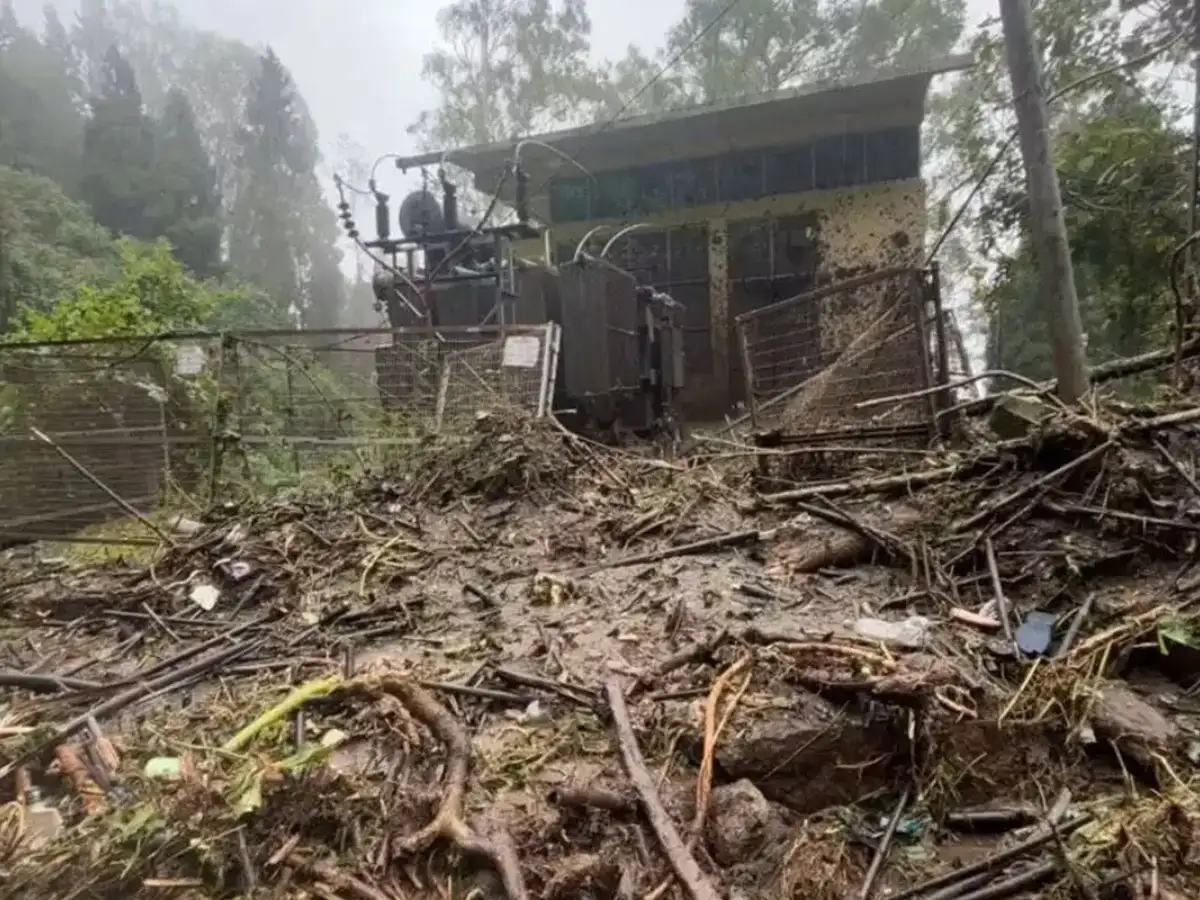
Landslides, heavy rain disrupt transport, residential infrastructure in Sikkim's Gangtok; DDMA initiates damage assessments
Continuous heavy rainfall has triggered landslides, mudflows and road blockages across Gangtok district, damaging homes and public infrastructure and disrupting connectivity. The District Disaster Management Authority has launched a multi-agency damage assessment, ordered road and debris clearance, and advised residents to avoid landslide-prone areas as teams inspect affected locations.
Landslides, heavy rain disrupt transport, residential infrastructure in Sikkim's Gangtok; DDMA initiates damage assessments
Continuous heavy rainfall has triggered landslides, mudflows and road blockages across Gangtok district, damaging homes and public infrastructure and disrupting connectivity. The District Disaster Management Authority has launched a multi-agency damage assessment, ordered road and debris clearance, and advised residents to avoid landslide-prone areas as teams inspect affected locations.

Moody’s raises India FY27 growth forecast to 7% from 6% on resilient economy, stronger investment
Moody's has raised India's GDP growth forecast to seven percent for 2026-27. Strong private consumption and robust investment are driving this optimistic economic outlook. This revised forecast surpasses projections from the IMF and S&P Global Ratings. However, elevated energy prices and potential El Niño disruptions remain key risks. Fiscal consolidation is expected to continue gradually over the next few years.

West Bengal needs 7.25% annual growth to achieve 5X economy by 2047: ORF report
A report details West Bengal's path to a fivefold economy by 2047. It identifies growth gaps and proposes six pillars for development. The state budget aligns with productivity and capital formation goals. Investment incentives and single window clearance aim to boost realization. Infrastructure and federal alignment are key steps for future growth.
YOUR NEWS, OUR NETWORK.
Do you have Great News you want to tell the world?
Be it updates about your business or your community, you can make sure that it’s heard by submitting your story to our network reaching hundreds of news sites across 6 verticals.