
First-of-its-Kind Study Shows Increased Exposure to Touchscreens and TV Results in a Significant Impact on Infants’ Sleep
Oct 7, 2020
NEW YORK, Oct. 7, 2020 /PRNewswire/ -- The effects of screens on children's sleep have been a focus of public health concern for decades. With screen time on the rise due to the coronavirus pandemic there is renewed attention on its impact on children and babies. A new study that will be published in an upcoming issue of SLEEP, found that infants as young as 3-months old may be more vulnerable to the effects of touchscreens. Screens may cause a disruption to their sleep-wake rhythms, with age playing a substantial role in the relationship between the type of screen exposure and sleep.

 Flinders University logo
The global study led by researchers at Flinders University and Nanit, developers of the leading smart baby monitor and sleep tracker, is the first ever to use objective sleep measurement to examine the link between touchscreen and television exposure to daytime and nighttime sleep of infants. With the largest sample size to date, researchers used the Nanit Plus camera with its computer vision technology to track and analyze nearly 14,000 nights of infant sleep along with parents reporting on the sleep and screen time of more than 1,000 infants.
Findings from the study revealed:
- Daytime touchscreen exposure is associated with marked decreases in nighttime sleep in older infants. Infants that were 13-months-old, on average, lost 1-minute nighttime sleep for each minute of time they used a touchscreen during the day. Touchscreens were also associated with poorer sleep quality and more fragmented sleep with more nighttime awakenings.
- Watching television during the day was linked to shorter than average sleep duration. 3-month-old infants that watched 34 minutes of television during the day averaged 20 minutes less daytime sleep and 22 minutes less total sleep within 24 hours.
- Age plays a more substantial role when it comes to touchscreen exposure compared to television. Touchscreen exposure was more robustly associated with sleep than television exposure. A surprising finding showed 3-month-old infants that were given 5 minutes of time with a touchscreen device during the day averaged 13 minutes less daytime sleep. However, the findings also suggest a trade-off between daytime and nighttime sleep. The displacement of daytime sleep may promote longer sleep stretches at night.
Dr. Michal Kahn, lead author of the study and Postdoctoral Research Fellow at Flinders University said, "We see that even in moderation, screens can have a considerable impact on infant sleep. There is still much we have to explore in understanding the connection between screen time and sleep, but this research definitively shows us they are linked and the effects vary by age."
"There are so many factors that go into helping your baby sleep well. Parents may not often think about how a little bit of screen time can have a big effect on the amount of sleep and how well they sleep. These findings suggest that while even a small amount of screen exposure might lead to a decrease in daytime sleep, nighttime sleep might be more consolidated in younger infants," said Dr. Natalie Barnett, Director of Clinical Research at Nanit.
The report Sleep and screen exposure across the beginning of life was authored by Dr. Michal Kahn, Research Fellow, Flinders University; Dr. Natalie Barnett, Director of Clinical Research, Nanit; Dr. Assaf Glazer, Co-founder and Chief Product Officer, Nanit; and Prof. Michael Gradisar, College of Education, Psychology and Social Work, Flinders University. To view the report, please visit SLEEP.
Methodology
A global sample of 1,074 infants ranging in ages 0-18 months participated in the study and nearly 14,000 nights of sleep were objectively assessed using Nanit's computer-vision technology. Sleep was additionally reported by parents in an online survey, as was infant's exposure to screens. The study was conducted in November and December 2019 prior to the outbreak of COVID-19.
ABOUT FLINDERS UNIVERSITY
Flinders University is a globally focused, locally engaged institution with a reputation for excellence in teaching, learning and research. A highly research active university, Flinders is finding solutions to the world's challenges and contributing to social, cultural, and economic growth. Ninety percent of its research has been ranked at or above world class by Excellence in Research for Australia (ERA). Flinders University's research achievements are underpinned by a robust network of partnerships with organisations and industries and are an important part of Flinders' exceptional student experience.
ABOUT NANIT
Founded at the Jacobs Technion-Cornell Institute by Dr. Assaf Glazer, Tor Ivry and Andrew Berman, Nanit uses technology, science and data to create innovative products that are safer and smarter, for parents and babies everywhere. Named by Fast Company as one of the Most Innovative Companies of 2019, Nanit combines computer vision, machine learning and advanced camera sensors that measure a baby's sleep cycle and breathing motion, to provide actionable insights that lead to healthier, improved sleep for the baby and the entire family.
Nanit's Research division has ongoing partnerships with major universities and institutions that explore pediatric sleep and development. Advisors have included world-renowned sleep experts Dr. Avi Sadeh of Tel Aviv University, Dr. Deborah Estrin of Cornell Tech, Dr. Thomas Anders of Brown University, Dr. David Gozal of University of Missouri and Dr. Haviva Veler of Weill Cornell Medicine. Since launching in 2016, Nanit has tracked over 135 million hours of sleep, 28 million parental visits, and over 13 million morning wakeups. For more information, visit www.nanit.com.
Media Contacts:
Jaime Cassavechia
EJ Media Group
[email protected]
646-701-7041
Jodi Lefkowitz
Nanit
[email protected]
For Flinders University:
Tania Bawden
+61 (0)434101516
[email protected]
SOURCE Nanit; Flinders University

More News

US Congress releases list of Chinese firms seeking Nvidia chips
A US House committee on Thursday released confidential licence applications from Chinese companies seeking to buy advanced artificial intelligence chips from Nvidia and AMD, information normally protected under US export-control law. Brian Mast, a Florida Republican and chair of the House Foreign Affairs Committee, used his authority under the Export Control Reform Act to make public the details of Nvidia and AMD licence applications to sell AI chips to China. “[The Committee] determines that...

US crackdown on scam networks connected to Chinese-born tycoon Chen Zhi ramps up
The United States sanctioned three individuals and two companies on Thursday over their alleged links to scam centre compounds in Southeast Asia, in the latest US crackdown on networks connected to Chinese-born tycoon Chen Zhi. “Southeast Asia-based scam centres, most of them run by Chinese organised crime groups, stole an estimated US$18.2 billion from Americans in 2025,” said US State Department spokesman Tommy Pigott. “These criminal enterprises steal billions of dollars from victims around...


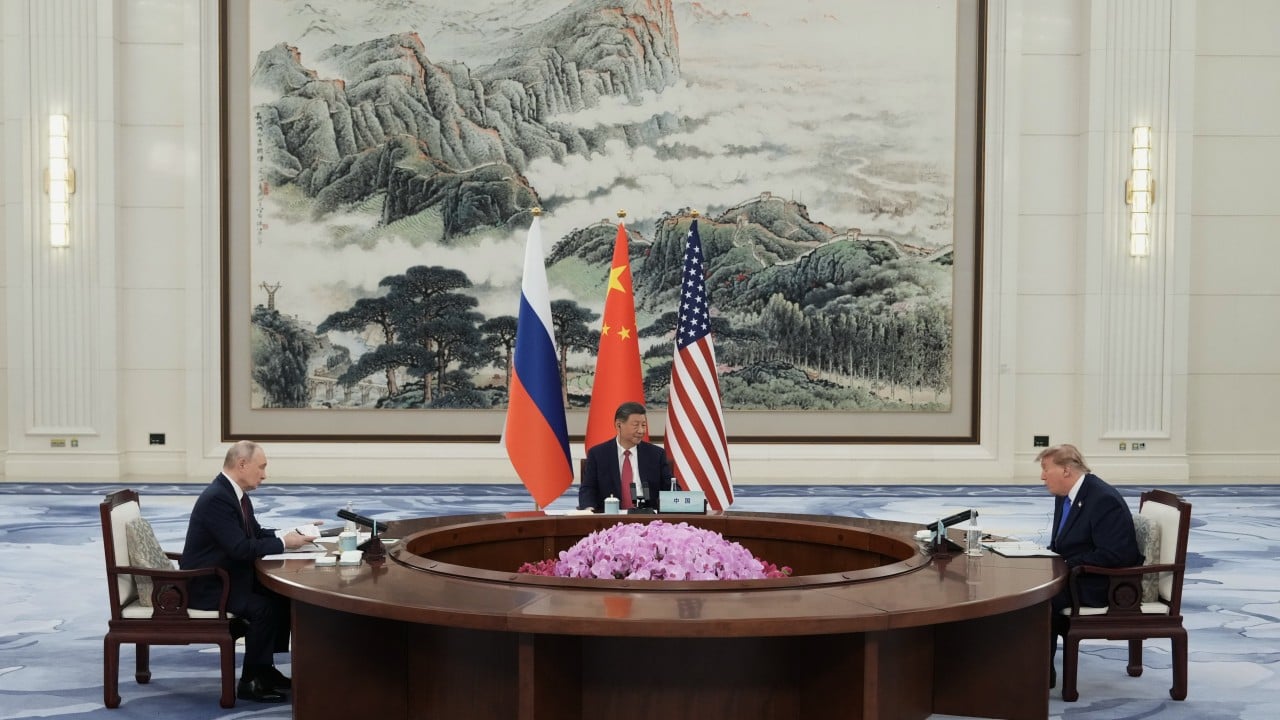
China-centred order or host duties? Experts weigh in on Xi-Trump-Putin seating
The seating arrangement at Thursday’s historic trilateral summit in Shenzhen sparked debate among former US officials and analysts over whether the optics reflected standard host protocol or a deliberate bid by China to place itself at the centre of the discussions. “A stunning image of a China-centred order: a would-be G3 with Xi presiding,” said Julian Gewirtz, who served as senior director for China and Taiwan affairs at the White House National Security Council during the Joe Biden...

‘States can levy tax on paid trade exhibitions’, says SC
The Supreme Court ruled that entertainment duty can be levied on paid gems and jewellery exhibitions. This ruling follows an appeal by the Gem and Jewellery Export Promotion Council regarding the India International Jewellery Show. The court found that paid entry aligns with the definition of entertainment under the Bombay Entertainments Duty Act, 1923. This decision upholds the Bombay High Court's previous ruling on the matter.

India votes against UN resolution critical of Iran's human rights record
India has opposed country-specific human rights resolutions at the UN, including a recent Canada-led resolution. The Indian government voted alongside countries like China, Russia, and Iran against the resolution. This aligns with India's previous stance against UN Human Rights Council resolutions regarding Iran's response to protests. Iran's UN mission rejected the resolution, calling it motivated and backed by only a handful of nations.
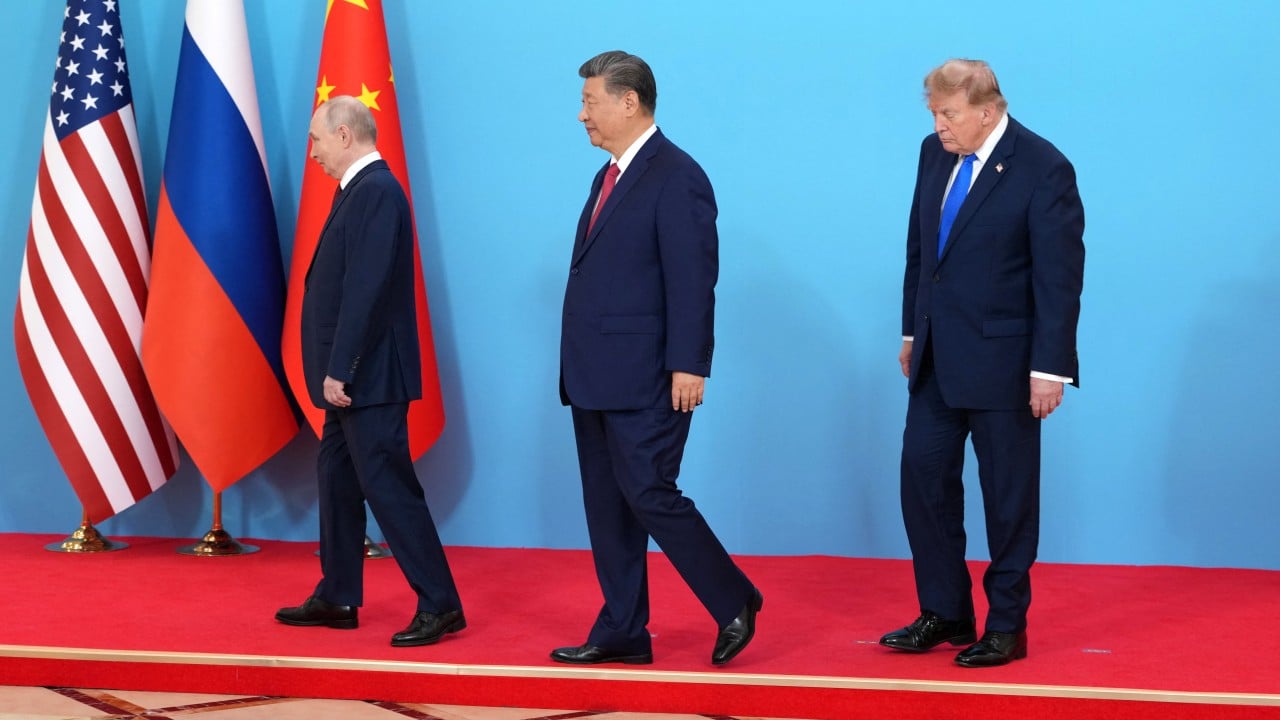
Xi, Trump and Putin ‘peace declaration’ suggests summit is more than a photo op
What was teased for weeks as an unprecedented three-way photo opportunity ended up rattling the geopolitical landscape on Thursday with the release of a China-US-Russia joint “peace declaration” outlining areas of cooperation in worldwide energy markets, nuclear non-proliferation and global governance. At the conclusion of the first-ever three-way meeting in Shenzhen between Chinese President Xi Jinping, US President Donald Trump and Russian President Vladimir Putin, the trio issued a statement...

India calls out Pakistan Army over mineral wealth exploitation
India's Permanent Representative to the United Nations, Parvathaneni Harish, addressed Pakistan's military at a recent UN meeting. He emphasized the need for Pakistan's military to use natural resources for public benefit instead of personal gain. Harish highlighted the military's exploitation of resources and its impact on political stability, particularly mentioning the dismissal of the Khyber Pakhtunkhwa government.

The US government will put up to $1,000 in your retirement account from 2027; one common move could wipe it out
Starting in 2027, eligible workers can receive a federal contribution for retirement savings based on their contributions. The Saver's Match, created by the SECURE 2.0 Act, replaces the Saver's Credit after 2026. Workers contributing up to $2,000 can receive a match of 50% from the federal government. Eligibility criteria include income limits and not being someone else's dependent or qualifying full-time student.
YOUR NEWS, OUR NETWORK.
Do you have Great News you want to tell the world?
Be it updates about your business or your community, you can make sure that it’s heard by submitting your story to our network reaching hundreds of news sites across 6 verticals.