
US lawmakers urge export restrictions targeting Xinjiang
Sep 12, 2018
Two U.S. lawmakers are urging the extension of American export restrictions to prevent sales of equipment that could be used in China's massive security clampdown targeting the Xinjiang region's native Muslim population
BEIJING — Two U.S. lawmakers are urging the extension of tougher American export restrictions to prevent sales of equipment that could be used in China's massive security clampdown targeting the Xinjiang region's native Muslim population.
Sen. Marco Rubio and Rep. Chris Smith want foreign entities, including businesses, research institutions, government and private organizations, and individuals seen as profiting from the clampdown added to a watch list, the two Republicans, among the staunchest critics of China in the U.S. Congress, said in a letter Wednesday to Commerce Secretary Wilbur Ross.
"U.S. companies should not be assisting in the expansion of China's systems for surveillance, detection, and detention, or be complicit in what are gross violations of internationally recognized human rights occurring daily" in Xinjiang (SHIN-jhang), the letter said.
Dozens of Chinese companies are already on the "Entity List," though none with an explicit, direct link to the oppression in Xinjiang. The U.S. has long maintained restrictions on the export of crime control and detection equipment to China.
Listing would place the entities under export administration regulations requiring American companies wishing to sell to them to be subject to "specific license requirements for the export, re-export and/or transfer (in-country) of specified items," according to the Commerce Department's Bureau of Industry and Security.
The letter says the director of the bureau's Foreign Policy Division, Anthony Christino, stated in recent testimony before the Congressional-Executive Commission on China that it was evaluating "whether there is sufficient evidence to justify additional end-user restrictions."
It said the commission was awaiting an update "as to the status and anticipated timeline of this interagency process," but said the government should err on the side of caution.
"Given the national integration of China's state security apparatus, we believe there should also be a presumption of denial for any sale of technology or equipment that would make a direct and significant contribution to the police surveillance and detection system," the letter said.
No specific entities were named in the letter, which is the latest sign that the detentions are raising concerns among foreign leaders, governments, activist groups, media outlets and private citizens.
Over recent years, Xinjiang has been transformed into a vast security state , packed with police stations, street cameras and security checkpoints at which electronic identity cards are scanned. Travel restrictions prevent free movement or even the opportunity to visit friends and relatives in nearby towns.
The measures target members of the Uighur (WEE-gur), Kazakh and other Muslim minority groups, with the region's ethnically Chinese residents largely exempted.
In addition, monitoring groups say as many as 1 million Muslims have been sent to a system of internment camps , also known as "re-education centers," where they are locked up for months without trial and forced to undergo political indoctrination and renounce Islam and traditional culture.
China has denied operating the system of camps, despite extensive documentation from those interned and relatives, and other evidence such as satellite photos and government documents.
Beijing says it is taking necessary measures to fight terrorism, religious extremism and separatism in the restive region and that criminals involved in minor offenses are sent to "vocational education and employment training centers" to help with their rehabilitation and reintegration into society.
The Wednesday letter follows one last month from U.S. lawmakers, including Rubio and Smith, to Secretary of State Mike Pompeo and Treasury Secretary Steve Mnuchin, calling for measures to address the "ongoing human rights crisis" in Xinjiang.
The letter singled out Xinjiang's top leader, Chen Quanguo, and other officials seen as behind the clampdown, saying they should be sanctioned under the Global Magnitsky Act that allows the U.S. government to place travel and financial restrictions on individuals anywhere in the world given credible proof of their role in human rights violations or corruption.
The letter also mentions two companies that could be sanctioned under a separate executive order, Hikvision and Dahua Technology, both of which make video surveillance technology used extensively throughout Xinjiang to track residents and restrict their movements.
Asked Tuesday about the possibility of sanctions, State Department spokeswoman Heather Nauert said the U.S. has "a lot of tools at our disposal" but mentioned no details.
"It's the old standard line on sanctions, that we're not going to preview any sanctions that may or may not happen," Nauert told reporters.
On Wednesday, Chinese foreign ministry spokesman Geng Shuang said China "has been firmly and strongly opposed to the U.S. using Xinjiang-related issues to interfere in China's internal affairs.
"The Chinese government protects the Chinese citizens' freedom of religion and belief in accordance with law," Geng told reporters at a daily briefing.
A day earlier, China rejected a request from the U.N.'s head of human rights, Michelle Bachelet, to allow monitors into Xinjiang, with Geng saying Bachelet should "respect China's sovereignty, fairly and objectively."
Also Wednesday, Australia's opposition Labor Party issued a statement saying it was "deeply concerned by continuing reports of the mass detention of China's minority Uighur population and other violations of human rights," citing questions brought by members of the U.N. Committee on the Elimination of Racial Discrimination in Geneva last week.
That followed a statement by the Australian National Imams Council condemning the treatment of Uighurs as "inhumane and unbearable" and urging action from the Australian government.
Muslim activists in Bangladesh, meanwhile, marched through the capital chanting slogans and carrying signs demanding China "stop religious persecution" of Uighurs.
MORE NEWS

Zheng Yongnian on what to expect from future Xi-Trump meetings
Zheng Yongnian is a political scientist in China and a government adviser. His academic work is mainly about contemporary China, particularly politics, the country’s transformation and its external relations. SCMP Plus readers get early access to articles in the Open Questions series. Many have offered a lukewarm assessment of the Xi-Trump summit in Washington, citing the lack of a breakthrough. What is your take? There are two primary views right now. One is nihilism, which holds that China and...

Asian Games 2026 Live Updates, Day 14: Lovlina Borgohain, Women's Archers Win Gold Medals
Asian Games 2026, October 2 Live Updates: Follow all the latest updates from the 14th day of the event with Indian contingent in action across various sports.

David vs Goliaths: Singapore builds most accurate clock ever, leaves US and China in dust
A small Singaporean research team has beaten scientists in China and the United States to build the world’s most accurate atomic clock. The clock, built with a single ion of a rare earth metal element known as lutetium, is so precise that it would lose one second every 260 billion years – nearly 20 times the age of our universe. It is about four times as accurate as the previous record holder, a calcium-ion clock developed by a Chinese Academy of Sciences team in Wuhan, and also surpasses an...
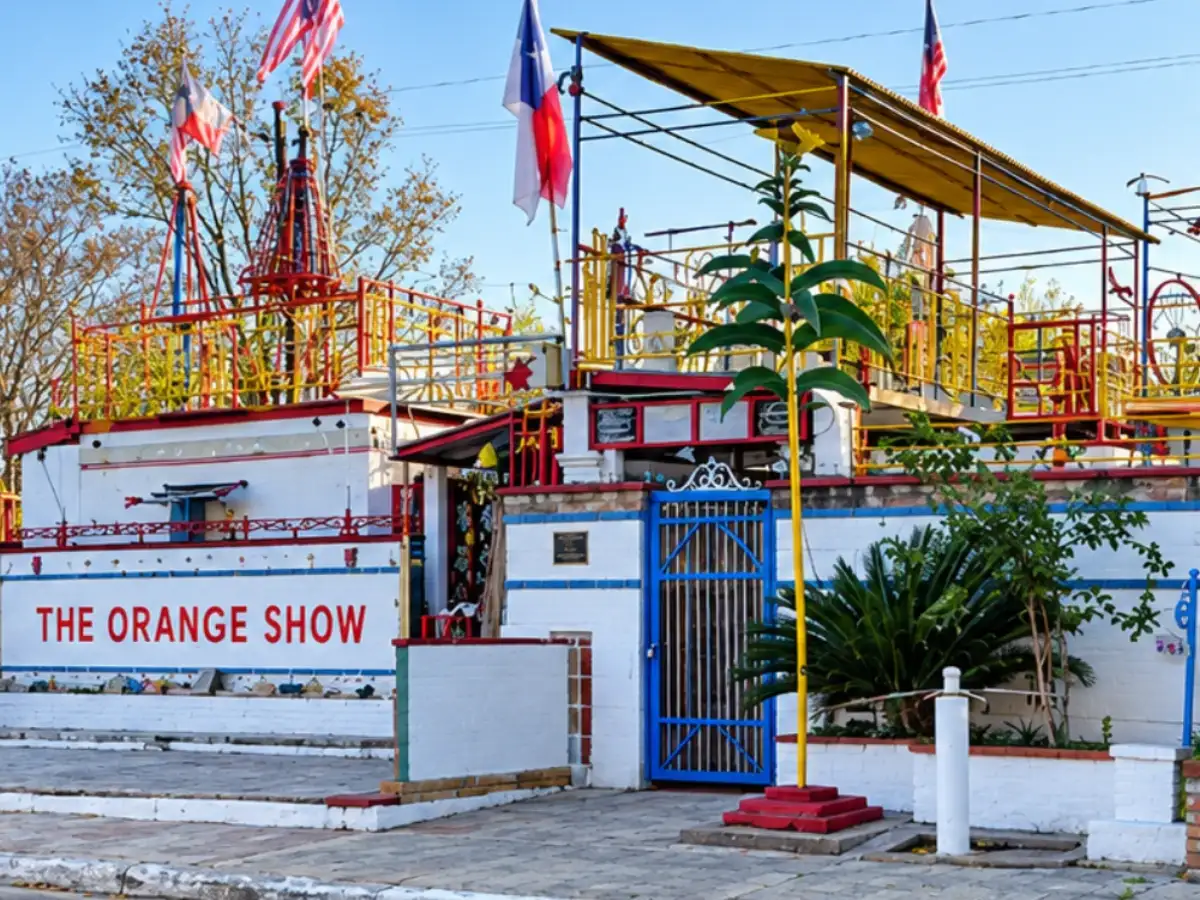
In 1956, Houston postman Jeff McKissack began building with things he found on roadsides; 23 years later, those materials filled a strange 3,000-square-foot maze
Jeff McKissack, a retired mail carrier, built the Orange Show in Houston over 23 years. He used various found materials to create a vibrant art space advocating for healthy living. After his passing, a nonprofit was established to preserve the site, reopening it in 1982. Currently, the Orange Show Center for Visionary Art is undergoing restoration and will remain closed until early 2027.

Government extends RoDTEP export tax refund scheme by three months till December 31
The government has extended the RoDTEP scheme until December 31, 2026, to support exporters amid challenges. This extension maintains the existing reimbursement rates and value caps for various export units. The RoDTEP scheme reimburses taxes and duties that are not refunded through other means, helping ease export costs. It has already covered over 10,700 tariff lines, with substantial disbursements made.

Alaska spent $46.9 million to lower electric bills in 186 communities in FY2025, covering 148.5 million kWh, where rural power costs can be far higher
In fiscal year 2025, Alaska committed around $46.9 million to assist 186 remote communities with rising electricity expenses. By targeting the high costs associated with diesel-generated power, the initiative aims to lessen financial burdens on approximately 80,000 residents benefiting from the Power Cost Equalization Program. While this support is crucial, there remain significant challenges around transitioning to renewable energy sources, underscoring equity issues in rural energy access.

SEBI relies on amended rules in Embassy REIT 'Fit and Proper' matter, tells Bombay HC no disqualification made out
The Securities and Exchange Board of India (SEBI) has told the Bombay High Court that its examination of complaints concerning the "fit and proper" status of persons associated with Embassy Office Parks REIT was completed after the regulatory framework was amended in April 2026, and that the material available did not warrant disqualification under the amended provisions.
SEBI relies on amended rules in Embassy REIT 'Fit and Proper' matter, tells Bombay HC no disqualification made out
The Securities and Exchange Board of India (SEBI) has told the Bombay High Court that its examination of complaints concerning the "fit and proper" status of persons associated with Embassy Office Parks REIT was completed after the regulatory framework was amended in April 2026, and that the material available did not warrant disqualification under the amended provisions.

SBI Research sees CPI inflation at 5.65% in Sept, above 6.5% in Oct-Nov
SBI Research forecasts a rise in CPI inflation to around 5.65 percent in September. They expect it to exceed 6.5 percent during October and November. Inflationary pressures have broadened significantly since the last monetary policy meeting. Additionally, the weakening rupee poses further risks to economic stability. The Reserve Bank of India may adjust its GDP growth and inflation projections during the upcoming policy review.

In 1977, Rich Man, Poor Man star Peter Strauss paid about $225,000 for a run-down 64-acre California ranch; 10 years later, it became a National Park Service site
Peter Strauss purchased a ranch in the Santa Monica Mountains in 1977 and sold it to a state agency in 1983. The land has a rich history, including use as a resort before being acquired by the National Park Service. The ranch has opened to the public, allowing visitors to enjoy nature after extensive restoration work. Although the site suffered from the Woolsey Fire in 2018, it has since reopened.

Smit Machchhar’s journey: From ‘why become a pilot?’ to ‘Captain, you are a hero’
Captain Smit Machchhar, the Indian pilot praised for helping save a flydubai flight after a violent cockpit attack, had never originally planned to enter aviation. A textile engineer who discovered flying at 19, Machchhar went on to become a Boeing pilot, train on the 737 Max and mentor aspiring aviators, describing the profession as a career in which constant learning and composure are essential.