
Thousands of opposition activists languish in prison as Bangladesh gears up for national election

Jan 5, 2024
In the months leading to Bangladesh’s national election on Sunday, thousands of opposition supporters and politicians have been arrested
DHAKA (AP) — Fazlur Rahman died on a hospital floor with his hands and legs still cuffed, his son Mohammad said, his voice breaking while recalling his father's final moments.
Rahman, 63, was one of thousands of opposition activists who were arrested in the months leading to Sunday's parliamentary election amid a sweeping polarized political culture.
The main opposition Bangladesh Nationalist Party, led by former premier Khaleda Zia, said Rahman was one of 10 members who died in police custody. According to his family, he was arrested on Oct. 25 outside the tea stall he ran and taken to jail. He fell sick and was later transferred to a hospital where he died over a week ago, they said. Rahman's arrest came three days before
a massive opposition rally
turned violent, leaving at least 11 dead and nearly a hundred injured.His family believed he was targeted for being an outspoken BNP supporter for the last 35 years.
“My father was with the BNP, which is why they took him," Mohammad said, “if he dies, BNP's name will vanish from our neighborhood.”
The BNP has accused Prime Minister Sheikh Hasina's government of a major crackdown targeting its supporters and opposition politicians on what they say are trumped-up charges in the lead-up to the polls. They claimed that over 20,000 of their members have been jailed in recent months.
However, government officials argued the figure to be much lower and that arrests were made not because of political affiliations but rather specific criminal charges such as arson. Attorney General A.M. Amin Uddin told The Associated Press over the phone that between 2,000 to 3,000 people have been arrested. The country’s law minister told the BBC this week that 10,000 have been arrested.
The figures remain unclear.
CIVICUS, a nonprofit that tracks civic freedoms around the world, recently downgraded Bangladesh to “closed,” the worst rating that it could assign, along with China and Venezuela, following the latest crackdown on opposition supporters.
“We’ve seen many of them being arbitrarily arrested and many of them are facing what we consider fabricated charges,” said Josef Benedict, a researcher with a focus on South Asia at CIVICUS.
Rahman's family said he was arrested in connection to a case dating back to 2022.
The clampdown has raised questions about the legitimacy of the upcoming election.
The BNP and other opposition parties had previously announced a boycott of the election, saying they could not trust the current administration to run it fairly. They repeatedly demanded Hasina's resignation and for a caretaker government to oversee the election. The move has all but guaranteed
Hasina, the country’s longest-serving leader
, to extend her 15-year-long rule and clinch a fifth term in power.Rights groups have called the polls a farce, and fear that it follows a pattern. In 2018, Hasina’s Awami League-led alliance won 96% of the 300 seats in parliament amid widespread allegations of vote-rigging, which authorities denied. And in 2014, she came to power after a boycott by all major opposition parties.
Instead of the BNP, smaller opposition parties and over 400 independent candidates — including scores from the Awami League itself — are participating. The government has invited international observers and defended the polls as fair and democratic, but critics say the aim is to make them look competitive instead.
The recent targeting of the BNP has also reignited concerns of alleged enforced disappearances of opposition members and critics under the Hasina government, said Benedict, the researcher at CIVICUS.
In August, Human Rights Watch said Bangladesh’s security forces have committed over 600 enforced disappearances since 2009, when Hasina came to power for the second time. The figures, based on Bangladeshi human rights monitors, show that nearly 100 remain missing.
The government has
consistently denied the accusations
but has refused to work with the U.N. to investigate the disappearances. In 2022, Home Minister Asaduzzaman Khan dismissed these concerns and said that those who went missing might be in hiding, and often return after a few days.That hasn’t been the case for Sajedul Islam, a BNP local politician, who has been missing for over 10 years, said Sanjida, his sister.
His family said he was picked up by agents of Bangladesh’s Rapid Action Battalion — a special security force unit — on 4 Dec. 2013, just days before the 2014 general election. Over 20 people working at the construction site from where Islam was taken saw agents dressed in the black RAB uniform tying his hands before bundling him into a van, the family said.
“As long as we live, I will keep saying, ‘bring my brother back because he is my family. He is my blood,’” Sanjida said.
Rights groups have long accused RAB of extrajudicial killings, enforced disappearances and human rights violations, sparking the U.S. government to impose sanctions on the elite paramilitary force in 2021.
While this helped bring down the number of such incidents, Islam's sister said they have struggled to push authorities to investigate her brother’s disappearance.
“He was a strong organizer for the BNP in our neighborhood, he was popular and people listened to him - I think that’s why he was targeted,” Sanjida said.
Political observers say such cases illustrate how the bitter rivalry between Hasina’s Awami League and the BNP led by Zia, who is ailing and under house arrest, has polarized Bangladeshi politics — and its citizens — for decades.
Hasina has often accused the BNP of courting hardline extremists that her party, which calls itself moderate and secular, had worked to stamp out, while Zia’s BNP accuses the Awami League of using oppressive tactics to stay in power.
The decades-long feud has deeply fractured the political landscape in Bangladesh, where the two main parties are marred by a history of electoral violence and a politics of retribution.
When the BNP was last in power, from 2001-2006, rights groups and observers detailed how political and security conditions deteriorated in Bangladesh. In 2004, a grenade attack on a rally led by Hasina killed over 20 people, and she narrowly escaped. The country saw nearly daily bombings throughout 2005, according to a Human Rights Watch report at the time, which also accused the then-BNP government of widespread rights abuses.
This week in the capital, Dhaka, people who said they suffered burn injuries during protests by BNP in October, took to the streets. Authorities at the time said they arrested scores of BNP members for stoking violence and burning vehicles. They have since blamed numerous arson attacks on the opposition, which BNP has denied, saying the accusations were politically motivated and aimed at quashing their supporters as the election approaches.
For Mohammad, who believes his father died because of supporting BNP, this election doesn't exist.
“After seeing my father’s condition, I will never vote as long as this government is here,” he said.
MORE NEWS

China’s top swimmers enjoy record-breaking performances at national championships
Chinese swimmers showcased their strength in-depth with record-breaking performances by veterans and rising stars at the national championships in Beijing. As of Tuesday, swimmers had broken one world, six Asian and multiple national records. Zhang Yufei and Zhang Zhanshuo set Asian short-course records in the women’s 100m butterfly and men’s 800m freestyle, clocking 54.87 seconds and 7 minutes 28.61 seconds respectively to claim gold. The national event is the official selection trial for...
'Personal' Setback Behind Neeraj Yadav's Suicide? Police Reveals Startling Details
A reported fallout with a woman friend has emerged as a key angle in the investigation into Neeraj Yadav's death.

Three-Time Grand Slam Winner Ends Tennis Career With 1st-Round Defeat In Basel
Stan Wawrinka ended his 24-year professional tennis career following a first-round defeat at the Basel Open.
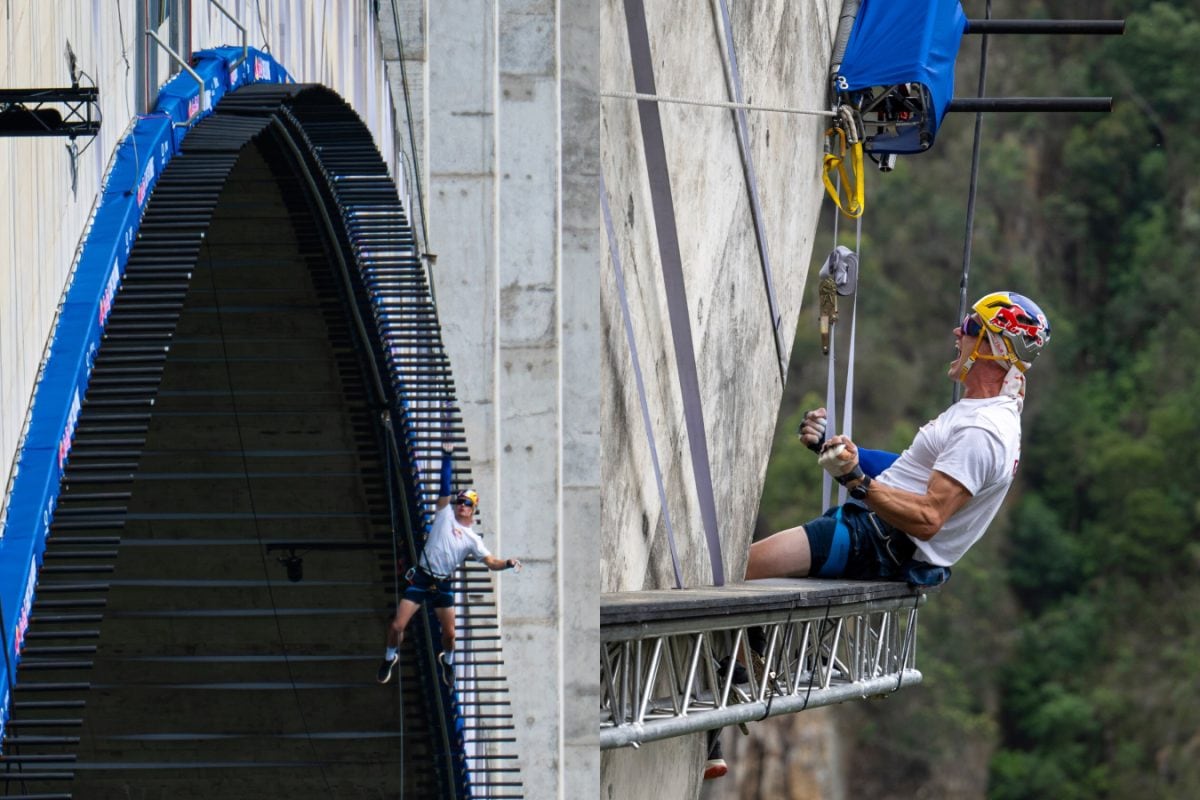
Thomas van Tonder Completes World-First Crossing Beneath Bloukrans Bridge
Thomas van Tonder completed a world-first crossing beneath Bloukrans Bridge, traversing 600 suspended monkey bars over 280 metres in 47 minutes and 37 sec.
Neeraj Yadav, Three-Time Asian Para Games Gold Medallist, Dies By Suicide
Para-athlete Neeraj Yadav has reportedly died by suicide after consuming poison.
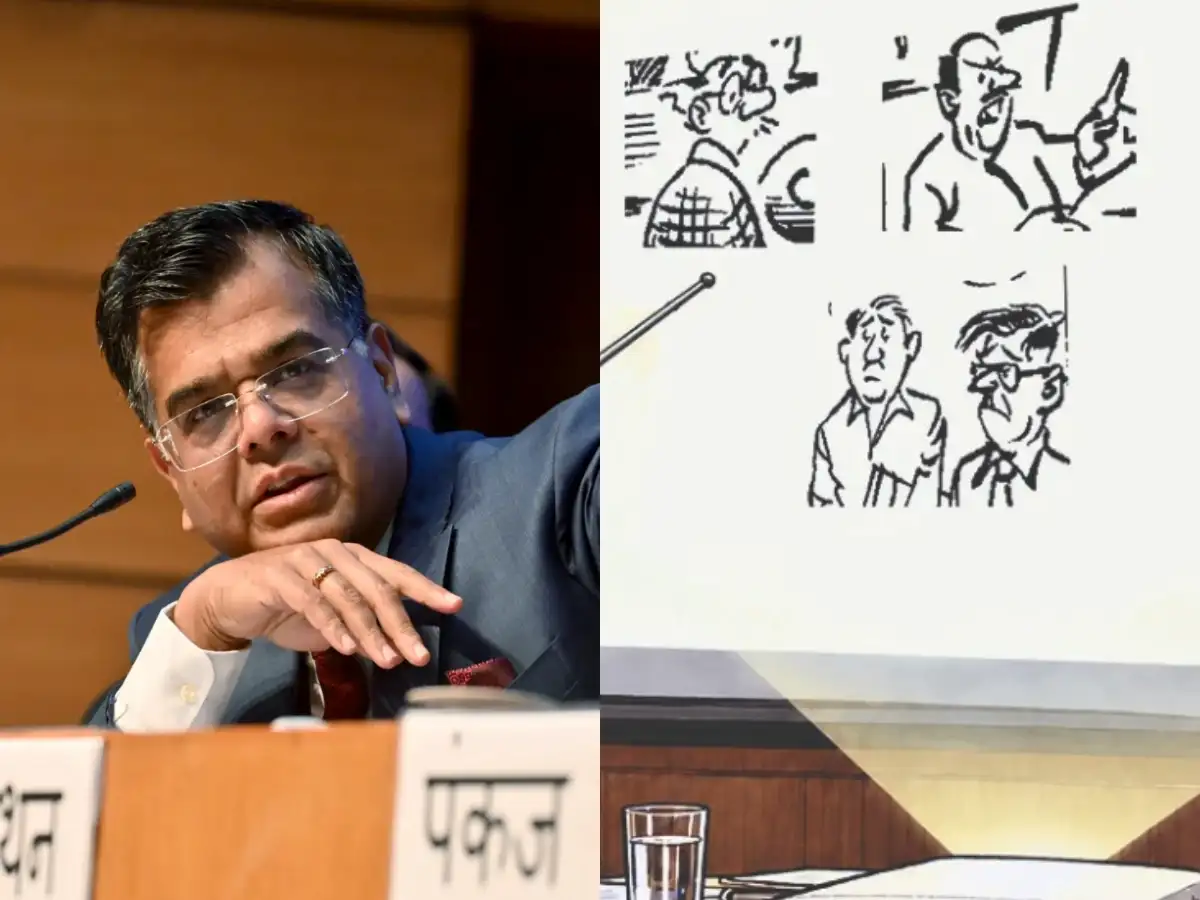
Babus who call late meetings, delay files face scrutiny as cabinet secretary lists 12 types of secretaries
Cabinet Secretary T V Somanathan highlighted issues with bureaucratic efficiency at a recent performance review meeting. He presented a list of problematic behaviors affecting government productivity using cartoons. Somanathan emphasized the necessity of timely decision-making and better communication between ministries. Another topic addressed was the improper usage of ration cards by railway employees.

Delhi starts online liquor booking app: How to order favourite brands without waiting in queues, check process, outlet availability, and key rules
Delhi's latest initiative introduces an online liquor booking app, letting users select their favorite brands and make payments seamlessly. To streamline the process, residents have 48 hours to pick up their orders from one of the 208 designated shops. While home delivery isn’t an option, the app aims to eliminate long queues and enhance transparency.


1st batch of Agniveers retiring soon: What's the retirement money, career options and benefits they will get
By 2026, approximately 18,300 Agniveers will finish their service in the armed forces, marking a pivotal transition. To ease their shift into civilian life, numerous states have initiated job quotas specifically for ex-Agniveers across different uniformed services and police departments. These initiatives stem from the Agnipath scheme launched in June 2022, which focuses on enlisting younger individuals in military roles.
GST clarification on foreign investor brokerage offers sentiment boost, analysts say
The Indian government has clarified that brokerage paid by overseas clients may qualify as an export service. This could help foreign investors avoid the 18% goods and services tax on brokerage fees. Analysts suggest this clarification is sentimentally positive amid significant foreign outflows from Indian stocks. There is ongoing speculation regarding potential cuts in capital gains tax ahead of the federal budget.

'Copying China's manufacturing model may not pay off': Ashwini Vaishnaw hits back with ‘Cope harder’ remark, cites Rs 3 lakh crore PLI returns
Union Minister Ashwini Vaishnaw has hit back at criticism of India's mobile phone manufacturing strategy with a blunt “Cope harder” remark. Citing figures from the government's Production Linked Incentive (PLI) scheme, he said the government paid Rs 19,000 crore in incentives and collected Rs 25,000 crore in direct taxes, alongside Rs 3 lakh crore in GST. His response followed a Bloomberg Opinion video questioning India's iPhone manufacturing model, its dependence on imported components and the cost of government subsidies.