
AP Exclusive: Rohingya say military cut off food in Myanmar
Feb 9, 2018
AP Exclusive: Interviews with recent refugees indicate Myanmar's military and Buddhist residents may be controlling food in order to force the few remaining Rohingya Muslims to leave
NAYAPARA REFUGEE CAMP, Bangladesh — Abdul Goni says the Myanmar government was starving his family one stage at a time.
First, soldiers stopped the Rohingya Muslim from walking three hours to the forest for the firewood he sold to feed his family. Then Buddhist neighbors and seven soldiers took his only cow, which he rented out to fertilize rice fields. Next, he says, they killed his uncle and strung him up on a wire for trying to stop the theft of his buffalos.
By the time Goni saw bodies floating down the local river, of fellow Rohingya killed for illegal fishing, he knew his family would die if they didn't leave. On bad days, they carved the flesh out of banana plant stalks for food. On the worst days, his children ate nothing.
"I felt so sorry that I couldn't give them enough food," the 25-year-old says, tears running down his face, in a refugee camp in Bangladesh, just across the border from Myanmar. "Everything just got worse and worse. ... Day by day, the pressure was increasing all around us. They used to tell us, 'This isn't your land. ... We'll starve you out.'"
First, massacres, rapes and the wholesale destruction of villages by the Myanmar military in western Rakhine state forced nearly 700,000 Rohingya Muslims to flee to Bangladesh, in reprisal for Rohingya militant attacks on Aug. 25. Now, the food supply appears to be another weapon that's being used against the dwindling numbers of Rohingya in Myanmar.
The accounts of hunger could not be independently confirmed, as Myanmar's government does not allow reporters into the northern part of Rakhine state, where most of the Rohingya lived. However, more than a dozen interviews by The Associated Press with the most recent refugees show growing desperation, as the noose tightens around their communities in what U.N. officials have said may be a genocide. The U.N. and human rights groups such as Amnesty International have also warned of increasing hunger among the Rohingya in areas where conflict and displacement have been most rampant.
Repeated calls to Myanmar's military weren't answered, but the Myanmar government denies ethnic cleansing and says it is battling terrorists. Social Welfare Minister Win Myat Aye says the government has been distributing food aid to as many people as possible.
"There are many ways that we have been reaching out to villagers frequently," he says. "And that's why it's not possible that there are people who are completely cut off from food or facing hunger."
The Rohingya Muslims, who have been loathed by Myanmar's Buddhist majority for decades, are locked down in their villages — sometimes even in their homes — and prevented from farming, fishing, foraging, trade and work, the refugees and aid groups say. In other words, they can no longer do what they need to do to eat. While restrictions on freedom of movement and access to food have long been in place, they have tightened dramatically in recent weeks, the AP interviews show.
"It was worse than a jail," says Goni, who finally left Hpa Yon Chaung village in Buthidaung township on Jan. 5. "People at least get food twice a day in jail. ...We were always surrounded, always under stress, always watched."
The hunger the Rohingya faced at home is evident when they come to the Bangladesh camps, where new refugees, especially children and women, suffer from "unbelievable" levels of malnutrition, according to Dr. Ismail Mehr.
"They are definitely coming in starving," says Mehr, who recently returned to the United States from treating refugees in the camps. "We saw the vitamin deficiencies in the children and the adults; we saw ... severely malnourished people who are basically skin and bones. It looked like the pictures from the Nazi camps."
The government's restrictions on access to northern Rakhine make it almost impossible to tell how many people are without food, how widespread the problem is or whether people are dying. The International Committee of the Red Cross, based in Yangon, says that since the end of August it has distributed food to more than 180,000 people in northern Rakhine state. The World Food Program said it was granted access in December and January to field locations, including Buthidaung, Maungdaw and Mrauk U townships, for the first time since August.
The people AP interviewed were mostly from Buthidaung township, where many day laborers, farmers and foragers were hit hard when the restrictions tightened, and Rathedaung township, where the impoverished Muslim communities are often encircled by Buddhists.
Mohammad Ilyas, 55, fled to Bangladesh with only a shirt and a lungi sarong, along with dozens of others from Rathedaung township. He says the military and his neighbors took Rohingya rice paddies and rice stockpiles.
"Sometimes we stayed hungry for a day, two days, even five days," Ilyas, who is from Ah Nauk Pyin village, says. "The Myanmar government doesn't want a single Muslim to remain there. They want to erase us completely."
Activists, aid groups and researchers say Myanmar squeezed the Rohingya by severely hampering many of the humanitarian operations that were crucial for their survival. Food aid was further disrupted by violence in 2016 and the bloodshed after Rohingya insurgents staged an unprecedented wave of 30 attacks on security posts across Rakhine state in August and killed at least 14 people.
Even before August, aid agencies in 2017 predicted a spike in severe malnutrition in children. In a report released today, Amnesty International details evidence of forced starvation by the military, including stopping the Rohingya from harvesting their rice fields in November and December. The Food and Agriculture Organization has also warned that the lack of access to food and fuel is adding to hunger in Myanmar.
Buddhists in Rakhine state began blocking food aid when they noticed that the Muslims were getting more than they were, according to Thomas MacManus, a specialist in international state crimes at Queen Mary University of London who has researched the Rohingya since 2012. Tightened curfews meant people couldn't harvest shrimp or rice, tend to their cattle, gather firewood or fish. Since August, an almost 24-hour-a-day curfew means no one is leaving their villages, he says.
MacManus says the Myanmar government has regularly employed a scorched-earth strategy that has denied food to other ethnic groups it has battled, including the Shan and the Kachin.
"What they're trying to do is design a situation where life just doesn't become livable anymore," he says. "You just block off an area and they can't get material or food. It is a time-honored way of doing genocide, and one of the easiest ways because you can do it slowly and without too much attention."
In this war on food, rice paddies are a major battlefield.
Last fall the Myanmar military stopped farmer Rashid Ahmed, 60, from harvesting his rice fields, which were about a 15-minute walk outside a village he could no longer leave. He stood by helpless as his Buddhist neighbors, assisted by the military, collected his rice and took his six buffalos. Without food, he says, he could not stay.
"It would have been better if they had just shot us instead of starving us out," says Ahmed, thin but wiry from years of field work, as he sat in a long hut with dozens of other new arrivals to the Bangladesh camps. "What they did was slower; it was crueler. They left us to imagine the worst, to wake up every day and think about what would happen when there was no food at all."
His family ate so many banana stalks that by the time they left, all 20 plants in his compound were gone.
"I always grew my own food, and now suddenly I couldn't feed myself or my family," says Ahmed, who is from Zay Di Taung village.
After Aug. 25, when he was trapped in his village, Mohammad Rafique, 25, a day laborer from Hpa Yon Chaung, survived on rice he'd stockpiled in his home. When that ran out in October, he sold family jewelry to get rice. When the money was gone, he begged from neighbors who still had rice stockpiles, often going without food so his children could eat.
"The market was closed; no one was harvesting," he says. "I was eating only once a day, sometimes not at all. ... I felt shame that I had to beg for food, but I had no other choice."
Without rice, things got very bad for the Rohingya very quickly.
Aid groups couldn't reach them regularly. The Buddhists blockaded their villages and wouldn't hire them; they put an embargo on Rohingya goods and even stopped selling them phone cards so they couldn't communicate with the outside world, according to aid groups. The Muslims ate through their stockpiles; they borrowed from friends and neighbors; then they ran out.
Food became so hard to get for Mohammad Hashim, 25, a wood cutter from Pyin La village, that he and his family sometimes ate broken rice grains normally given to chickens.
"We sometimes went two days without food," Hashim says. "They treated us like animals."
Goni says that of the 500 families who lived near him, around 150 have fled to Bangladesh. Everyone else wants to leave, he said, but they either don't have enough money or are too old.
"Some families have enough food because they stockpiled rice, but that can't last forever," he says. "If they can't get to Bangladesh, and they run out of rice, the only option is death."
___
Associated Press video journalist Rishabh Jain contributed to this report.
___
Foster Klug has covered Asia for the AP since 2005. Follow him at twitter.com/apklug
MORE NEWS

In Graphics: How the cost of Iran war piled up
As crude oil prices rose, India paid more for this critical import even though it got less of it, data shows. Trade with major partners in the region remains affected, households and companies are staring at high inflation, and the govt is footing an elevated subsidy bill.

Michael Douglas and Kathleen Turner romance: Basic Instinct actor admits secret relationship; here's who he was married to at the time
Michael Douglas has confirmed that he and Kathleen Turner had a secret romantic relationship while filming Romancing the Stone. The affair began in 1984 when Douglas was separated from his wife but still married. Both actors denied their romance publicly for over four decades to protect his family. Their relationship ended when Diandra, his wife, interfered after visiting the filming location in Mexico.

Fuel subsidies may top $1 trillion: UN
The UNDP analysis - which looked at data from the World Bank, the International Monetary Fund and the International Energy Agency - found the number of countries deploying different relief measures nearly doubled between April and September as the war's impact continued.

Fresh protest at Jantar Mantar on October 10 if CEC Gyanesh Kumar does not resign: CJP leader Dipke
The Cockroach Janta Party’s Abhijeet Dipke has announced a protest at Delhi’s Jantar Mantar on October 10 if Chief Election Commissioner Gyanesh Kumar does not resign.

Bonded warehouses may face 24-hour discrepancy reporting, five-year digital records under proposed customs overhaul
The government is considering tighter compliance rules for bonded warehouses, including a 24-hour deadline to electronically report shortages or discrepancies and mandatory digital records tracking goods from receipt to clearance, transfer or export. The proposed framework also envisages five-year record retention, monthly reporting and insurance against potential customs duty liabilities.

16 states await SSR, Hegde case, Attorney General opinion at centre of ECI rift
Both Election Commissioners -- Sukhbir Singh Sandhu and Vivek Joshi -- are learnt to have interpreted that the AG opinion and Hegde case inputs favoured resuming the decades-old convention of annual SSR, which was paused after 2024, skipped in 2025 and is yet to be announced in 2026, already late given the usual announcement timeline of May-July.


Adani Group committed to investment plans of over ₹6 lakh crore in Maharashtra across energy, airports and infra
Adani Group has announced plans to invest over ₹6 lakh crore in Maharashtra across multiple sectors. The investments are aimed at aiding Maharashtra's goal of becoming a $1 trillion economy by 2030. The group has committed to significant infrastructure projects, including the management of Mumbai's airports and renewable power sourcing. Additionally, the Dharavi Redevelopment Project will transform the area with modern housing and economic opportunities.

India extends RoDTEP export support till Dec 2026; raises insurance cover to 95% amid West Asia disruption
The government has extended the RoDTEP scheme for exporters until December 31, 2026, while raising insurance risk coverage to 95% for eligible shipments to specified regions amid geopolitical and logistics disruptions in West Asia. Existing RoDTEP rates and value caps will remain unchanged under the extension, the commerce ministry said.
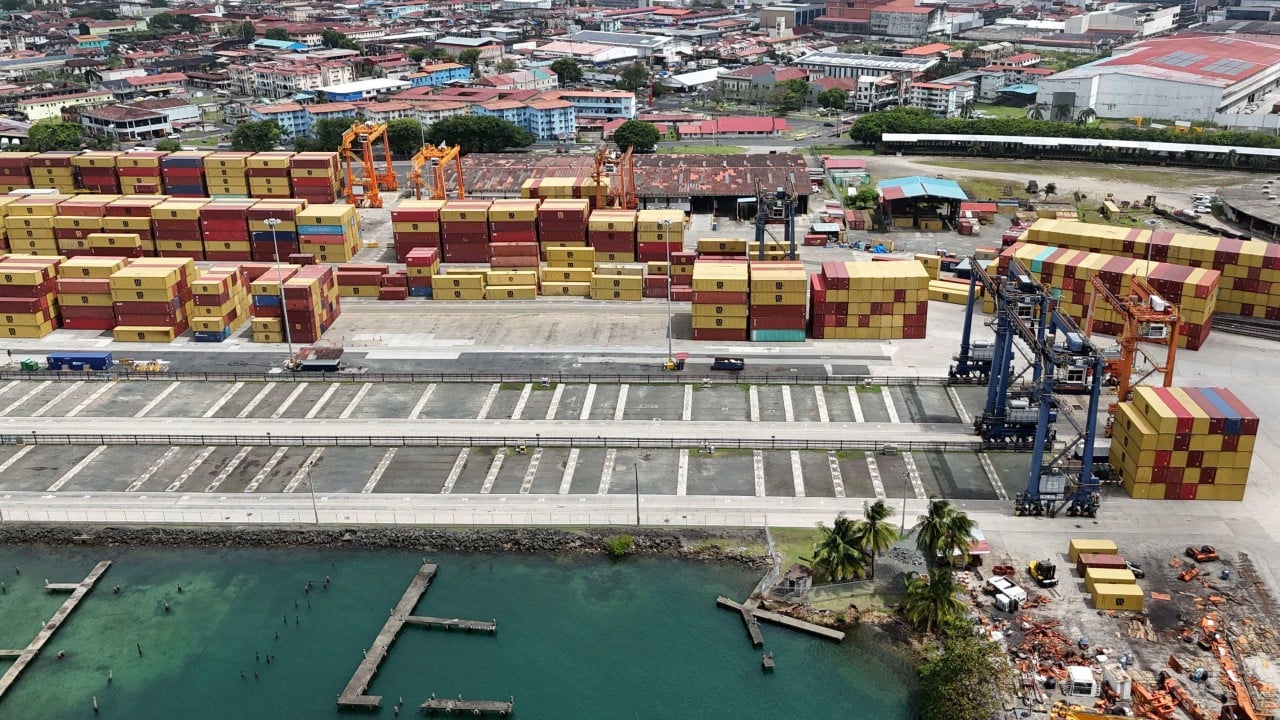
Panama auditor targets ex-port regulators and CK Hutchison’s executives in canal probe
Panama’s comptroller general said on Friday that his office would send prosecutors more audit material on former executives of CK Hutchison’s local subsidiary next week, as part of a criminal investigation into the Hong Kong conglomerate’s annulled Panama Canal ports concession. Speaking at the Atlantic Council in Washington, Anel Flores said prosecutors had requested documents concerning Panama Ports Company (PPC), the operator of the Balboa and Cristobal terminals at either end of the canal...

Gujarat approves 50% vehicle tax concession for scrapping
As per the notification recently issued by the Ports and Transport Department regarding this decision, transport and non-transport vehicles manufactured as per Mass Emission Standards Bharat Stage-I (BS-I) and earlier standards have been covered under this provision. In addition, a concession has also been provided for all medium and heavy goods motor vehicles as well as all medium and heavy passenger motor vehicles manufactured as per BS-II standards.
Gujarat approves 50% vehicle tax concession for scrapping
As per the notification recently issued by the Ports and Transport Department regarding this decision, transport and non-transport vehicles manufactured as per Mass Emission Standards Bharat Stage-I (BS-I) and earlier standards have been covered under this provision. In addition, a concession has also been provided for all medium and heavy goods motor vehicles as well as all medium and heavy passenger motor vehicles manufactured as per BS-II standards.