
As Sri Lanka mourns, Islamic State claims Easter bombings
Apr 23, 2019
As the death toll from the Easter bombings in Sri Lanka rose to 321, the Islamic State group claimed responsibility and released images that purportedly show the attackers
COLOMBO, Sri Lanka — As the death toll from the Easter bombings in Sri Lanka rose to 321 on Tuesday, the Islamic State group claimed responsibility and released images that purported to show the attackers, while the country's prime minister warned that several suspects armed with explosives are still at large.
Another top government official said the suicide bombings at the churches, hotels and other sites were carried out by Islamic fundamentalists in apparent retaliation for the New Zealand mosque massacres last month that a white supremacist has been charged with carrying out.
The Islamic State group, which has lost all the territory it once held in Iraq and Syria, has made a series of unsupported claims of responsibility and Prime Minister Ranil Wickremesinghe said that investigators were still determining the extent of the bombers' foreign links.
Sri Lankan authorities have blamed the attacks on National Towheed Jamaar, a little-known Islamic extremist group in the island nation. Its leader, alternately known as Mohammed Zahran or Zahran Hashmi, became known to Muslim leaders three years ago for his incendiary speeches online.
The IS group's Aamaq news agency released an image purported to show the leader of the attackers, standing amid seven others whose faces are covered. The group did not provide any other evidence for its claim, and the identities of those depicted in the image were not independently verified.
Meanwhile, in an address to Parliament, Ruwan Wijewardene, the state minister of defense, said "weakness" within Sri Lanka's security apparatus led to the failure to prevent the nine bombings.
"By now it has been established that the intelligence units were aware of this attack and a group of responsible people were informed about the impending attack," Wijewardene said. "However, this information has been circulated among only a few officials."
In a live address to the nation late Tuesday, Sri Lanka President Maithripala Sirisena said he also was kept in the dark on the intelligence about the planned attacks and vowed to "take stern action" against the officials who failed to share the information. He also pledged "a complete restructuring" of the security forces.
Wijewardene said the government had evidence that the bombings were carried out "by an Islamic fundamentalist group" in retaliation for the March 15 mosque shootings in Christchurch, New Zealand, that killed 50 people, although he did not disclose what the evidence was.
The office of New Zealand Prime Minister Jacinda Ardern issued a statement responding to the Christchurch claim that described Sri Lanka's investigation as "in its early stages."
"New Zealand has not yet seen any intelligence upon which such an assessment might be based," it said. An Australian white supremacist, Brenton Harrison Tarrant, was arrested in the Christchurch shootings.
As Sri Lanka's leaders wrangled over the apparent intelligence failure, security was out in force for a national day of mourning Tuesday.
In the city of Negombo, Cardinal Malcolm Ranjith, the archbishop of Colombo, held a funeral service in the courtyard of St. Sebastian Church, where 110 people were killed in one of the bombings. Hundreds of military and police personnel attended the service, and nuns, priests and community members were frisked as they arrived.
Because of the toll, the service lasted several hours, with caskets brought in three and four at a time, accompanied by sobbing relatives. The coffins were then taken to a mass burial site and covered by three earth movers.
Elsewhere in Negombo, where soldiers stood every few feet, private memorials were held with tents set up on lawns for guests.
Also Tuesday, the military employed special police powers that it last used during a devastating civil war that ended in 2009. Among the 40 people arrested on suspicion of links to the bombings were the driver of a van allegedly used by the suicide attackers and the owner of a house where some of them lived.
A nationwide curfew began at 9 p.m.
The near-simultaneous bombings Sunday at three churches and three luxury hotels, as well as three related blasts, left 321 dead and 500 wounded, representing Sri Lanka's deadliest violence in a decade. The U.N. children's agency said the dead included at least 45 children.
In some places, entire families fell victim. On Easter, as they did every Sunday, Berlington Joseph Gomez and his wife, Chandrika Arumugam, went to church at Colombo's St. Anthony's Shrine. And as always, they brought their three sons: 9-year-old Bevon, 6-year-old Clavon and 11-month-old Avon.
Two days later, they were all being mourned by dozens of neighbors gathered at the modest home of Berlington's father, Joseph Gomez.
"All family, all generation, is lost," Gomez said.
Word from international intelligence agencies that the local group National Towheed Jamaar was planning attacks apparently didn't reach the prime minister's office until after the massacre, exposing the continuing turmoil in the highest levels of government.
On April 11, Priyalal Disanayaka, the deputy inspector general of police, signed a letter addressed to directors of four Sri Lankan security agencies, warning them a group was planning a suicide attack.
The intelligence report attached to his letter, which has circulated on social media, identified the group as National Towheed Jamaar and its leader as Zahran Hashmi, and said it was targeting "some important churches" in a suicide attack that was planned to take place "shortly."
The report identified six individuals likely to be involved in the plot, including someone it said had been building support for Zahran and was in hiding since the group clashed with another religious organization in 2018.
On Monday, Sri Lanka's health minister held up a copy of the intelligence report while describing its contents, spurring questions about what police had done to protect the public. It was not immediately clear what steps were taken by any of these security directors. Disanayaka did not answer calls or messages seeking comment.
Heightened security was evident at an international airport outside the capital where security personnel patrolled with explosives-sniffing dogs, checked car trunks and questioned drivers. Police also ordered that anyone leaving a parked car unattended must leave a note with their phone number on it. Postal workers were not accepting pre-wrapped parcels.
A block on most social media since the attacks has left a vacuum of information, fueling confusion and giving little reassurance the danger had passed. Even after an overnight curfew ended, the streets of central Colombo were mostly deserted Tuesday and shops closed as armed soldiers stood guard.
Prime Minister Ranil Wickremesinghe said he feared the massacre could unleash instability and he vowed to "vest all necessary powers with the defense forces" to act against those responsible. At a later news conference, he warned that more militants and explosives were "out there."
Authorities said they knew where the group trained and had safe houses, but did not identify any of the seven suicide bombers, whose bodies were recovered, or the other suspects taken into custody. All seven bombers were Sri Lankans, but authorities said they strongly suspected foreign links.
The history of Buddhist-majority Sri Lanka, a country of 21 million including large Hindu, Muslim and Christian minorities, is rife with ethnic and sectarian conflict.
In the nation's 26-year civil war, the Tamil Tigers, a powerful rebel army known for using suicide bombers, had little history of targeting Christians and was crushed by the government in 2009. Anti-Muslim bigotry fed by Buddhist nationalists has swept the country recently.
In March 2018, Buddhist mobs ransacked businesses and set houses on fire in Muslim neighborhoods around Kandy, a city in central Sri Lanka that is popular with tourists.
After the mob attacks, Sri Lanka's government also blocked some social media sites, hoping to slow the spread of false information or threats that could incite more violence.
Sri Lanka has no history of Islamic militancy. Its small Christian community has seen only scattered incidents of harassment.
___
Associated Press journalists Bharatha Mallawarachi, Jon Gambrell and Rishabh Jain in Colombo, Gemunu Amarasinghe in Negombo, Sri Lanka and Sarah El Deeb in Beirut contributed.
___
Follow Emily Schmall on Twitter @emilyschmall
MORE NEWS
US Federal Reserve Interest Rate prediction: Fed experts are making bold forecast
US Fed Interest Rate Forecast: Benchmark 10-year Treasury note yield touched a 24-year high before falling back to around 5.24 per cent. Higher long-term bond yields show market participants expect strong economic growth and a higher Fed policy rate

OpenAI sacks 3 researchers over leaking 'sensitive' info, ChatGPT maker alerts over 100 organizations about rogue AI agent activity
ChatGPT maker has been conducting a broad review of the activities of its AI models after the accidental hacking of Hugging Face. OpenAI is searching through roughly 50 petabytes of data as it works to understand the full scope of its rogue agent activity.

Donald Trump's closest adviser Stephen Miller's wife Katie Miller cyberstalking case: What has happened as Massachusetts man charged by Federal prosecutors
Katie Miller is a conservative podcaster who is married to Stephen Miller, one of President Donald Trump's closest advisers.

Nike stock plunges after shocking earnings report, company plans lay offs
Nike earnings statement shows that the company projected sales in the current fiscal year would fall by "high-single digits". Nike reported a two percent drop in quarterly profits to $712 million. Revenues fell four percent to $11.2 billion for the quarter ending August 31, the first quarter of Nike's fiscal 2027.

Nike stock falls after revenue miss, NKE forecasts 2027 revenue decline and announces layoffs - here's what investors need to know
Nike stock after NKE earnings: Nike stock is down after the company reported a quarterly revenue miss and forecast a high-single-digit revenue decline for fiscal 2027. Nike also announced layoffs as part of a restructuring plan expected to generate about $2.5 billion in savings through fiscal 2031.
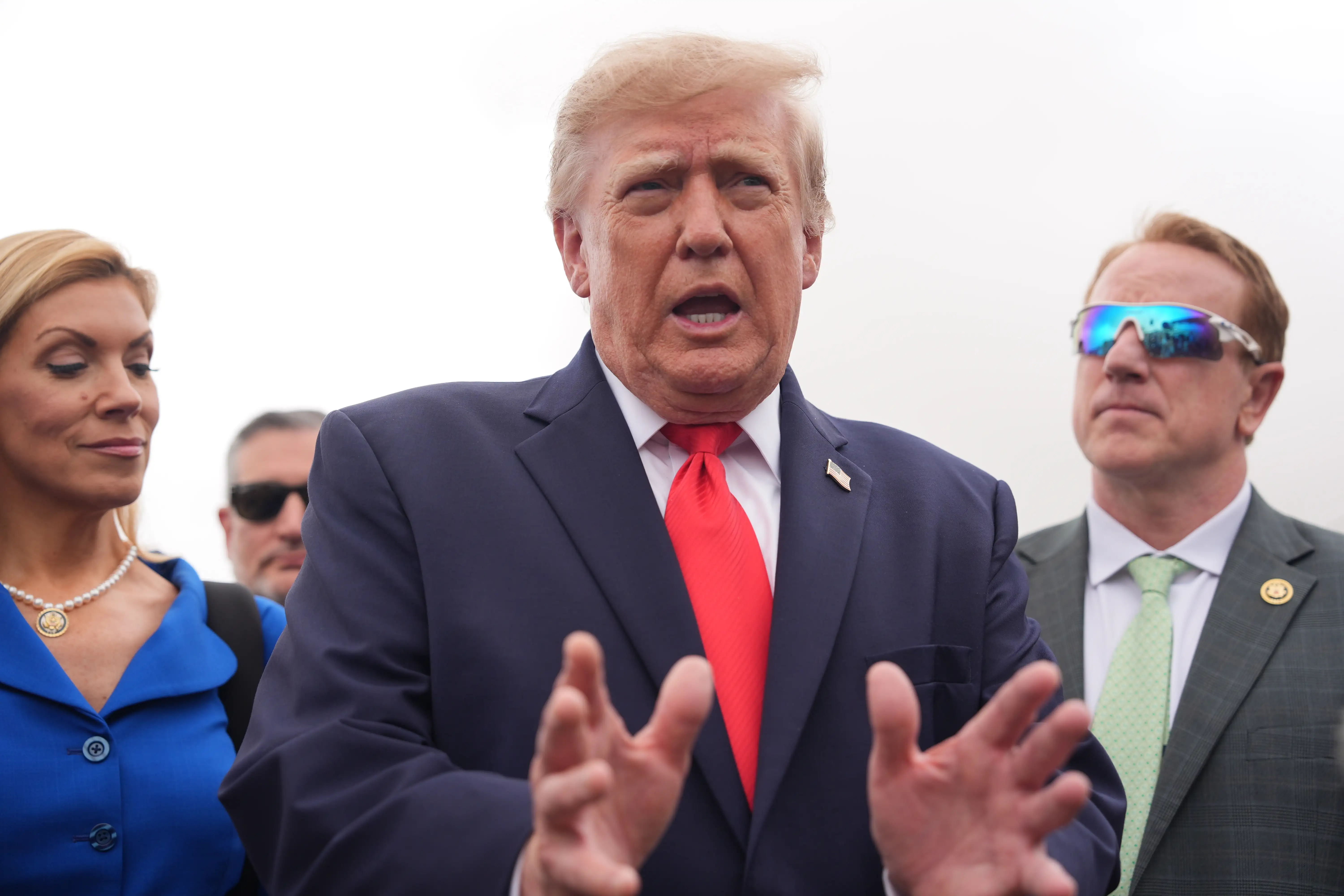
US midterm elections 2026: Trump's approval rating falls to record low as 2026 Midterms near
A recent AP-NORC poll shows Donald Trump's approval rating has plummeted to 31%, reflecting increasing public dissatisfaction. With midterm elections on the horizon, voters voiced their worries about the economy and rising prices, emphasizing 17% approval for Trump's management of cost of living. In response, White House spokesperson Davis Ingle defended Trump’s record by pointing out his significant policy achievements that could influence the forthcoming elections in November 2026.

Bitcoin price target: Why Citi raised its BTC USD forecast to $113,000 from $82,000 as the cryptocurrency rebounds
Bitcoin (BTC USD) price target: Citigroup has increased its 12-month Bitcoin price target from $82,000 to $113,000 due to favorable market conditions. The bank expects $5 billion in crypto investment product inflows over the next year as advisers increase allocations. Spot Bitcoin ETFs have started seeing renewed inflows after significant outflows earlier this year.

US Midterm Elections 2026: Here’s how to vote, register and cast your ballot
US Midterm Elections 2026: Voters need to be aware of registration deadlines and voting rules that vary by state. The 2026 U.S. midterm elections are scheduled for November 3, impacting numerous federal and state positions. Early voting and absentee ballot options are available depending on state regulations. Voter ID requirements must also be consulted to ensure compliance with local laws. Checking state election resources will provide the latest updates on procedures and deadlines.
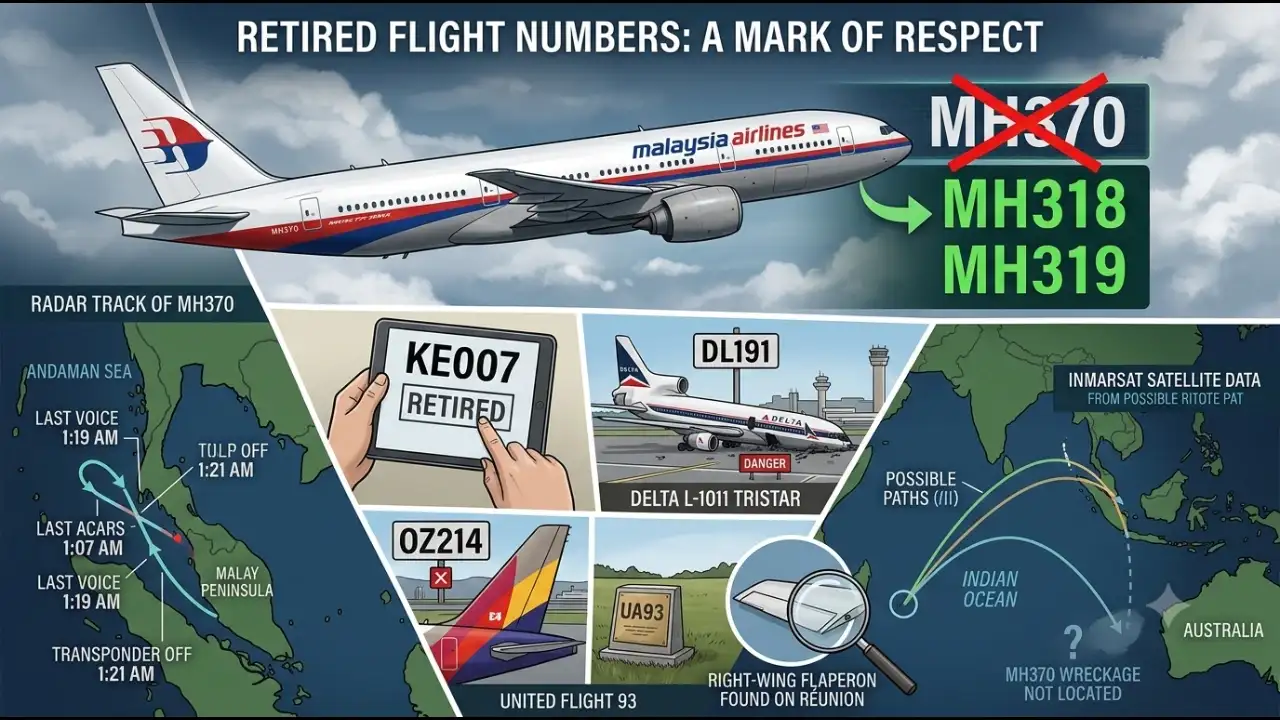
Malaysia Airlines stopped using flight code MH370 after the plane disappeared with 239 people aboard - why airlines retire flight numbers after aviation tragedies
Malaysia Airlines MH370: Malaysia Airlines changed flight numbers MH370 and MH371 following the aircraft's disappearance in March 2014. The aircraft, carrying 239 people, vanished during its journey from Kuala Lumpur to Beijing. Extensive search operations were conducted in the Indian Ocean, but the main wreckage remains undiscovered.
Social Security claiming age names could change: Will your benefits change? What new labels for ages 62, 67 and 70 really mean
Congress has cleared a bill that would give Social Security’s key claiming ages new names. The proposal would call 62 the “minimum monthly benefit age,” 67 the “standard monthly benefit age,” and 70 the “maximum monthly benefit age.” The ages themselves would not change. The goal is to make the benefit trade-offs easier to understand before workers decide when to claim.