
Police use tear gas against Indian farmers marching to New Delhi to demand guaranteed crop prices
Feb 13, 2024
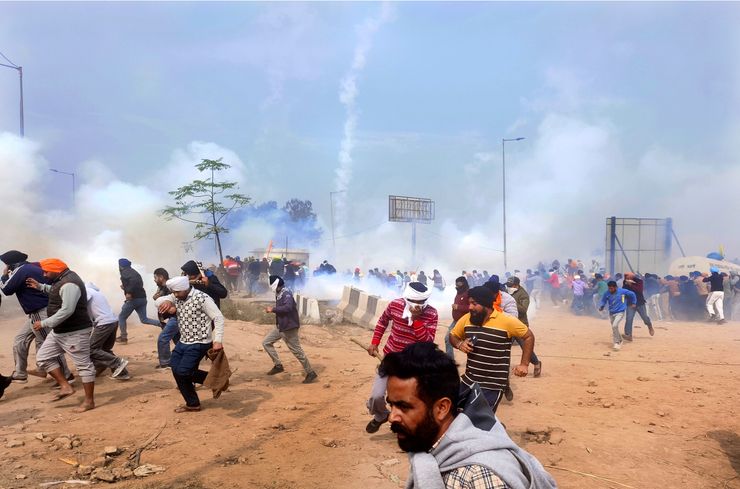
Indian police have fired tear gas and detained some farmers who tried to break barricades blocking their way to New Delhi in a protest march
NEW DELHI (AP) — Indian police on Tuesday used tear gas and detained some farmers who clashed with them and tried to break barricades blocking their way to New Delhi to demand
guaranteed crop prices in a repeat of 2021 protests
, when they camped on the capital's outskirts for more than a year.Police dropped tear gas canisters on the protesting farmers from a drone at one of the border points in northern Haryana state that leads to New Delhi, where tens of thousands of farmers are headed on tractors and trucks.
Police have sealed multiple entry points into the capital with barriers of giant metal containers, barbed wire, spikes and cement blocks. The government has banned large gatherings in the capital and suspended internet service in some districts of neighboring Haryana state to prevent communication among the protesters.
The demonstration comes more than two years after Prime Minister Narendra Modi
withdrew controversial agriculture laws
that had triggeredthe earlier protests,
in which tens of thousands of farmers camped outside the capital through a harsh winter and a devastating COVID-19 surge.The farmers, who began their march in northern Haryana and Punjab states, are asking for legislation that will guarantee a minimum support price for all farm produce. The government protects agricultural producers against any sharp fall in farm prices by announcing a minimum purchase price for certain essential crops at the beginning of the sowing season, taking into account the cost of production.
Farmers are also pressing the government to meet its promise to double their income and waive their loans. They say they will protest in New Delhi until their demands are met.
The withdrawal of the agricultural laws in November 2021 was seen as a
major retreat
by the Modi government, which was shocked in January that year when tens of thousands of farmersstormed the historic Red Fort in New Delhi.
After withdrawing the laws, the government said it would set up a panel of farmers and government officials to find ways to ensure support prices for all farm produce. Multiple meetings since then have made no progress.
“We do not want to break any barricades. We want a resolution of our issues through dialogue. But if they (the government) do nothing, then what will we do? It is our compulsion,” Sarwan Singh Pandher, a leader of one of the farmer groups, told reporters Tuesday.
Pandher said talks between farm leaders and government ministers on Monday failed to produce any consensus on their key demands and the government refused to make a decision.
The current march called “Delhi Chalo," or “March to Delhi," comes just months before a national election in which Modi is widely expected to win a third term.
The protests could pose a significant challenge for Modi and his governing Bharatiya Janata Party as farmers form the most influential voting bloc in India and politicians have long considered it unwise to alienate them. The stakes are high in Haryana and Punjab, where farmers form a sizable population, as the two states send 23 lawmakers to India’s lower house of Parliament.
India's opposition Congress party said it will address the farmers’ demand for a law ensuring a minimum support price if it is voted into power in the upcoming national election.
“This is the first guarantee of Congress on the path of justice," party leader Rahul Gandhi wrote on X.
Some farmer and trade unions have also announced a countrywide rural strike on Friday.
MORE NEWS
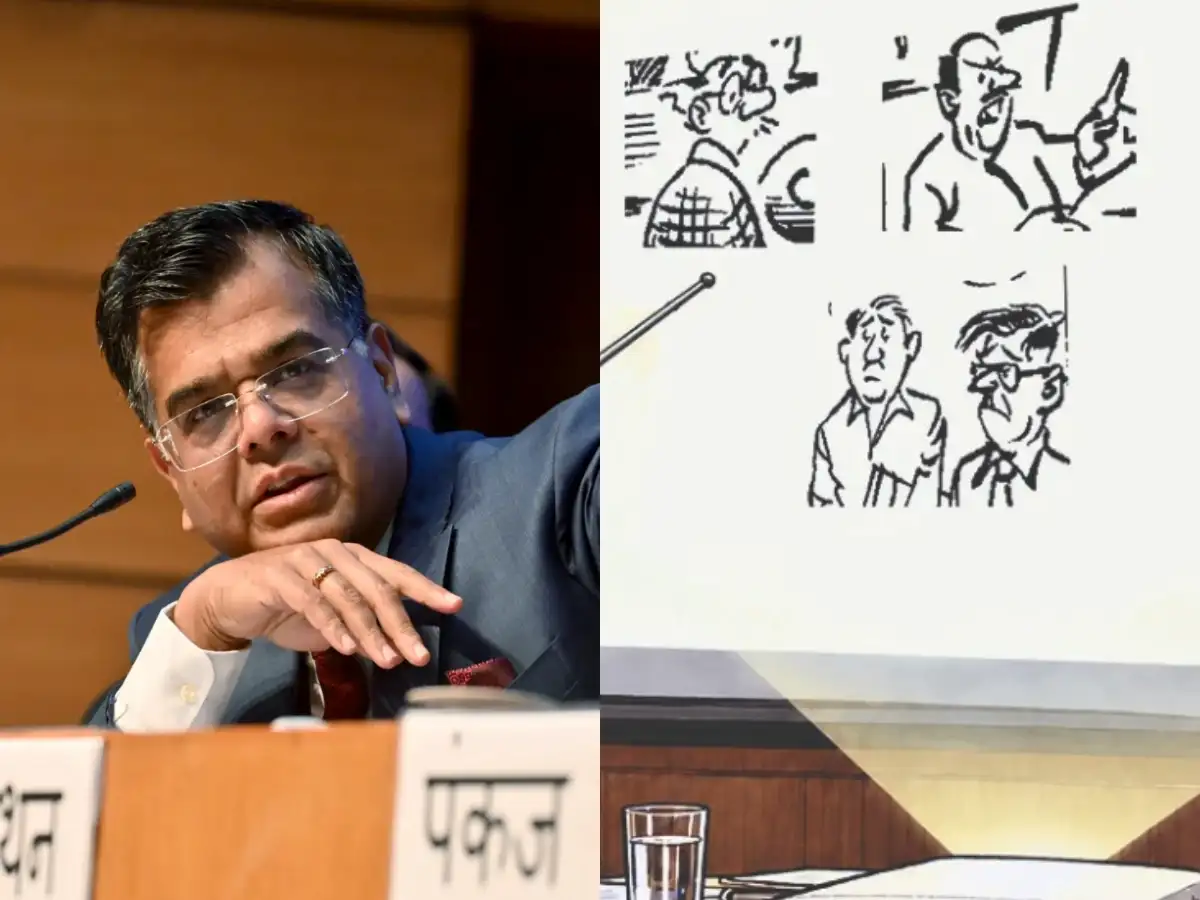
Babus who call late meetings, delay files face scrutiny as cabinet secretary lists 12 types of secretaries
Cabinet Secretary T V Somanathan highlighted issues with bureaucratic efficiency at a recent performance review meeting. He presented a list of problematic behaviors affecting government productivity using cartoons. Somanathan emphasized the necessity of timely decision-making and better communication between ministries. Another topic addressed was the improper usage of ration cards by railway employees.
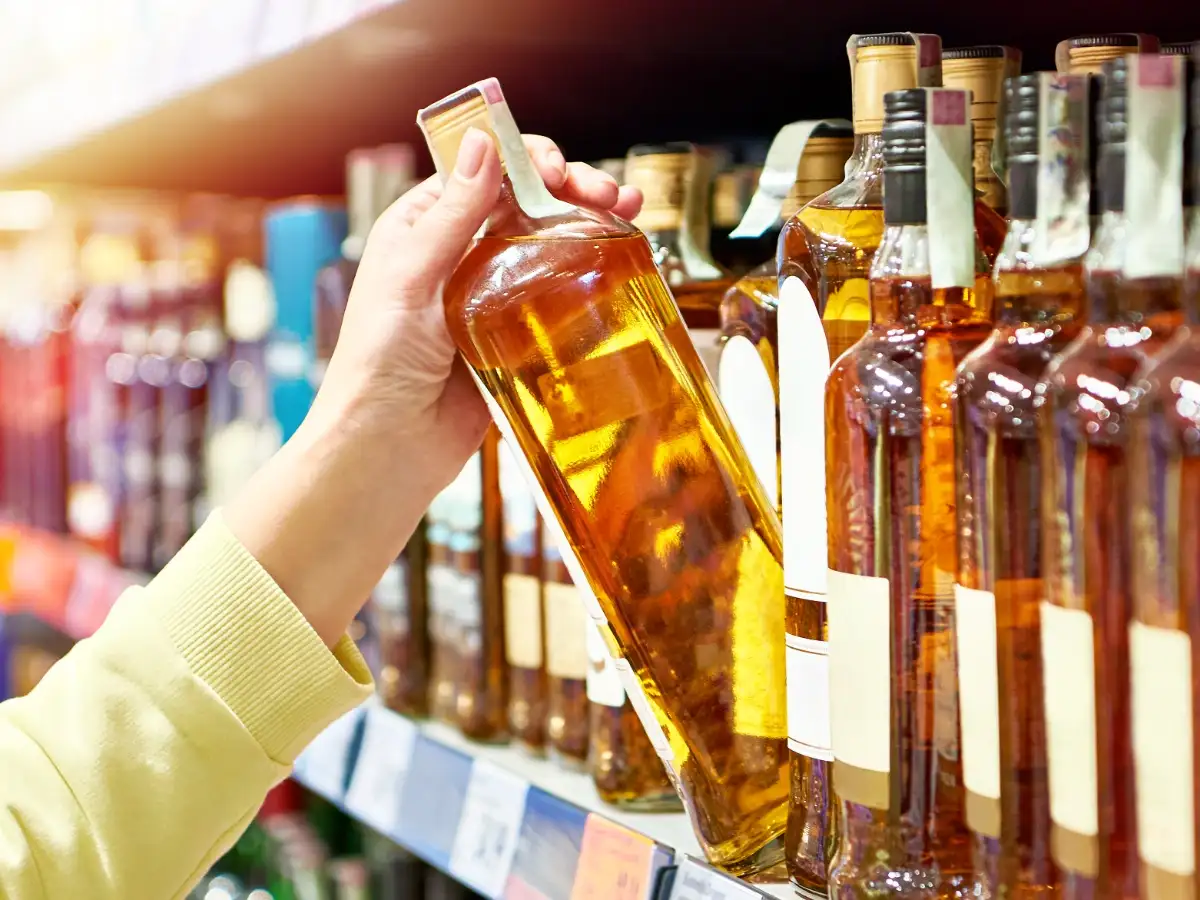
Delhi starts online liquor booking app: How to order favourite brands without waiting in queues, check process, outlet availability, and key rules
Delhi's latest initiative introduces an online liquor booking app, letting users select their favorite brands and make payments seamlessly. To streamline the process, residents have 48 hours to pick up their orders from one of the 208 designated shops. While home delivery isn’t an option, the app aims to eliminate long queues and enhance transparency.


1st batch of Agniveers retiring soon: What's the retirement money, career options and benefits they will get
By 2026, approximately 18,300 Agniveers will finish their service in the armed forces, marking a pivotal transition. To ease their shift into civilian life, numerous states have initiated job quotas specifically for ex-Agniveers across different uniformed services and police departments. These initiatives stem from the Agnipath scheme launched in June 2022, which focuses on enlisting younger individuals in military roles.
GST clarification on foreign investor brokerage offers sentiment boost, analysts say
The Indian government has clarified that brokerage paid by overseas clients may qualify as an export service. This could help foreign investors avoid the 18% goods and services tax on brokerage fees. Analysts suggest this clarification is sentimentally positive amid significant foreign outflows from Indian stocks. There is ongoing speculation regarding potential cuts in capital gains tax ahead of the federal budget.

'Copying China's manufacturing model may not pay off': Ashwini Vaishnaw hits back with ‘Cope harder’ remark, cites Rs 3 lakh crore PLI returns
Union Minister Ashwini Vaishnaw has hit back at criticism of India's mobile phone manufacturing strategy with a blunt “Cope harder” remark. Citing figures from the government's Production Linked Incentive (PLI) scheme, he said the government paid Rs 19,000 crore in incentives and collected Rs 25,000 crore in direct taxes, alongside Rs 3 lakh crore in GST. His response followed a Bloomberg Opinion video questioning India's iPhone manufacturing model, its dependence on imported components and the cost of government subsidies.



Ministry of Civil Aviation reviews Cyclone 'Arnab' situation, operational readiness
Cyclonic Storm Arnab is expected to intensify as it approaches the Andhra Pradesh coast on October 28. The Union Ministry of Civil Aviation has organized a meeting to ensure aviation safety during this period. Flights to and from coastal regions, including Visakhapatnam, Vijayawada, and Rajahmundry, are facing significant disruptions. Airlines have been advised to assist passengers and adhere to operational guidelines amid adverse weather.