
Pakistan's Ahmadis fearful as leaders bow to extremists
Sep 28, 2018
Fears mount for Pakistan's Ahmadiyya minority after new government bows to Islamic hard-liners
ISLAMABAD — Pakistan's embattled Ahmadiyya minority enjoyed a brief moment of hope earlier this month when one of its own, a U.S.-based Princeton economist, was appointed to an economic advisory council.
But the backlash from Islamic hard-liners, which led newly elected Prime Minister Imran Khan to quickly rescind the appointment under political pressure, has only underscored the Ahmadis' fraught position in the conservative, Muslim-majority country.
Ahmadis believe another Islamic prophet, Ahmad, appeared in the 19th century, a view at odds with the fundamental Islamic principle that Muhammad was the final messenger sent by God. Islamic hard-liners view them as heretics, and have successfully pressured past governments to pass draconian laws against the community. Ahmadis have also long been targeted by Islamic extremists, and are shunned by many mainstream Muslims.
Religious parties have never done well in Pakistan's elections, and last July's balloting was no exception. But the ability of hard-line clerics to organize mass rallies and incite violence against political opponents has often forced even liberal governments to bow to their demands.
Khan, a cosmopolitan former cricket star who ran on a populist platform of combatting corruption, is the latest leader to give in.
In early September, he appointed Atif Mian, a respected Princeton professor of economics, public policy and finance, to an economic advisory council. Just 72 hours later, Khan sought Mian's resignation, which the economist announced on Twitter, saying he was stepping down "for the sake of the stability of the government."
"The government was facing a lot of adverse pressure regarding my appointment from the Mullahs (Muslim clerics) and their supporters," Mian said.
Several religious parties took part in this year's election, but as in previous voting, they garnered less than 10 percent of the popular vote. However, they have allies among all the major parties who rallied against the appointment, even introducing a resolution in the upper house of parliament to condemn the move.
Leading the charge was cleric Khadim Rizvi's political party, which won three provincial seats in southern Sindh province by campaigning on a single issue — the finality of the Prophet Muhammad. They also support a harsh blasphemy law that prescribes death for anyone found guilty of insulting Islam.
Rizvi's power was on display last November when he mobilized mass rallies over proposed electoral reforms that neglected to mention Islam's prophet. The two-week demonstration paralyzed the capital, Islamabad, leading to the sacking of a government minister and the legislation's revision. It may have also contributed to the ruling party's defeat in July.
The firebrand cleric had threatened to bring his supporters into the streets again over Mian.
"The finality of the prophet and the blasphemy law is the most potent weapon because the mullahs know that no one can dare touch it," said Zahid Hussain, a defense analyst and the author of two books on militancy in Pakistan.
Mian had at least one defender. Information Minister Fawad Chaudhry sought to stem the controversy by pointing out that the position had nothing to do with religion or lawmaking, and that the newly elected government wanted to be inclusive.
"When I stood up and defended the appointment of Mian, I looked behind me and no one was there," Chaudhry said in an interview this week. "The problem is that you know the opposition will partner with the violence. You don't get the kind of support you need."
Despite their poor showing at the polls, the religious parties are "very effective," Chaudhry said. "They have the capacity to kill you. Extremism here is a reality. We cannot say it isn't," he said.
Moeed Yusuf, a scholar at the Washington-based U. S. Institute of Peace, said "Pakistani society has become deeply intolerant and many more than we think sympathize with such views." Mian's resignation "shows the perceived power of the Islamists and the reluctance of both state and society to stand up to them given the costs they fear — including physical harm."
Mian's abrupt resignation came as a major blow to the 500,000-strong Ahmadi community, which already feels persecuted and afraid. Many Ahmadis worry they could now lose their jobs, and say their children are often denied admission to certain schools.
Pakistan changed its constitution in 1974 to declare Ahmadis non-Muslims. Ten years later, the government declared it a criminal offense for Ahmadis to "pose as Muslims." They are forbidden from calling their places of worship mosques and cannot sound the call to prayer. Ahmadis have even been punished for using the common Arabic greeting "assalamu aleikum," which means "peace be upon you."
High Court Judge Shaukat Aziz Siddiqui recently issued a more than 170-page judgment that would force Ahmadis to take further steps to identify themselves publicly, which would expose them to even greater discrimination and violence. It calls for Ahmadis to take names that identify their religion, bans them from wearing "Muslim clothing" — without specifying what that means — and bars them from taking the name "Ahmad." The judgment is being appealed.
"It is like Nazi Germany. They want to be able to identify us wherever we go," Usman Ahmad, a representative of the community, said. "The level of intolerance in Pakistan has never been as great as it is today. Every Ahmadi hides his identity."
"What does Pakistan want?" asked Salim Uddin, a spokesman for the community. "Do they want to eradicate Ahmadis? Do they want Ahmadis to leave Pakistan?"
Both men insisted on meeting in a non-descript guesthouse, rather than the official Ahmadi house of worship, a fortress-like building surrounded by high walls and guarded around the clock.
"This is not a new story in Pakistan. It's been happening for decades, including under more liberal governments," said Michael Kugelman, deputy director of the Asia program at the U.S.-based Wilson Center.
"What makes it all more alarming now is that with new parties now involved in electoral politics, the hateful ideas and narratives that fuel discrimination and violence against Ahmadis and other religious minorities will gain more prominence," he said.
MORE NEWS

Zheng Yongnian on what to expect from future Xi-Trump meetings
Zheng Yongnian is a political scientist in China and a government adviser. His academic work is mainly about contemporary China, particularly politics, the country’s transformation and its external relations. SCMP Plus readers get early access to articles in the Open Questions series. Many have offered a lukewarm assessment of the Xi-Trump summit in Washington, citing the lack of a breakthrough. What is your take? There are two primary views right now. One is nihilism, which holds that China and...

Asian Games 2026 Live Updates, Day 14: Lovlina Borgohain, Women's Archers Win Gold Medals
Asian Games 2026, October 2 Live Updates: Follow all the latest updates from the 14th day of the event with Indian contingent in action across various sports.

David vs Goliaths: Singapore builds most accurate clock ever, leaves US and China in dust
A small Singaporean research team has beaten scientists in China and the United States to build the world’s most accurate atomic clock. The clock, built with a single ion of a rare earth metal element known as lutetium, is so precise that it would lose one second every 260 billion years – nearly 20 times the age of our universe. It is about four times as accurate as the previous record holder, a calcium-ion clock developed by a Chinese Academy of Sciences team in Wuhan, and also surpasses an...
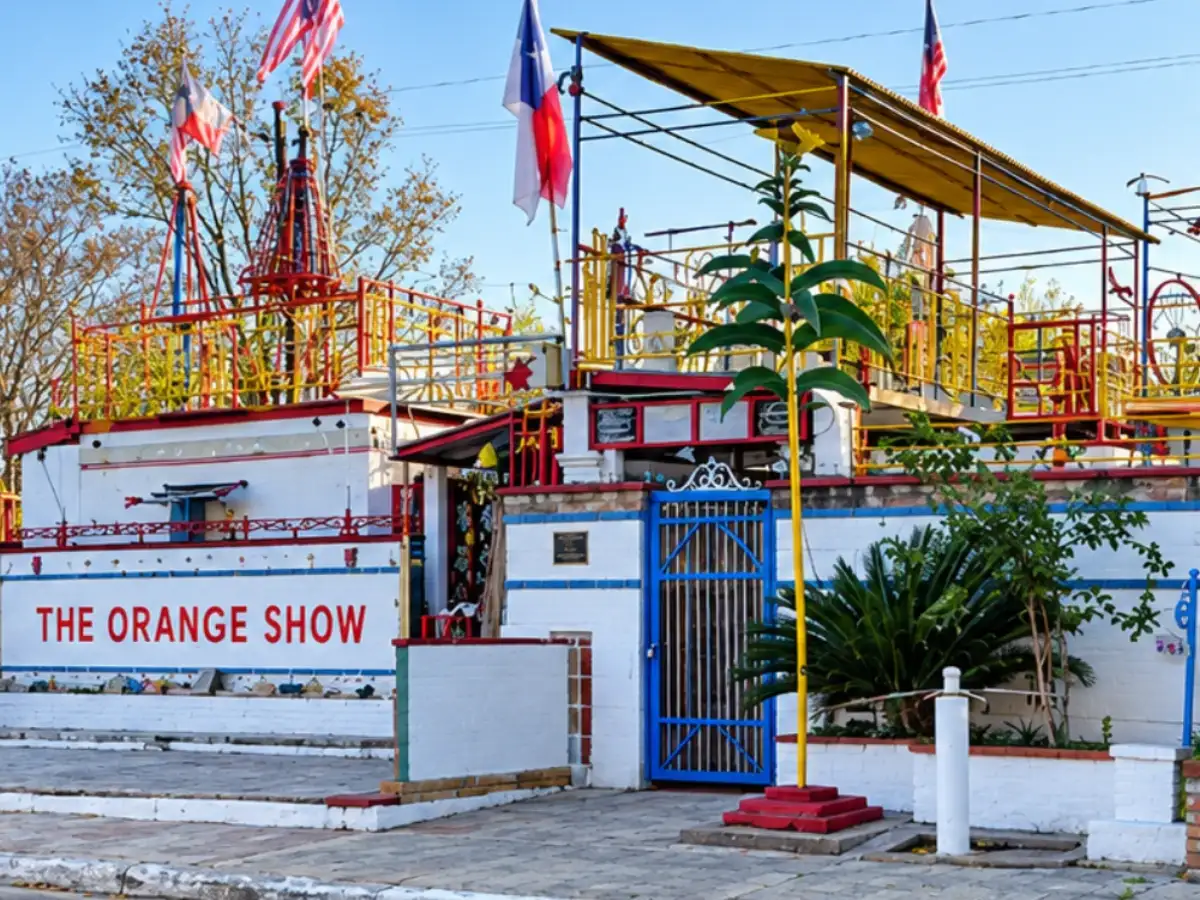
In 1956, Houston postman Jeff McKissack began building with things he found on roadsides; 23 years later, those materials filled a strange 3,000-square-foot maze
Jeff McKissack, a retired mail carrier, built the Orange Show in Houston over 23 years. He used various found materials to create a vibrant art space advocating for healthy living. After his passing, a nonprofit was established to preserve the site, reopening it in 1982. Currently, the Orange Show Center for Visionary Art is undergoing restoration and will remain closed until early 2027.

Government extends RoDTEP export tax refund scheme by three months till December 31
The government has extended the RoDTEP scheme until December 31, 2026, to support exporters amid challenges. This extension maintains the existing reimbursement rates and value caps for various export units. The RoDTEP scheme reimburses taxes and duties that are not refunded through other means, helping ease export costs. It has already covered over 10,700 tariff lines, with substantial disbursements made.

Alaska spent $46.9 million to lower electric bills in 186 communities in FY2025, covering 148.5 million kWh, where rural power costs can be far higher
In fiscal year 2025, Alaska committed around $46.9 million to assist 186 remote communities with rising electricity expenses. By targeting the high costs associated with diesel-generated power, the initiative aims to lessen financial burdens on approximately 80,000 residents benefiting from the Power Cost Equalization Program. While this support is crucial, there remain significant challenges around transitioning to renewable energy sources, underscoring equity issues in rural energy access.


SEBI relies on amended rules in Embassy REIT 'Fit and Proper' matter, tells Bombay HC no disqualification made out
The Securities and Exchange Board of India (SEBI) has told the Bombay High Court that its examination of complaints concerning the "fit and proper" status of persons associated with Embassy Office Parks REIT was completed after the regulatory framework was amended in April 2026, and that the material available did not warrant disqualification under the amended provisions.
SEBI relies on amended rules in Embassy REIT 'Fit and Proper' matter, tells Bombay HC no disqualification made out
The Securities and Exchange Board of India (SEBI) has told the Bombay High Court that its examination of complaints concerning the "fit and proper" status of persons associated with Embassy Office Parks REIT was completed after the regulatory framework was amended in April 2026, and that the material available did not warrant disqualification under the amended provisions.

SBI Research sees CPI inflation at 5.65% in Sept, above 6.5% in Oct-Nov
SBI Research forecasts a rise in CPI inflation to around 5.65 percent in September. They expect it to exceed 6.5 percent during October and November. Inflationary pressures have broadened significantly since the last monetary policy meeting. Additionally, the weakening rupee poses further risks to economic stability. The Reserve Bank of India may adjust its GDP growth and inflation projections during the upcoming policy review.

In 1977, Rich Man, Poor Man star Peter Strauss paid about $225,000 for a run-down 64-acre California ranch; 10 years later, it became a National Park Service site
Peter Strauss purchased a ranch in the Santa Monica Mountains in 1977 and sold it to a state agency in 1983. The land has a rich history, including use as a resort before being acquired by the National Park Service. The ranch has opened to the public, allowing visitors to enjoy nature after extensive restoration work. Although the site suffered from the Woolsey Fire in 2018, it has since reopened.

Smit Machchhar’s journey: From ‘why become a pilot?’ to ‘Captain, you are a hero’
Captain Smit Machchhar, the Indian pilot praised for helping save a flydubai flight after a violent cockpit attack, had never originally planned to enter aviation. A textile engineer who discovered flying at 19, Machchhar went on to become a Boeing pilot, train on the 737 Max and mentor aspiring aviators, describing the profession as a career in which constant learning and composure are essential.