
Pakistan delays ruling on blasphemy death sentence case
Oct 8, 2018
Pakistan's Supreme Court has postponed its ruling on the final appeal of a Christian woman who has been on death row since 2010 after being convicted of blasphemy against Islam
ISLAMABAD — Pakistan's Supreme Court postponed its ruling Monday on the final appeal of a Christian woman who has been on death row since 2010 after being convicted of blasphemy against Islam.
The judicial panel listened to Asia Bibi's defense lawyer challenge statements by those who accused her of insulting Islam's prophet, an allegation punishable by death that can incite riots in conservative Pakistan.
The three-judge panel, headed by Pakistan's Chief Justice Mian Saqib Nisar, did not say why they reserved their judgment or when they would announce their decision. It ordered everyone present to refrain from commenting on the case, in an apparent attempt to avoid inflaming public opinion.
The charge against Bibi dates back to a hot day in 2009 when she went to get water for her and her fellow farmworkers. Two Muslim women refused to take a drink from a container used by a Christian. A few days later, a mob accused her of blasphemy. She was convicted and sentenced to death.
Bibi's lawyer, Saiful Malook, argued that the many contradictions in witnesses' statements tainted the evidence. The two Muslim women who leveled the charges against Bibi denied they were quarrelling with her, saying her outbursts against Islam were unprovoked. Yet several independent witnesses who gave statements recounted a cantankerous exchange between the women.
The prosecution's case centered mostly on religious texts that vilify those who make blasphemous statements.
Ahead of the hearing, Malook expressed optimism that he would win the last legal appeal for Bibi. But if not, he planned to seek a review, which could take years to complete.
"I am a 100 percent sure she will be acquitted," Malook told The Associated Press in a telephone interview on the eve of the hearing. "She has a very good case."
He refused to comment at the end of Monday's hearing, citing the judges' orders.
Bibi's case has generated international outrage, but within Pakistan it has fired up radical Islamists, who use the blasphemy law to rally supporters and intimidate mainstream political parties.
Even defending Bibi in court is dangerous.
"I have lost my health. I am a high blood pressure patient, my privacy is totally lost. You have to be in hiding," her lawyer said ahead of the hearing. Everyone on his tree-lined street knows his identity, he said. "They look at this house and they know this is the home of a person who can be killed at any time by angry mullahs."
Police provide round-the-clock security around Malook's home, in the city of Lahore.
Members of Pakistan's religious minorities have campaigned against the law, which they say is invoked to justify attacks on them. For them, Bibi's case is seen as a watershed. Her husband recently traveled to the Vatican to meet Pope Francis.
Joseph Francis, an activist for Pakistan's Christians, said he currently is aiding 120 Christians facing blasphemy charges. His organization, Center for Legal Aid Assistance and Settlement, provides legal aid as well as finding a safe haven for Christians who are targeted even after being cleared of blasphemy allegations.
"This law is misused and it is not only misused against Christians but also against Muslims," he said.
France, Spain and Germany have all offered to welcome Bibi should she be acquitted, said Francis, who said he will help secret her out of the country.
But Khadim Hussein Rizvi, the leader of a radical Islamist party, warned after the postponement that "no blasphemer will be able to escape punishment.
In 2011, Salman Taseer, the governor of Punjab province, was shot and killed by one of his elite guards for defending Bibi and criticizing misuse of the blasphemy law. Malook prosecuted his killer, Mumtaz Qadri, who was hanged for his crime.
Qadri has since become a martyr to millions, who make a pilgrimage to a shrine erected in his name by his family outside the capital, Islamabad. His supporters have called for the immediate killing of anyone accused of blasphemy.
Pakistan's newly elected government is led by Prime Minister Imran Khan, a former cricket star who has embraced religious conservatism and bowed to some of the demands of radical Islamists. Last month, a member of his government offered prayers at Qadri's shrine, drawing outrage from rights activists.
An unprecedented number of religious parties participated in the July elections that put Khan in power. As in previous elections, they garnered less than 10 percent of the popular vote, but they have allies among all the major parties.
According to the U.S. Commission on International Religious Freedom, 71 countries have blasphemy laws — around a quarter of them are in the Middle East and North Africa and around a fifth are European countries, though enforcement and punishment varies.
Pakistan is one of the most ferocious enforcers.
At least 1,472 people were charged under Pakistan's blasphemy laws between 1987 and 2016, according to statistics collected by the Center for Social Justice, a Lahore-based group. Of those, 730 were Muslims, 501 were Ahmadis — a sect reviled by mainstream Muslims as heretical — while 205 were Christians and 26 were Hindus. The center said it didn't know the religion of the final 10 because they were killed by vigilantes before they could get their day in court.
While Pakistan's law carries the death penalty for blasphemy and offenders have been sentenced to death, so far no one has ever been executed.
___
Associated Press writer Munir Ahmed contributed to this report
MORE NEWS

Zheng Yongnian on what to expect from future Xi-Trump meetings
Zheng Yongnian is a political scientist in China and a government adviser. His academic work is mainly about contemporary China, particularly politics, the country’s transformation and its external relations. SCMP Plus readers get early access to articles in the Open Questions series. Many have offered a lukewarm assessment of the Xi-Trump summit in Washington, citing the lack of a breakthrough. What is your take? There are two primary views right now. One is nihilism, which holds that China and...

Asian Games 2026 Live Updates, Day 14: Lovlina Borgohain, Women's Archers Win Gold Medals
Asian Games 2026, October 2 Live Updates: Follow all the latest updates from the 14th day of the event with Indian contingent in action across various sports.

David vs Goliaths: Singapore builds most accurate clock ever, leaves US and China in dust
A small Singaporean research team has beaten scientists in China and the United States to build the world’s most accurate atomic clock. The clock, built with a single ion of a rare earth metal element known as lutetium, is so precise that it would lose one second every 260 billion years – nearly 20 times the age of our universe. It is about four times as accurate as the previous record holder, a calcium-ion clock developed by a Chinese Academy of Sciences team in Wuhan, and also surpasses an...
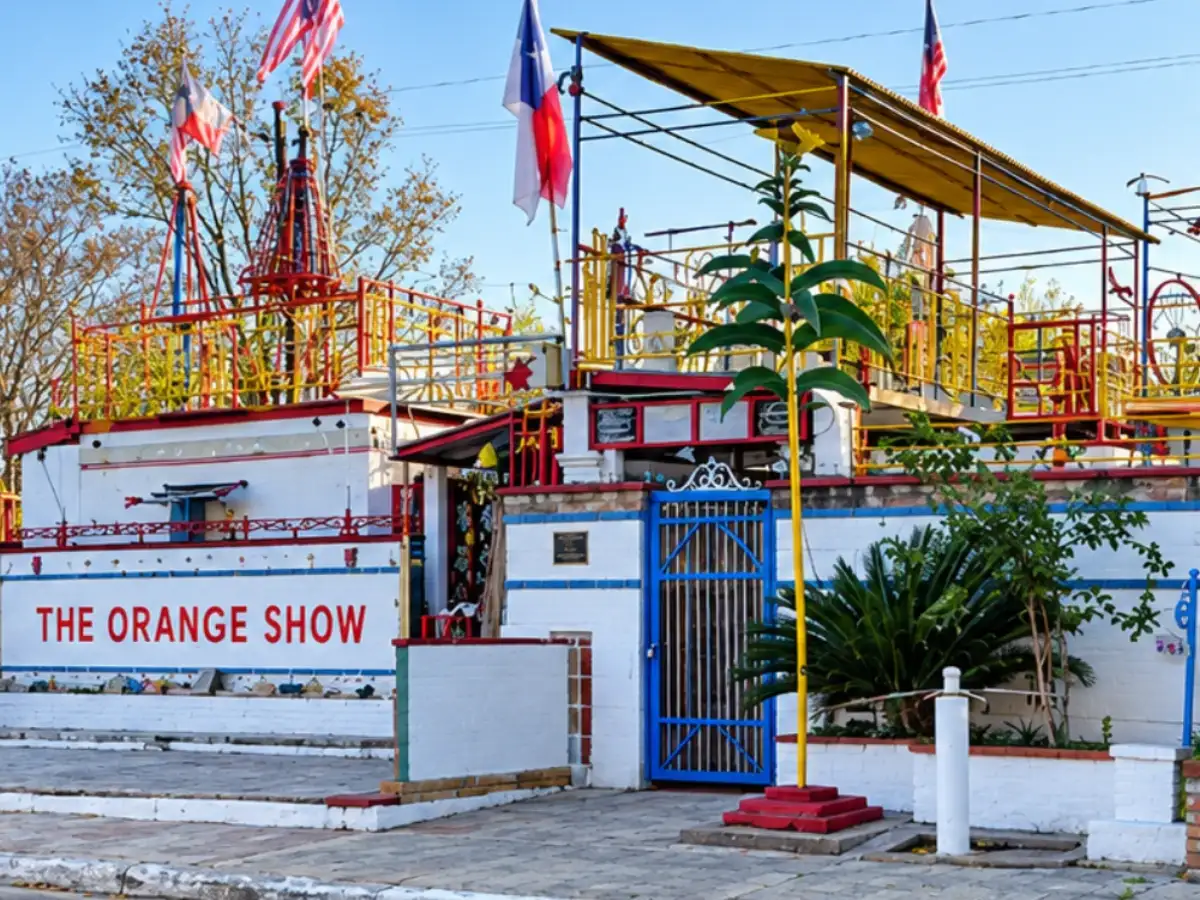
In 1956, Houston postman Jeff McKissack began building with things he found on roadsides; 23 years later, those materials filled a strange 3,000-square-foot maze
Jeff McKissack, a retired mail carrier, built the Orange Show in Houston over 23 years. He used various found materials to create a vibrant art space advocating for healthy living. After his passing, a nonprofit was established to preserve the site, reopening it in 1982. Currently, the Orange Show Center for Visionary Art is undergoing restoration and will remain closed until early 2027.

Government extends RoDTEP export tax refund scheme by three months till December 31
The government has extended the RoDTEP scheme until December 31, 2026, to support exporters amid challenges. This extension maintains the existing reimbursement rates and value caps for various export units. The RoDTEP scheme reimburses taxes and duties that are not refunded through other means, helping ease export costs. It has already covered over 10,700 tariff lines, with substantial disbursements made.

Alaska spent $46.9 million to lower electric bills in 186 communities in FY2025, covering 148.5 million kWh, where rural power costs can be far higher
In fiscal year 2025, Alaska committed around $46.9 million to assist 186 remote communities with rising electricity expenses. By targeting the high costs associated with diesel-generated power, the initiative aims to lessen financial burdens on approximately 80,000 residents benefiting from the Power Cost Equalization Program. While this support is crucial, there remain significant challenges around transitioning to renewable energy sources, underscoring equity issues in rural energy access.


SEBI relies on amended rules in Embassy REIT 'Fit and Proper' matter, tells Bombay HC no disqualification made out
The Securities and Exchange Board of India (SEBI) has told the Bombay High Court that its examination of complaints concerning the "fit and proper" status of persons associated with Embassy Office Parks REIT was completed after the regulatory framework was amended in April 2026, and that the material available did not warrant disqualification under the amended provisions.
SEBI relies on amended rules in Embassy REIT 'Fit and Proper' matter, tells Bombay HC no disqualification made out
The Securities and Exchange Board of India (SEBI) has told the Bombay High Court that its examination of complaints concerning the "fit and proper" status of persons associated with Embassy Office Parks REIT was completed after the regulatory framework was amended in April 2026, and that the material available did not warrant disqualification under the amended provisions.

SBI Research sees CPI inflation at 5.65% in Sept, above 6.5% in Oct-Nov
SBI Research forecasts a rise in CPI inflation to around 5.65 percent in September. They expect it to exceed 6.5 percent during October and November. Inflationary pressures have broadened significantly since the last monetary policy meeting. Additionally, the weakening rupee poses further risks to economic stability. The Reserve Bank of India may adjust its GDP growth and inflation projections during the upcoming policy review.

In 1977, Rich Man, Poor Man star Peter Strauss paid about $225,000 for a run-down 64-acre California ranch; 10 years later, it became a National Park Service site
Peter Strauss purchased a ranch in the Santa Monica Mountains in 1977 and sold it to a state agency in 1983. The land has a rich history, including use as a resort before being acquired by the National Park Service. The ranch has opened to the public, allowing visitors to enjoy nature after extensive restoration work. Although the site suffered from the Woolsey Fire in 2018, it has since reopened.

Smit Machchhar’s journey: From ‘why become a pilot?’ to ‘Captain, you are a hero’
Captain Smit Machchhar, the Indian pilot praised for helping save a flydubai flight after a violent cockpit attack, had never originally planned to enter aviation. A textile engineer who discovered flying at 19, Machchhar went on to become a Boeing pilot, train on the 737 Max and mentor aspiring aviators, describing the profession as a career in which constant learning and composure are essential.