
No Mass for Sri Lanka's Catholics; no veils for Muslim women
Apr 28, 2019
A week after the Easter bombings, Catholics in Sri Lanka took part in Sunday Mass only via television, with churches across the nation shut, while Muslim women were ordered to stop wearing veils
AMPARA, Sri Lanka — The effects of Sri Lanka's Easter suicide bombings reverberated across two faiths Sunday, with Catholics shut out of their churches for fear of new attacks, left with only a televised Mass, and Muslim women ordered to stop wearing veils in public.
Many across the nation knelt before their televisions as Cardinal Malcolm Ranjith, the archbishop of Colombo, delivered a homily before members of the clergy and the country's leaders in a small chapel at his residence in the capital.
The closing of all of Sri Lanka's Catholic churches — an extraordinary measure unheard of in the church's centuries on this island off the southern tip of India — came after local officials and the U.S. Embassy in Colombo warned that more militants remained on the loose with explosives a week after bombings claimed by the Islamic State group and aimed at churches and hotels killed more than 250 people.
Before services began, the Islamic State group claimed three militants who blew themselves up Friday night after exchanging fire with police in the country's east. Investigators sifting through that site and others uncovered a bomb-making operation capable of spreading far more destruction.
"This is a time our hearts are tested by the great destruction that took place last Sunday," Ranjith told those watching across the nation. "This is a time questions such as, does God truly love us, does he have compassion toward us, can arise in human hearts."
Later on Sunday, President Maithripala Sirisena banned all kinds of face coverings that may conceal people's identities. The emergency law, which takes effect Monday, prevents Muslim women from veiling their faces.
The decision came after the Cabinet had proposed laws on face veils at a recent meeting. It had deferred the matter until talks with Islamic clerics could be held, on the advice of Prime Minister Ranil Wickremesinghe.
In a rare show of unity, Sirisena, Wickremesinghe and opposition leader Mahinda Rajapaksa had attended the Mass in person. Their political rivalry and government dysfunction are blamed for a failure to act upon near-specific information received from foreign intelligence agencies that preceded the bombings, which targeted three churches and three luxury hotels.
Police said they had arrested 48 suspects over the last 24 hours as checkpoints mounted by all of Sri Lanka's security forces sprung up across this country of 21 million people. Those arrested include two men whom authorities recently appealed to the public to locate.
The government also warned that it would crack down on those spreading false information and making inflammatory remarks.
Police, meanwhile, entered the main mosque of National Towheed Jamaat on Sunday afternoon, just a day after authorities declared it and another organization terror groups over the bombings.
Police entered the mosque, located in Kattankudy in eastern Sri Lanka, and stopped an interview among foreign journalists and mosque officials. Later, a senior police officer dispersed journalists waiting outside, saying authorities were conducting a "cordon and search operation."
Police then left, locking up the mosque just before afternoon prayers were to start.
Authorities banned National Towheed Jamaat over its ties to Mohammed Zahran, the alleged mastermind of the Easter Sunday bombings. Zahran and masked others had pledged their loyalty to IS leader Abu Bakr al-Baghdadi before carrying out the attacks, showing the danger the extremist group poses even after losing all its territory in Iraq and Syria.
On Friday night, a confrontation with police sparked a firefight with the militants in Kalmunai, some 225 kilometers (140 miles) northeast of Colombo. Sri Lanka's military said the gunfire and later suicide blasts killed 15 people, including six children.
On Sunday, the Islamic State group claimed three of the militants who blew themselves up there. In a statement carried by the extremists' Aamaq news agency, IS identified the bombers by their noms du guerre as Abu Hammad, Abu Sufyan and Abu al-Qa'qa. It said they opened fire with automatic weapons and "after exhausting their ammunition, detonated ... their explosive belts."
Police spokesman Ruwan Gunasekara said a woman and a 4-year-old child found wounded after the gunbattle have been identified as Zahran's wife and daughter.
At the main police station in Ampara, an outdoor stage now holds what police recovered after the firefight. The IS-aligned militants had created a bomb-making factory at the home, complete with laboratory-style beakers and thick rubber gloves.
Bags of fertilizer, gunpowder and small ball bearings filled boxes. Police found tens of liters (gallons) of acids, used to make the fire of the blast more lethal.
A police investigator, who spoke to The Associated Press on condition of anonymity because he wasn't authorized to publicly comment, said the mix of acids worsened the wounds suffered by those who didn't immediately die in the blast.
"At the hospital a lot more people died. That's why," he said, nodding toward the acids. "It made the wounds incurable."
The bombers likely carried two rectangular detonators in their pockets similar to the ones recovered, the investigator said. A red switch armed the explosives, while a light teal button detonated the bombs hidden inside of their large backpacks.
Along with the acids, the bombs contained a mixture of fertilizer, gunpowder, ball bearings and explosives typically used by quarries to blast loose rocks, the investigator said. Those explosives made the bombs powerful enough to blow the roof off of St. Sebastian's Church in Negombo, he said, referring to one of the churches near Colombo targeted in the Easter attacks.
The Sri Lankan navy controls the sale of the mining explosives and investigators already have begun tracing the serial numbers off of the plastic sticks, he said. A notebook contained bomb-making instructions that had apparently been explained to the writer.
Police also recovered religious tracts in Tamil glorifying suicide bombings, saying they granted the attacker direct entrance to heaven. The investigator contrasted that to the Tamil Tigers, a separatist group the government defeated in 2009 after a 26-year civil war.
"Their only intention is to kill as many as possible," the investigator said. "That is different than the Tamil Tigers. They wanted to control land. These people want to kill as many as possible."
___
Francis reported from Colombo, Sri Lanka. Associated Press journalists Gemunu Amarasinghe and Rishabh Jain contributed to this report.
MORE NEWS


Nike stock falls after revenue miss, NKE forecasts 2027 revenue decline and announces layoffs - here's what investors need to know
Nike stock after NKE earnings: Nike stock is down after the company reported a quarterly revenue miss and forecast a high-single-digit revenue decline for fiscal 2027. Nike also announced layoffs as part of a restructuring plan expected to generate about $2.5 billion in savings through fiscal 2031.

US midterm elections 2026: Trump's approval rating falls to record low as 2026 Midterms near
A recent AP-NORC poll shows Donald Trump's approval rating has plummeted to 31%, reflecting increasing public dissatisfaction. With midterm elections on the horizon, voters voiced their worries about the economy and rising prices, emphasizing 17% approval for Trump's management of cost of living. In response, White House spokesperson Davis Ingle defended Trump’s record by pointing out his significant policy achievements that could influence the forthcoming elections in November 2026.

Bitcoin price target: Why Citi raised its BTC USD forecast to $113,000 from $82,000 as the cryptocurrency rebounds
Bitcoin (BTC USD) price target: Citigroup has increased its 12-month Bitcoin price target from $82,000 to $113,000 due to favorable market conditions. The bank expects $5 billion in crypto investment product inflows over the next year as advisers increase allocations. Spot Bitcoin ETFs have started seeing renewed inflows after significant outflows earlier this year.


US Midterm Elections 2026: Here’s how to vote, register and cast your ballot
US Midterm Elections 2026: Voters need to be aware of registration deadlines and voting rules that vary by state. The 2026 U.S. midterm elections are scheduled for November 3, impacting numerous federal and state positions. Early voting and absentee ballot options are available depending on state regulations. Voter ID requirements must also be consulted to ensure compliance with local laws. Checking state election resources will provide the latest updates on procedures and deadlines.

Malaysia Airlines stopped using flight code MH370 after the plane disappeared with 239 people aboard - why airlines retire flight numbers after aviation tragedies
Malaysia Airlines MH370: Malaysia Airlines changed flight numbers MH370 and MH371 following the aircraft's disappearance in March 2014. The aircraft, carrying 239 people, vanished during its journey from Kuala Lumpur to Beijing. Extensive search operations were conducted in the Indian Ocean, but the main wreckage remains undiscovered.

Social Security claiming age names could change: Will your benefits change? What new labels for ages 62, 67 and 70 really mean
Congress has cleared a bill that would give Social Security’s key claiming ages new names. The proposal would call 62 the “minimum monthly benefit age,” 67 the “standard monthly benefit age,” and 70 the “maximum monthly benefit age.” The ages themselves would not change. The goal is to make the benefit trade-offs easier to understand before workers decide when to claim.
India-US trade deal 'not imminent'; USTR Greer says 'sticking points' identified
US Trade Representative Jamieson Greer said the Trump administration is working with India to finalise a bilateral trade deal, but an agreement is not imminent. Greer said he had a “very constructive conversation” with Commerce Minister Piyush Goyal at the G20 trade ministers meeting and that officials remain engaged.

Jeff Bezos just put $25 million into the Pacific Ocean. Is the Bezos Earth Fund enough to save the Pacific Ocean before the $10 billion deadline?
The Bezos Earth Fund has committed $25 million to enhance conservation efforts across five Pacific island nations, now totaling approximately $63.3 million dedicated to preserving marine ecosystems. This initiative strives to safeguard at least 30% of the oceanic territories by 2030, aligning with Jeff Bezos' ambitious $10 billion climate pledge. As the deadline nears, over $7 billion remains available for impactful distribution.
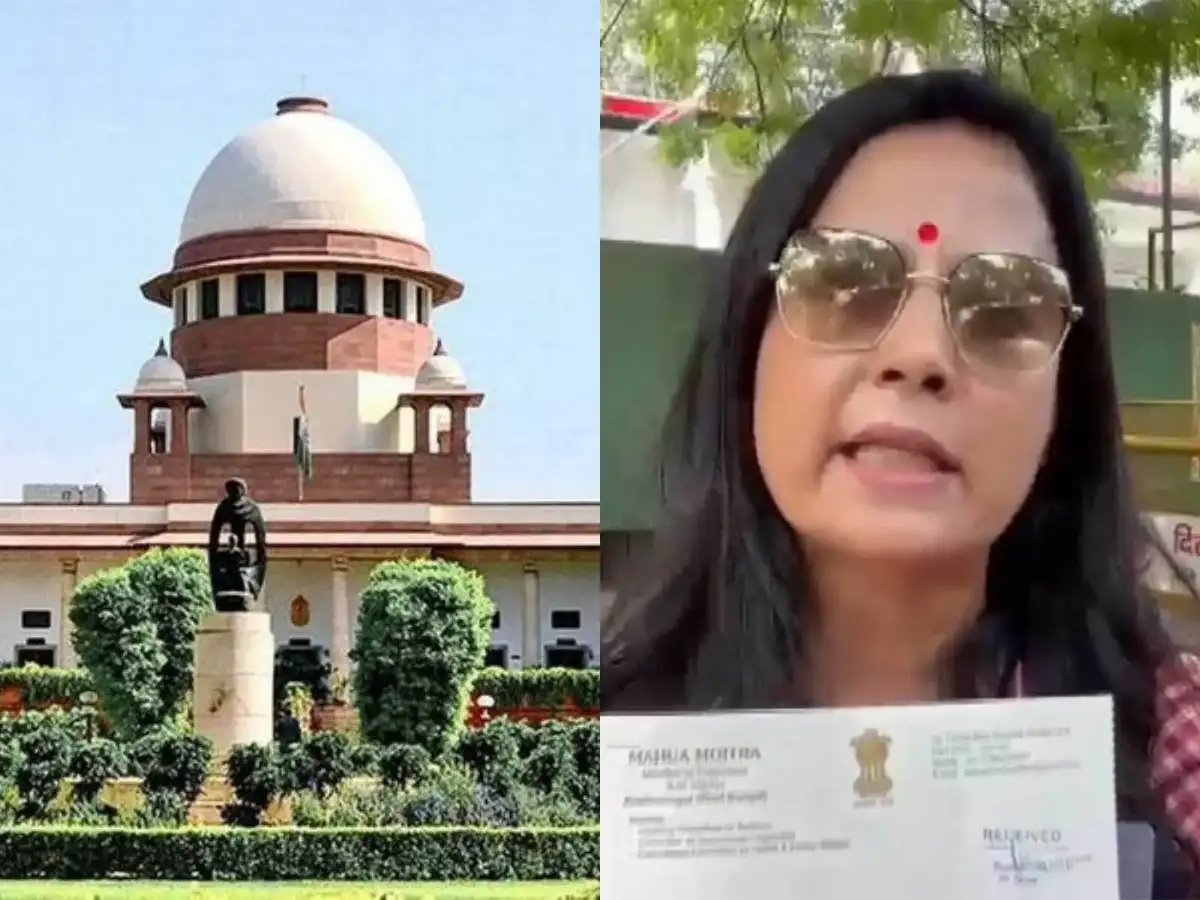
SC seeks Centre, Bengal govt response on Mahua Moitra’s plea over MPLADS works
The Supreme Court has sought responses from the Centre and West Bengal government on TMC MP Mahua Moitra’s plea alleging obstruction in implementing works under the MPLADS in her Krishnanagar constituency. A bench of Justices Joymalya Bagchi and V Mohana also heard her allegations that her functioning as an MP had been impeded.
SC seeks Centre, Bengal govt response on Mahua Moitra’s plea over MPLADS works
The Supreme Court has sought responses from the Centre and West Bengal government on TMC MP Mahua Moitra’s plea alleging obstruction in implementing works under the MPLADS in her Krishnanagar constituency. A bench of Justices Joymalya Bagchi and V Mohana also heard her allegations that her functioning as an MP had been impeded.