
India's clean energy boom slows as new solar projects get delayed. Experts say it can pick back up
Feb 7, 2024
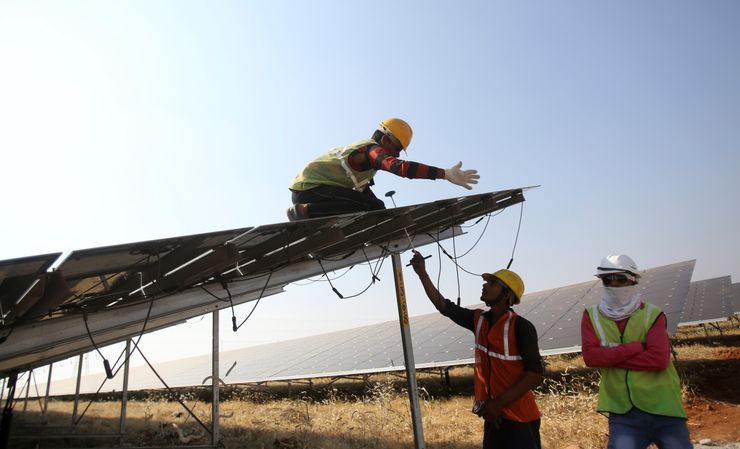
For years, renewable projects in India have been growing steadily — from small-town rooftop solar installations to large-scale projects across the desert and long stretches of wind turbines and solar panels on farmland all helping the country transition to clean energy
BENGALURU, India (AP) — For years, renewable projects in India have been growing steadily, from
small-town rooftop solar installations
tolarge-scale projects across the desert
and long stretches ofwind turbines and solar panels on farmland
all contributing to the country's climate goal of transitioning to clean energy.But a mix of policy decisions, politics and supply chain issues meant solar projects in 2023 have been marred in delays and uncertainty, making the country fall short of its annual clean energy installation target in a year that saw
heat records topple
anddevastating floods
batter the country. Experts say this is a significant dent in the country's ambitions, but some are confident that the shortfall can be made up this year.A report by the Institute for Energy Economics and Financial Analysis found that the country only installed 13.7 gigawatts of clean energy last year, like wind, solar and nuclear, compared to 16.3 gigawatts in 2022. India needs to install 40 gigawatts a year to meet its goal of installing 500 gigawatts of clean energy — enough to power 51 million homes in the country — by the end of the decade.
The shortfall “means that meeting the 2030 target for clean energy is highly challenging,” said Charith Konda, part of the team that put together the IEEFA’s analysis.
Solar module prices have dropped substantially worldwide in recent years, but in India, they have been subject to conflicting import tax policies, with the government first ordering
high import taxes
and then backtracking within the space of a year. This created a “wait and watch” attitude among solar project developers, said Vinay Pabba, chief operating officer of Hyderabad-based renewables company Vibrant Energy.It takes up to two years for solar projects to come online after all agreements and paperwork are finalized, he said, so “changing policies in timeframes lesser than that creates a lot of uncertainty.”
Numerous projects, both big and small and across different states, have been hit with monthslong delays because of solar project developers holding off making new orders, said Gurpreet Singh Walia, a consultant for renewable energy projects in India.
Konda said that incentives to
encourage domestic manufacturing of solar modules
, rather than importing them from abroad, conflicted with the country’s goal of installing renewable energy at speed.And since what was being domestically produced in India was preferred by countries like the United States for their own energy transition over Chinese manufacturers, a huge increase in exports of solar power parts from India meant there was less supply available for local projects, analysts say.
Experts also say fossil fuel lobbying in the country meant policies to encourage renewable growth have fallen short.
Between 2008 and 2022, India added the third-most solar power capacity of any country — behind only China and the United States — and the sixth-most wind power, according to the Global Energy Monitor. But in those 15 years, the amount of coal capacity added in the country
was well over double that of wind and solar
, the Global Energy Monitor’s data shows.“People in positions of power and decision-makers do not believe that renewable energy can provide firm power” because they are not convinced that batteries can store enough renewable energy to make reliable and consistent electricity when the sun doesn't shine or the wind doesn't blow, said Alexander Hogeveen Rutter, an independent energy analyst based in New Delhi. "When it comes to getting real power, coal is still considered the best option in India."
That view means the country, the third largest emitter of greenhouse gases, is still installing new coal every year as electricity demand surges because of development and population growth. More than
75% of India’s electricity
is made from coal-burning, but it plans to have 50% of its growing electricity needs from renewable sources by the end of the decade.But some analysts believe that most of these issues have now been ironed out and that India can make up for the shortfall of new projects this year.
There was a sharp rise in solar modular imports toward the end of last year, suggesting that a lot of the delayed projects will soon be completed, said Vinay Rustagi who tracks and analyzes the clean power sector for the financial research firm Crisil.
“We can expect a record 2024 in that sense,” he said. But he warned that even if India makes up for lost ground, "this kind of volatility is not good for the market on the whole. It detracts from the ambitious targets the government has set.”
Hogeveen Rutter added that a slew of new tenders for renewable energy projects issued in 2023 is a positive signal that India will install a lot more clean power in the coming years.
But even if the country does make up for the slow growth last year, he warned that India's renewable energy targets are just “arbitrary figures, rather than linked to the resource planning process.” India’s demand growth alone is enough to justify 50 to 55 gigawatts of clean power additions annually, and that demand is expected to continue to rise rampantly in the coming decades.
Without more ambitious clean energy targets, the country's renewable growth — however significant — won't reach its full potential, Hogeveen Rutter said.
“There are incredible entrepreneurs and innovators in both renewables and storage who are truly world-class just waiting to be unleashed," he said. "As soon as the targets are moved in line with India’s demand, there is no doubt India can become a clean energy powerhouse."
___
Associated Press data journalist Mary Katherine Wildeman contributed to this report from Hartford, Conn.
___
Follow Sibi Arasu on X at
@sibi123
___
The Associated Press’ climate and environmental coverage receives financial support from multiple private foundations. AP is solely responsible for all content. Find AP’s
standards
for working with philanthropies, a list of supporters and funded coverage areas atAP.org
.MORE NEWS

Three-Time Grand Slam Winner Ends Tennis Career With 1st-Round Defeat In Basel
Stan Wawrinka ended his 24-year professional tennis career following a first-round defeat at the Basel Open.

Thomas van Tonder Completes World-First Crossing Beneath Bloukrans Bridge
Thomas van Tonder completed a world-first crossing beneath Bloukrans Bridge, traversing 600 suspended monkey bars over 280 metres in 47 minutes and 37 sec.

Neeraj Yadav, Three-Time Asian Para Games Gold Medallist, Dies By Suicide
Para-athlete Neeraj Yadav has reportedly died by suicide after consuming poison.
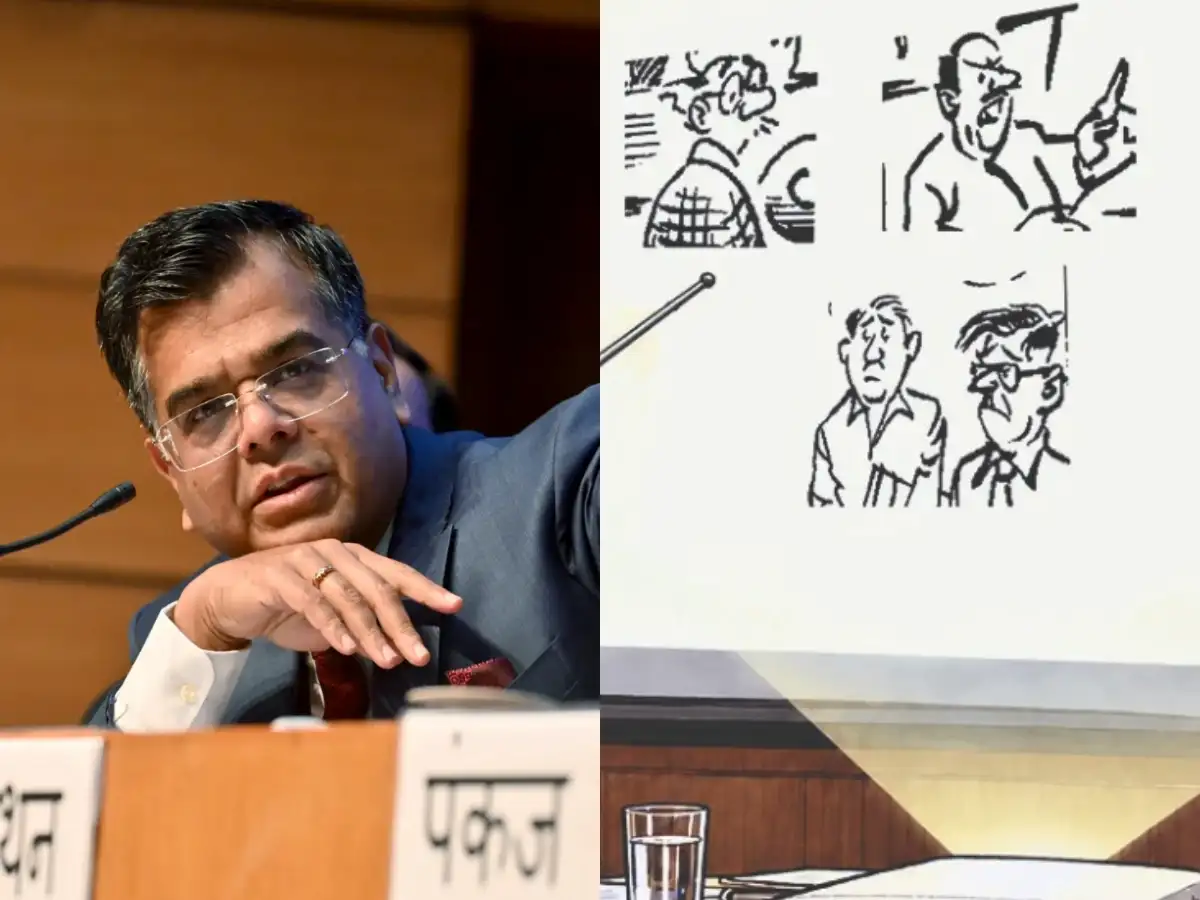
Babus who call late meetings, delay files face scrutiny as cabinet secretary lists 12 types of secretaries
Cabinet Secretary T V Somanathan highlighted issues with bureaucratic efficiency at a recent performance review meeting. He presented a list of problematic behaviors affecting government productivity using cartoons. Somanathan emphasized the necessity of timely decision-making and better communication between ministries. Another topic addressed was the improper usage of ration cards by railway employees.

Delhi starts online liquor booking app: How to order favourite brands without waiting in queues, check process, outlet availability, and key rules
Delhi's latest initiative introduces an online liquor booking app, letting users select their favorite brands and make payments seamlessly. To streamline the process, residents have 48 hours to pick up their orders from one of the 208 designated shops. While home delivery isn’t an option, the app aims to eliminate long queues and enhance transparency.


1st batch of Agniveers retiring soon: What's the retirement money, career options and benefits they will get
By 2026, approximately 18,300 Agniveers will finish their service in the armed forces, marking a pivotal transition. To ease their shift into civilian life, numerous states have initiated job quotas specifically for ex-Agniveers across different uniformed services and police departments. These initiatives stem from the Agnipath scheme launched in June 2022, which focuses on enlisting younger individuals in military roles.

GST clarification on foreign investor brokerage offers sentiment boost, analysts say
The Indian government has clarified that brokerage paid by overseas clients may qualify as an export service. This could help foreign investors avoid the 18% goods and services tax on brokerage fees. Analysts suggest this clarification is sentimentally positive amid significant foreign outflows from Indian stocks. There is ongoing speculation regarding potential cuts in capital gains tax ahead of the federal budget.

'Copying China's manufacturing model may not pay off': Ashwini Vaishnaw hits back with ‘Cope harder’ remark, cites Rs 3 lakh crore PLI returns
Union Minister Ashwini Vaishnaw has hit back at criticism of India's mobile phone manufacturing strategy with a blunt “Cope harder” remark. Citing figures from the government's Production Linked Incentive (PLI) scheme, he said the government paid Rs 19,000 crore in incentives and collected Rs 25,000 crore in direct taxes, alongside Rs 3 lakh crore in GST. His response followed a Bloomberg Opinion video questioning India's iPhone manufacturing model, its dependence on imported components and the cost of government subsidies.