
Indian scholars, activists criticize school hijab ban ruling
Apr 2, 2022
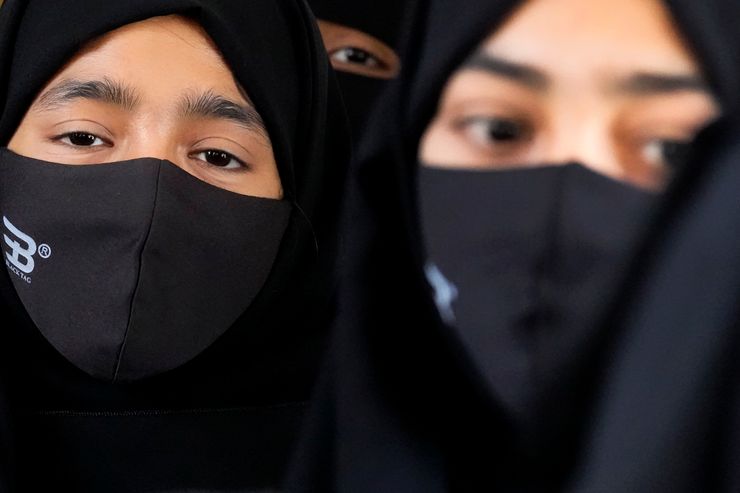
An Indian court ruling upholding a ban on Muslim students wearing head coverings in schools has sparked criticism from constitutional scholars and rights advocates who say that judicial overreach threatens religious freedoms in an officially secular nation
NEW DELHI (AP) — A recent court ruling upholding a ban on Muslim students wearing head coverings in schools has sparked criticism from constitutional scholars and rights activists who say that judicial overreach threatens religious freedoms in officially secular India.
Even though the ban is only imposed in the southern state of Karnataka, critics worry it could be used as a basis for wider curbs on Islamic expression in a country already witnessing a surge of Hindu nationalism under Prime Minister Narendra Modi's governing Bharatiya Janata Party.
“With this judgment, the rule you are making can restrict the religious freedom of every religion,” said Faizan Mustafa, a scholar of freedom of religion and vice chancellor at the Hyderabad-based Nalsar University of Law. “Courts should not decide what is essential to any religion. By doing so, you are privileging certain practices over others.”
Supporters of the decision say it’s an affirmation of schools’ authority to determine dress codes and govern student conduct, and that takes precedence over any religious practice.
“Institutional discipline must prevail over individual choices. Otherwise, it will result in chaos,” said Karnataka Advocate General Prabhuling Navadgi, who argued the state's case in court.
Before the verdict, more than 700 signatories including senior lawyers and rights advocates had expressed opposition to the ban in an open letter to the chief justice, saying that “the imposition of an absolute uniformity contrary to the autonomy, privacy and dignity of Muslim women is unconstitutional.”
The dispute began in January when a government-run school in the city of Udupi, in Karnataka, barred students wearing hijabs from entering classrooms. Staffers said the Muslim headscarves contravened the campus' dress code, and that it had to be strictly enforced.
Muslims protested, and Hindus staged counter demonstrations. Soon more schools imposed their own restrictions, prompting the Karnataka government to issue a statewide ban.
A group of female Muslim students sued on the grounds that their fundamental rights to education and religion were being violated.
But a three-judge panel, which included a female Muslim judge, ruled last month that the Quran does not establish the hijab as an essential Islamic practice and it may therefore be restricted in classrooms. The court also said the state government has the power to prescribe uniform guidelines for students as a “reasonable restriction on fundamental rights.”
“What is not religiously made obligatory therefore cannot be made a quintessential aspect of the religion through public agitations or by the passionate arguments in courts,” the panel wrote.
The verdict relied on what's known as the essentiality test — basically, whether a religious practice is or is not obligatory under that faith. India’s constitution does not draw such a distinction, but courts have used it since the 1950s to resolve disputes over religion.
In 2016, the high court in the southern state of Kerala ruled that head coverings were a religious duty for Muslims and therefore essential to Islam under the test. Two years later, India’s Supreme Court again used the test to overturn historical restrictions on Hindu women of certain ages entering a temple in the same state, saying it was not an “essential religious practice.”
Critics say the essentiality test gives courts broad authority over theological matters where they have little expertise and where clergy would be more appropriate arbiters of faith.
India’s Supreme Court is itself in doubt about the test. In 2019 it set up a nine-judge panel to reevaluate it, calling its legitimacy regarding matters of faith “questionable." The matter is still under consideration.
The lawsuit in Karnataka cited the 2016 Kerala ruling, but this time the justices came to the opposite conclusion — baffling some observers.
“That’s why judges make for not-so-great interpreters of religious texts,” said Anup Surendranath, a professor of constitutional law at the Delhi-based National Law University.
Surendranath said the most sensible avenue for the court would have been to apply a test of what Muslim women hold to be true from a faith perspective: “If wearing hijab is a genuinely held belief of Muslim girls, then why ... interfere with that belief at all?”
The ruling has been welcomed by Bharatiya Janata Party officials including Mukhtar Abbas Naqvi, the federal minister of minority affairs, and B. C. Nagesh, Karnataka's education minister.
Satya Muley, a lawyer at the Bombay High Court, said it's perfectly reasonable for the judiciary to place some limits on religious freedoms if they clash with dress codes, and the verdict will “help maintain order and uniformity in educational institutions.”
“It is a question of whether it is the constitution, or does religion take precedence,” Muley said. “And the court’s verdict has answered just that by upholding the state’s power to put restrictions on certain freedoms that are guaranteed under the constitution.”
Surendranath countered that the verdict was flawed because it failed to invoke the three “reasonable restrictions” under the constitution that let the state interfere with freedom of religion — for reasons of public order, morality or health.
“The court didn’t refer to these restrictions, even though none of them are justifiable to ban hijabs in schools,” Surendranath said. “Rather, it emphasized homogeneity in schools, which is opposite of diversity and multiculturalism that our constitution upholds.”
The Karnataka ruling has been appealed to India's Supreme Court. Plaintiffs requested an expedited hearing on the grounds that a continued ban on the hijab threatens to cause Muslim students to lose an entire academic year. The court declined to hold an early hearing, however.
Muslims make up just 14% of India's 1.4 billion people, but nonetheless constitute the world's second-largest Muslim population for a nation. The hijab has historically not been prohibited or restricted in public spheres, and women donning the headscarf — like other outward expressions of faith, across religions — is common across the country.
The dispute has further deepened sectarian fault lines, and many Muslims worry hijab bans could embolden Hindu nationalists and pave the way for more restrictions targeting Islam.
“What if the ban goes national?” said Ayesha Hajeera Almas, one of the women who challenged the ban in the Karnataka courts. “Millions of Muslim women will suffer.”
Mustafa agreed.
“Hijab for many girls is liberating. It is a kind of bargain girls make with conservative families as a way for them to go out and participate in public life,” he said. “The court completely ignored this perspective.”
___
Associated Press writer Krutika Pathi in New Delhi contributed to this report.
___
Associated Press religion coverage receives support through the AP’s collaboration with The Conversation US, with funding from Lilly Endowment Inc. The AP is solely responsible for this content.
MORE NEWS

Elon Musk to co-lead 'Project Meridian' on future of warfare, announces US War Secy Pete Hegseth
US Secretary Pete Hegseth announced the formation of Project Meridian to study future warfare strategies. Elon Musk will co-lead this initiative alongside Palmer Luckey and Newt Gingrich. The project aims to explore and identify key domains and technologies relevant to warfare. It has a strict 120-day deadline to provide findings to military leadership. Hegseth also introduced the Autonomous Warfare Command, emphasizing the need for advancements in military technology.
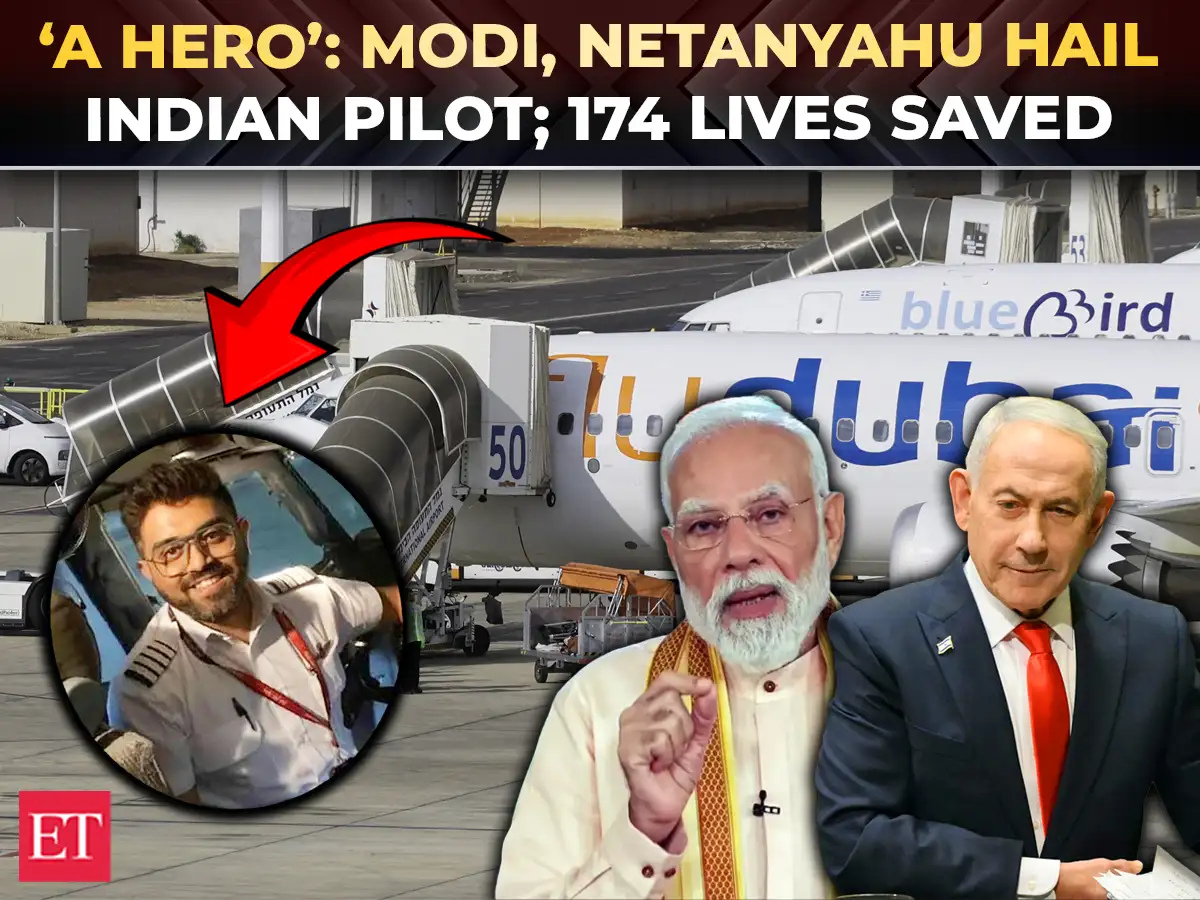
Midair miracles: Passengers hail Captain Smit Machchhar and Israeli heroes who thwarted attack on flydubai flight
An Indian flydubai pilot, Captain Smit Machchhar, was seriously stabbed by his copilot in an attempted plane crash. Despite his injuries, he unlocked the cockpit door, enabling passengers and crew to overpower the attacker. The plane landed safely, and global leaders hailed the captain as a hero.
Asian Games 2026 Live Updates, Day 13: India Win Squash Women's Team Bronze
India at the Asian Games 2026 Live: Follow all the latest updates, scores and latest medals tally as India competes across various events on Day 13 in Japan.
Murder of Sena (UBT) leader: In police statement, son blames ex-mayor of Thane, her husband
Pradeep Purnekar was shot dead in Thane, leading to major protests by his family and supporters. His son, Ram Purnekar, has accused Meenakshi Shinde and her husband of orchestrating the crime. The police arrested one suspect and detained another in connection with the murder case.
RBI’s success on dollar flows raises stakes in inflation fight & clamour for rate hike
India’s record $133 billion diaspora inflow has flooded banks with liquidity, pushing overnight rates below the RBI’s 5.25% policy rate. The Reserve Bank has already drained more than ₹1 trillion as food and oil prices fuel inflation concerns. Markets now expect further liquidity measures and are increasingly pricing in a possible RBI interest-rate hike.

Senate punts bill to permanently ban Chinese cars until after midterm elections
Legislation aiming to permanently prohibit Chinese vehicles and technology from entering the U.S. market is currently stalled. Senators are negotiating to address concerns raised by a Republican senator regarding foreign ownership stakes. The proposed bill seeks to protect American automakers from subsidized Chinese competition and prevent data privacy risks. Supporters of the bill anticipate revisiting this matter after the upcoming November elections.

SC seeks response of Delhi government on plea for free treatment for EWS patients at ILBS
The court agreed to examine the plea which also sought an independent inquiry into alleged patient-rights violations and financial irregularities at the ILBS
'Very good call': US Ambassador Sergio Gor on PM Modi-Trump telephonic conversation
Modi and Trump engaged in a telephone conversation reviewing bilateral cooperation. They discussed trade, defense, energy, and critical technologies during the call. Both leaders reaffirmed their commitment to advancing the India-US Comprehensive Global Strategic Partnership after evaluating ongoing regional and international developments. EAM S Jaishankar indicated progress on a mutually beneficial trade deal while addressing tariff concerns.

KPSC paper leak: ED alleges IAS officer supplied Veterinary Officer exam paper for bribes
Gyanendra Kumar Gangwar, an IAS officer, allegedly leaked the Veterinary Officers Recruitment Examination question paper for money. The Enforcement Directorate is investigating this corruption case involving 400 Veterinary Officer posts. Middleman Basavaraj Kannale, who facilitated the scheme, promised candidates their selection in exchange for bribes. Candidates received leaked exam materials while residing at a resort prior to the exam.