
Indian farmers strike to demand guaranteed crop prices as others attempt to march to New Delhi
Feb 16, 2024
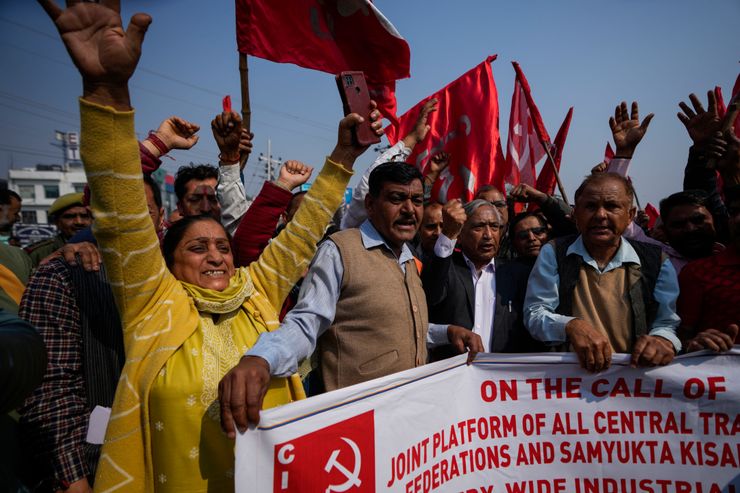
Farmers are blocking highways and holding demonstrations in many rural areas in northern India to protest over a range of grievances that have also led tens and thousands to march toward the capital
NEW DELHI (AP) — Farmers blocked highways and held demonstrations in many rural areas in northern India on Friday to protest over a range of grievances that have also led tens of thousands to march toward the capital in tractors and wagons.
Farmers in the northern states of Haryana and Punjab held sit-ins near toll plazas on major highways in the strike, supported by some trade unions. Authorities advised commuters to plan routes carefully to avoid blocked roads.
Tens of thousands of farmers began a protest march toward New Delhi earlier this week to demand
guaranteed prices for their produce
, but were stopped by the police about 200 kilometers (125 miles) away from the capital. The farmers are camping on the border between Punjab and Haryana after being blocked by concrete and metal barricades. Police detained some protesters.Authorities have also suspended mobile internet service in some areas of Haryana, blocked social media accounts of some protest leaders and used drones to drop tear gas canisters on the protesters.
The farmers’ march comes two years after Prime Minister Narendra Modi’s government faced similar protests that continued for more than a year. At that time, farmers camped on the capital’s outskirts to demonstrate against new
agriculture laws
that were later withdrawn.At the heart of the latest protests is a demand for legislation that would guarantee minimum support prices for all farm produce.
Currently, the government protects agricultural producers against any sharp fall in farm prices by setting a minimum purchase price for certain essential crops, a system that was introduced in the 1960s to help shore up food reserves and prevent shortages. The farmers want legislation that will apply the protection to all produce.
The protesting farmers are mostly from Punjab and Haryana and are relatively better-off than farmers in other Indian states. But increasing cultivation costs and rising debts have led them to overproduce rice and wheat, crops for which they get a minimum support price, or MSP. However, those water-guzzling crops have also depleted the water table in the two states and forced farmers to look for other alternatives. Farmers say a guaranteed minimum support price for other crops would stabilize their incomes.
Farmers are also pressing the government to follow through on promises to double their income, waive their loans and withdraw legal cases brought against them during the earlier
2021 protests
.Some economists say that implementation of the demands could risk food inflation. However, experts also point out that a key cause of the farmers’ frustration is the lack of implementation of policies that are already in place.
“The system of MSP is already there, but the government doesn’t follow through on what it is promising,” said Himanshu, an economist at New Delhi’s Jawaharlal Nehru University who goes by his first name.
The system of guaranteed prices — which applies to 23 crops — has been in place for decades, but the government mostly pays those prices for crops like rice and wheat, he said. “For the remaining 21 crops, the government hardly buys at those prices. That’s a problem. That’s why they want a guarantee.”
Several meetings between farm leaders and government ministers have failed to end the deadlock.
Agriculture Minister Arjun Munda, who met farm leaders on Thursday, said the talks were positive and the two sides will meet again Sunday.
“We believe we will all find a solution together peacefully,” Munda told reporters.
The protests come at an important time for India with elections to be held in a few months. Modi is widely expected to secure a third successive term.
In 2021, Modi’s decision to repeal the agricultural laws was seen as a move to appease farmers, an influential voting bloc, ahead of crucial state polls.
MORE NEWS
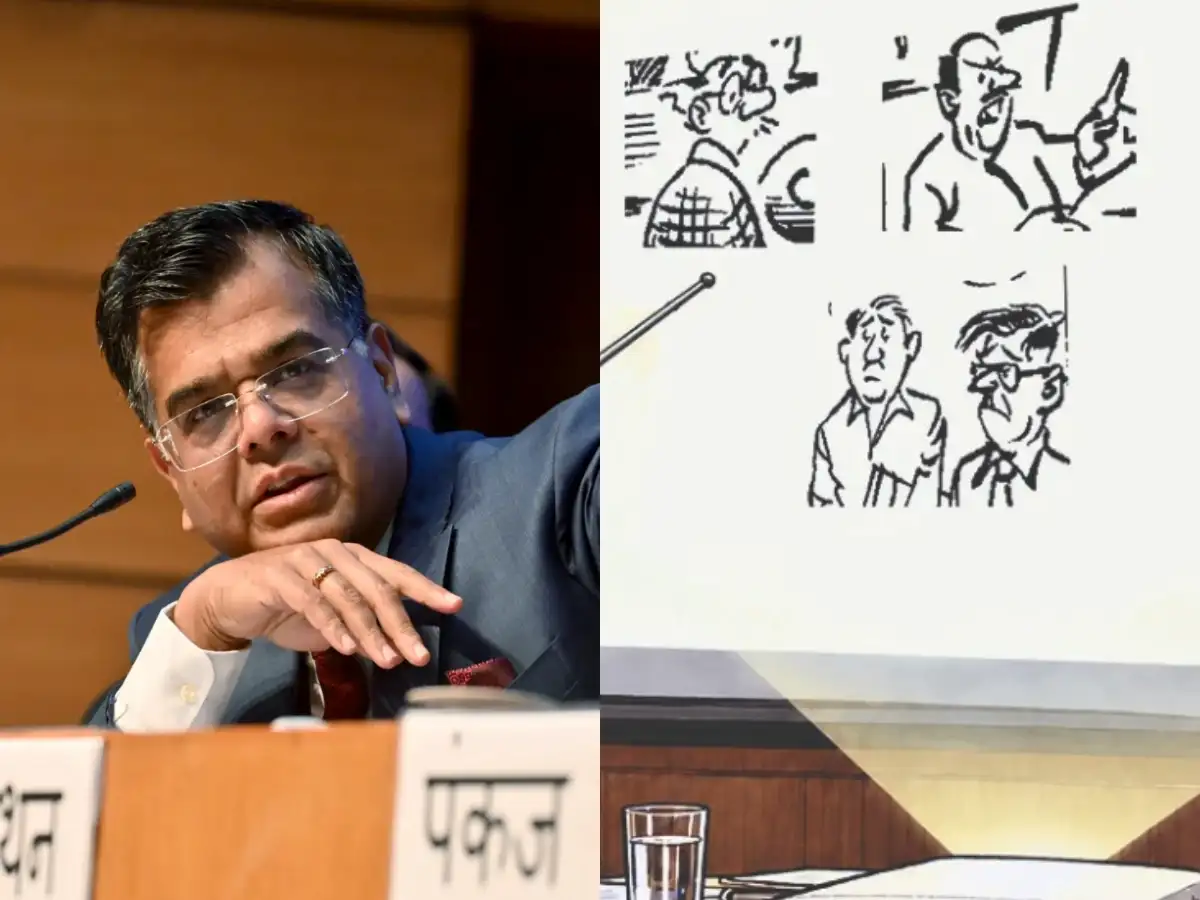
Babus who call late meetings, delay files face scrutiny as cabinet secretary lists 12 types of secretaries
Cabinet Secretary T V Somanathan highlighted issues with bureaucratic efficiency at a recent performance review meeting. He presented a list of problematic behaviors affecting government productivity using cartoons. Somanathan emphasized the necessity of timely decision-making and better communication between ministries. Another topic addressed was the improper usage of ration cards by railway employees.

Delhi starts online liquor booking app: How to order favourite brands without waiting in queues, check process, outlet availability, and key rules
Delhi's latest initiative introduces an online liquor booking app, letting users select their favorite brands and make payments seamlessly. To streamline the process, residents have 48 hours to pick up their orders from one of the 208 designated shops. While home delivery isn’t an option, the app aims to eliminate long queues and enhance transparency.


1st batch of Agniveers retiring soon: What's the retirement money, career options and benefits they will get
By 2026, approximately 18,300 Agniveers will finish their service in the armed forces, marking a pivotal transition. To ease their shift into civilian life, numerous states have initiated job quotas specifically for ex-Agniveers across different uniformed services and police departments. These initiatives stem from the Agnipath scheme launched in June 2022, which focuses on enlisting younger individuals in military roles.
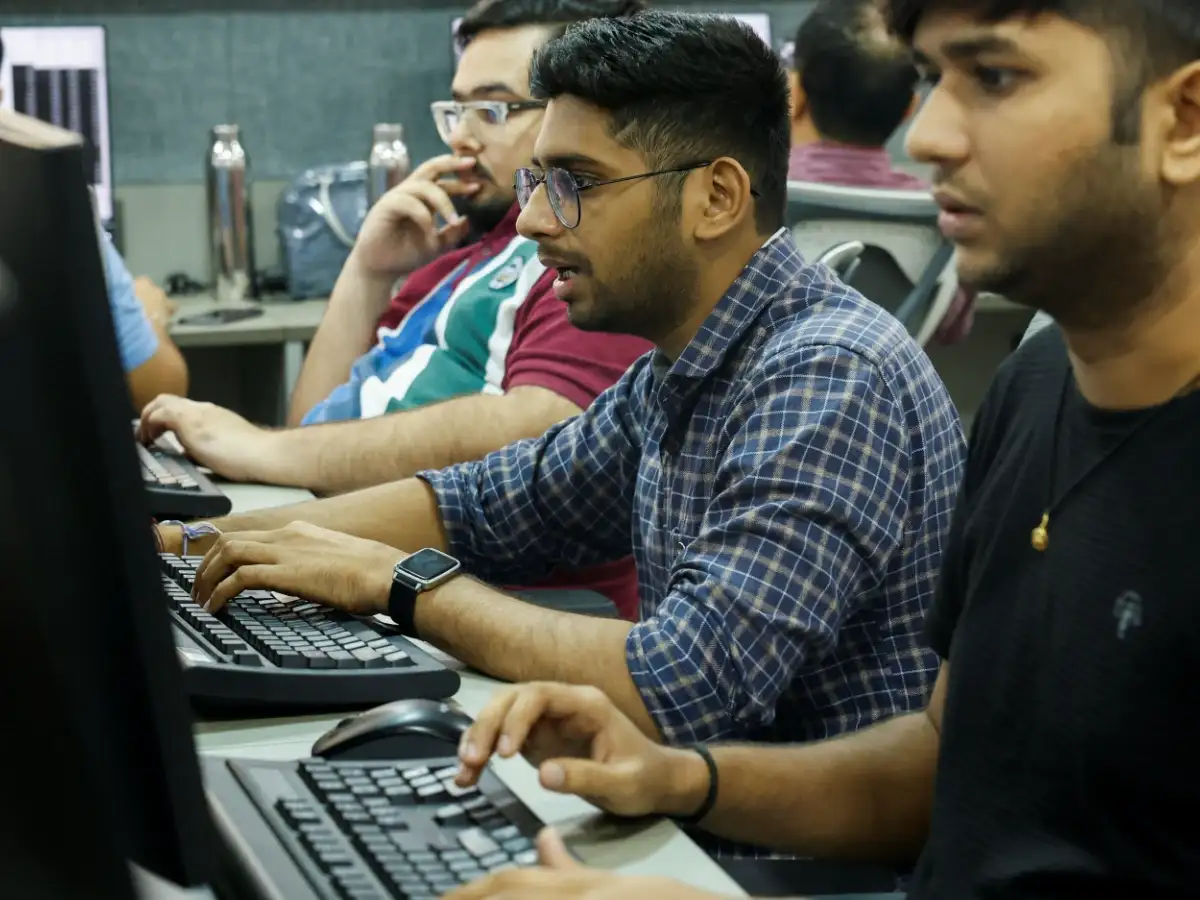
GST clarification on foreign investor brokerage offers sentiment boost, analysts say
The Indian government has clarified that brokerage paid by overseas clients may qualify as an export service. This could help foreign investors avoid the 18% goods and services tax on brokerage fees. Analysts suggest this clarification is sentimentally positive amid significant foreign outflows from Indian stocks. There is ongoing speculation regarding potential cuts in capital gains tax ahead of the federal budget.

'Copying China's manufacturing model may not pay off': Ashwini Vaishnaw hits back with ‘Cope harder’ remark, cites Rs 3 lakh crore PLI returns
Union Minister Ashwini Vaishnaw has hit back at criticism of India's mobile phone manufacturing strategy with a blunt “Cope harder” remark. Citing figures from the government's Production Linked Incentive (PLI) scheme, he said the government paid Rs 19,000 crore in incentives and collected Rs 25,000 crore in direct taxes, alongside Rs 3 lakh crore in GST. His response followed a Bloomberg Opinion video questioning India's iPhone manufacturing model, its dependence on imported components and the cost of government subsidies.



Ministry of Civil Aviation reviews Cyclone 'Arnab' situation, operational readiness
Cyclonic Storm Arnab is expected to intensify as it approaches the Andhra Pradesh coast on October 28. The Union Ministry of Civil Aviation has organized a meeting to ensure aviation safety during this period. Flights to and from coastal regions, including Visakhapatnam, Vijayawada, and Rajahmundry, are facing significant disruptions. Airlines have been advised to assist passengers and adhere to operational guidelines amid adverse weather.