
Ganges River flows with history and prophecy for India

Aug 11, 2020
For more than 1,700 miles, the Ganges flows across the plains like a timeline of India’s past, nourishing an extraordinary wealth of life
ALONG THE GANGES, India (AP) — More than 2,000 years ago, a powerful king built a fort on the banks of India’s holiest river, on the fringes of what is now a vast industrial city.
Today, little of the ancient construction remains, except for mounds of rubble that tannery workers pick through for bricks to build shanties atop what was once the fortress of the great King Yayati.
And Kanpur, where Yayati built his fort, is a city known for its leather tanneries and the relentless pollution they pump into the Ganges River.
For more than 1,700 miles, from the Gangotri Glacier in the Himalayas to the Bay of Bengal, the Ganges flows across the plains like a timeline of India’s past, nourishing an extraordinary wealth of life. It has seen empires rise and fall. It has seen too many wars, countless kings, British colonials, independence and the rise of Hindu nationalism as a political movement.
In India, the Ganges is far more than just a river. It is religion, industry, farming and politics. It is a source of water for millions of people, and an immense septic system that endures millions of gallons of raw sewage.
To Hindus, the Ganges is “Ganga Ma” — Mother Ganges — and a center of spiritual life for more than a billion people. Every year, millions of Hindus make pilgrimages to the temples and shrines along its shores. To drink from it is auspicious. For many Hindus, life is incomplete without bathing in it at least once in their lifetime, to wash away theirs sins.
But all is not well with the Ganges.
Pollution has left large sections of it dangerous to drink. Criminal gangs illegally mine sand from its banks to feed India’s relentless appetite for concrete. Hydroelectric dams along the river’s tributaries, needed to power India’s growing economy, have infuriated some Hindus, who say the sanctity of the river has been compromised.
And over the past 40-some years, the Gangotri Glacier — source of almost half the Ganges' water —has been receding at an increasingly frightening pace, now losing about 22 meters (yards) per year.
For millennia, the Gangotri’s glacial melt water has ensured the arid plains get enough water, even during the driest months. The rest comes from Himalayan tributaries that flow from the colossal chain of mountains.
As the Ganges flows across the plains, its once clean and mineral-rich water begins collecting the toxic waste from the millions of people who depend on it, becoming one of the most polluted rivers in the world. Millions of liters (gallons) of sewage, along with heavy metals, agricultural pesticides, human bodies and animal carcasses, are dumped into the Ganges every day.
At times, officials try to fix things but vast stretches of it remain dangerously unhealthy.
Still, to Hindus, the river remains religiously pure.
Every year, tens of thousands of Hindus bring the bodies of their loved ones to be cremated at the Ganges, in the city of Varanasi. A Hindu who dies in the city, or is cremated alongside it, is also freed from that cycle of birth and death.
After Varanasi, the Ganges continues its eastward journey through endless farmland as it nears the coast, eventually splitting off into ever-smaller rivers in the great wilderness of her delta. The biggest river, the Hooghly, heads south towards the sea, passing through Kolkata, the largest city in eastern India. Once the capital of the British raj, known as Calcutta, today the seething metropolis is home to nearly 15 million people.
Eventually, its waters spill into the Bay of Bengal.
Up near the Gangotri glacier, a genial Hindu holy man who goes by the name Mouni Baba and spends much of his life in silent meditation sees all of mankind reflected in the river.
“Human existence is like this ice,” he said. “It melts and becomes water and then merges into a stream. The stream goes into a tributary which flows into a river and then it all ends up in an ocean. Some (rivers) remain pure while others collect dirt along the way. Some (people) help mankind and some become the cause of its devastation.”
MORE NEWS

Vinegar and 1/2 cup herbal tea make a floor cleaner; Mississippi State says peppermint adds antibacterial qualities
More households are turning to DIY floor cleaners made from vinegar and peppermint tea. While vinegar is known for its cleaning properties, it doesn't effectively disinfect, according to research. Though peppermint tea has some antimicrobial benefits, it's not potent enough for thorough germ elimination. The addition of soap enhances dirt removal, making the solution suitable for routine cleaning.

Mars had a secret water history: NASA rover finds ancient groundwater and hot fluids that reshaped the planet after its ancient lake vanished
NASA's Perseverance rover discovered that Jezero Crater's Margin Unit was influenced by various water processes. The findings reveal alterations by ancient groundwater, lake water, and later hot fluids. These discoveries challenge previous assumptions about the crater's geological history and its water systems. Researchers believe that olivine and other minerals could provide clues about ancient habitability. The insights gained from Jezero may inform future studies on Mars' environmental changes.

New OTT releases this weekend: 9 new movies and shows coming on Netflix, JioHotstar, Prime Video and more
From anime sequels and action thrillers to sports documentaries, crime dramas and Indian films, this week's OTT lineup brings fresh movies and series across Netflix, Prime Video, JioHotstar, ZEE5 and more.
New OTT releases this weekend: 9 new movies and shows coming on Netflix, JioHotstar, Prime Video and more
From anime sequels and action thrillers to sports documentaries, crime dramas and Indian films, this week's OTT lineup brings fresh movies and series across Netflix, Prime Video, JioHotstar, ZEE5 and more.

BMW to cut 8,000 jobs in Germany as AI-led restructuring takes shape
BMW plans to eliminate around 8,000 jobs in Germany as part of its cost-cutting restructuring plan. The German luxury automaker aims to enhance competitiveness amid challenges such as weak demand and increasing Chinese competition. It intends to cut management roles by 20% and streamline its organizational structure while focusing on enhanced artificial intelligence.

What is Pentobarbital Injection? The drug used in Christa Pike’s failed Tennessee execution
Pentobarbital, a barbiturate used in lethal injections, was administered to Christa Pike during a failed execution. Pike survived after officials delivered two doses on September 30, 2026. Following the incident, Governor Bill Lee halted remaining executions for 2026 and ordered a review of the procedure. This incident has raised further scrutiny regarding the use of pentobarbital in capital punishment.

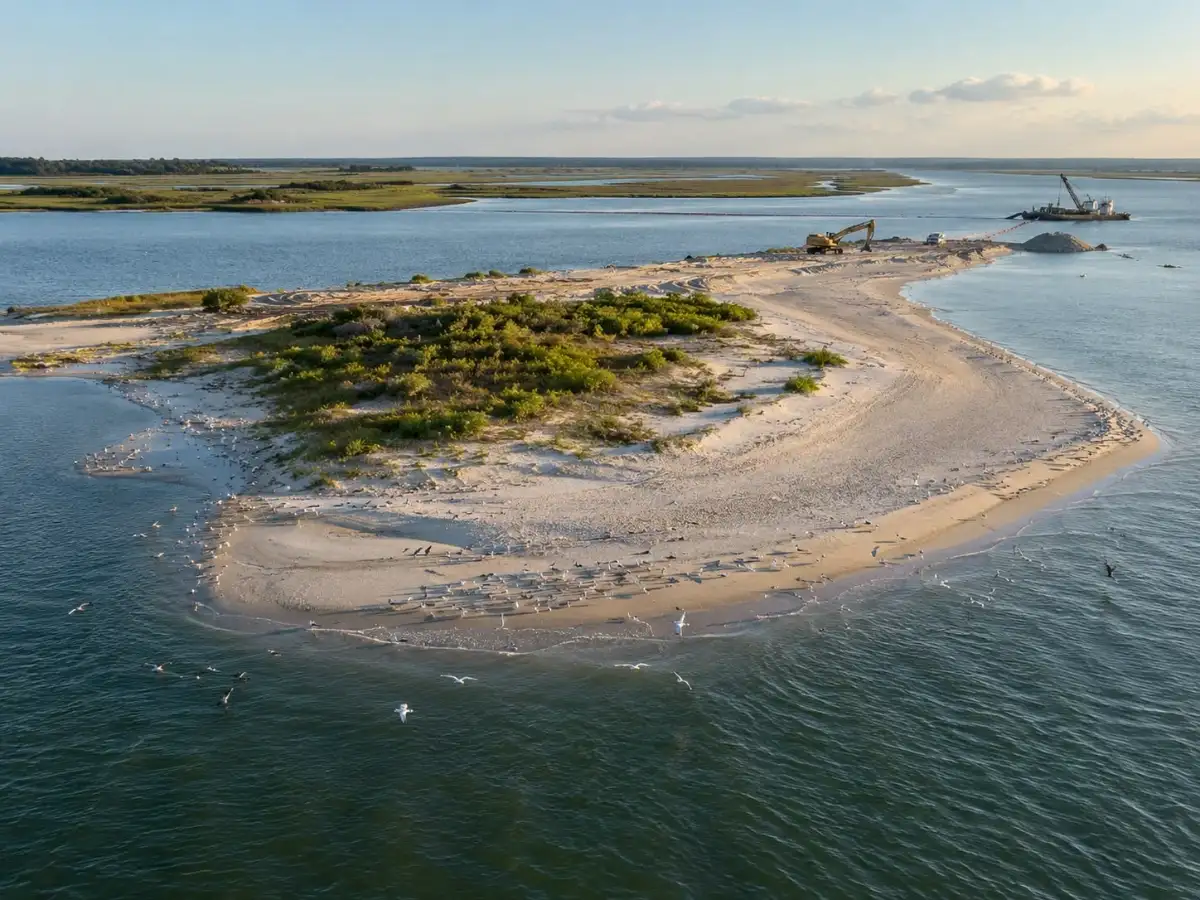
In 2018, South Carolina pumped 40,000 cubic yards of river sand onto an eroding bird island; enough to fill about 4,000 dump trucks and restore lost nesting ground
The restoration of Bird Key Stono, a vital nesting habitat for endangered bird species, involved utilizing dredged sand from Folly River. This effort was prompted by the severe erosion of the island's shores following Hurricane Irma. Supported by funding of $300,000 from federal sources, the South Carolina Department of Natural Resources and the U.S.


In 2014, volunteers began hunting for unusual features in particle-collision images; by 2026, over 42,000 had examined nearly 39,000 pictures
Higgs Hunters has rallied over 42,000 volunteers to sift through large volumes of images captured by the Large Hadron Collider. These participants seek to uncover distinctive patterns following the landmark Higgs boson discovery in 2012. The initiative not only fosters a deeper comprehension of particle physics but also motivates volunteers to pursue further studies, developing a unique lexicon that reflects their collective learning journey.

In 1967, Robert Kearns patented a windshield wiper that paused between sweeps; Ford later used the idea, and a jury awarded him $10.2 million in 1990
In the 1960s, inventor Robert W. Kearns developed a groundbreaking windshield wiper system featuring intermittent operation. After Ford appropriated his design without permission, Kearns found himself embroiled in an arduous legal fight to reclaim ownership. He endured various personal and financial hardships but triumphed in 1990 with a monumental $10.2 million judgment against Ford. Kearns' journey highlights the immense struggles inventors face in safeguarding their creations.

In 1988, Patricia Bath patented a device that used a laser through a tiny 1 mm incision to remove a cataract, turning the procedure into a matter of minutes
Dr. Patricia Bath made a groundbreaking advancement in cataract surgery with her invention of the Laserphaco Probe, utilizing cutting-edge laser technology. This innovation paved the way for minimally invasive procedures, leading to significantly quicker recovery times for patients. Despite facing numerous obstacles in securing research resources globally, Bath co-founded the American Institute for the Prevention of Blindness to enhance access to eye care.