
Armed mobs rampage through villages and push remote Indian region to the brink of civil war
Jul 5, 2023
India's remote northeastern state of Manipur is caught in a deadly conflict between two ethnic communities that have armed themselves and launched brutal attacks against one another
KANGVAI, India (AP) — Zuan Vaiphei is armed and prepared to kill. He is also ready to die.
Vaiphei spends most of his days behind the sandbag walls of a makeshift bunker, his fingers resting on the trigger of a 12-gauge shotgun. Some 1,000 yards ahead of him, between a field of tall green grass and wildflowers, is the enemy, peering from parapets of similar sandbag fortifications, armed and ready.
“The only thing that crosses our mind is will they approach us; will they come and kill us? So, if they happen to come with weapons, we have to forget everything and protect ourselves,” the 32-year-old says, his voice barely audible amid an earsplitting drone of cicadas in Kangvai village that rests along the foothills of India’s remote northeastern Manipur state.
Dozens of such fortifications mark one of the many front lines that don’t exist on any map and yet
dissect Manipur in two ethnic zones
– between people from hill tribes and those from the plains below. There, amid endless groves of bamboo and oak, young men walk by with rifles slinging from their shoulders.“Our mothers, our sisters, they fast for us, praying to God,” Vaiphei says, standing at the mouth of his bunker where he keeps a copy of the Bible alongside him.
Two months ago, Vaiphei was teaching economics to students when the simmering tensions between the two communities exploded in a bloodletting so horrific that thousands of Indian troops who were sent to quell the unrest remain near paralyzed by it.
The two warring factions have formed armed militias, laying bare the ethnonationalist fissures that have long threatened to worsen instability in India’s restive northeastern region.
Tucked in the mountains on the border with Myanmar, Manipur was once ruled by a patchwork of kings and tribal confederations. It appears to be a different world from the rest of India, a culture that borrows heavily from East Asia. Manipur is also a state that has never been fully reconciled to central rule and some guerrilla groups still pursue an effort to break away from India.
Ethnic clashes between different groups have occasionally erupted in the past, mostly pitting the minority Christian Kukis against mostly Hindu Meiteis, who form a narrow majority in the state. But no one was prepared for the killings, arson and a rampage of hate that followed in May, after Meiteis had demanded a special status that would allow them to buy land in the hills populated by Kukis and other tribal groups, as well as a share of government jobs.
Police armories were looted. Within days, both sides were armed to unleash havoc.
Witnesses interviewed by The Associated Press described how angry mobs and armed gangs swept into villages and towns, burning down houses, massacring civilians, and driving tens of thousands from their homes. More than 50,000 people have fled to packed relief camps. Those who fought back were killed, sometimes bludgeoned to death or beheaded, and the injured tossed into raging fires, according to witnesses and others with first-hand knowledge of the events.
The deadly clashes, which have left at least 120 dead by the authorities' conservative estimates, persist despite the army’s presence. Isolated villages are still raked with gunfire. Wide swathes have turned into ghost towns, scorched by fire so fierce that it left tin roofs melted and twisted. Burnt buildings and churches stare out at the narrow dirt roads. In front-line neighborhoods, women join night patrols with flaming torches.
Manipur is India’s unseen war – barely visible on the country’s countless TV news channels and newspapers, a conflict hidden behind the
blanket shutdown of the internet
that the government said was used to fuel the violence by spreading disinformation and rumors. The internet ban has severed communications in Manipur, locked out reporters and left the state’s 3.7 million people scrambling for a sliver of information.“It is as close to civil war as any state in independent India has ever been,” said Sushant Singh, a senior fellow at the Centre for Policy Research in India and an Indian army veteran. He said the armed civilians were not organized as militant or terrorist groups, but ”these are local people, people of one ethnicity, fighting against other ethnicity."
The conflict has also divided state forces, with many defecting to their communities along with their arms and in some cases more sophisticated weaponry like snipers, light machine guns and mortars. A number of former army soldiers and policemen have been shot dead by either faction.
The unrest has been met with nearly two months of silence from Prime Minister Narendra Modi, whose Bharatiya Janata Party rules Manipur.
Modi’s powerful home minister, Amit Shah, visited the state in May
and tried to make peace between the two sides. Since then, state lawmakers — many of whom escaped after their homes were torched by mobs — have huddled in New Delhi to try to find a solution.The state government, nonetheless, has assured Manipur is returning to normalcy. On June 25, Chief Minister N. Biren Singh said that the government and armed forces had been “able to control the violence to a great extent in the past week.” However, Singh’s visit on Sunday to a front line coincided with fresh clashes that left three people dead, officials said.
In some ways, the bitter fight between the two factions is driven by deeply rooted problems that have festered for years.
Meiteis have long blamed minority Kukis for the state’s rampant drug problems and accused them of harboring migrants from Myanmar. The administration, mostly made up of Meiteis, also appears to be coming down heavily on Kukis after Singh alleged that some of those involved in the latest clashes were “terrorists.”
However, India's top military officer, Gen. Anil Chauhan, who visited the state in May, had a different view, saying “this particular situation in Manipur has nothing to do with counter-insurgency and is primarily a clash between two ethnicities.”
Some Meiteis fear that the hill tribes are using illegal drugs to finance a war to finish them off. On the other side, Kukis worry for their safety and now seek federal rule over the state and administrative autonomy for the community.
Such concerns gave way to violence on May 3, when clashes first erupted in Manipur’s Churachandpur district and soon spread to other parts of the state as frenzy mobs attacked one village after another.
It reached A. Ramesh Singh’s home on May 4 in Phayeng, a predominantly Meitei village some 17 kilometers (10 miles) from the state capital Imphal.
The previous day, Singh had kept a vigil outside his village whose residents, more than 200 of them, were expecting mobs of Kukis to descend from an adjacent hill. A former soldier, Singh carried a licensed gun with him, his son, Robert Singh, said.
The night of the raid, Singh fired shots, some in the air and some at the mobs, but was hit in his leg. Wounded and unable to walk, he watched his village being ransacked, before he was abducted with four other people and dragged up the hills, his son said.
The entire village gathered in a nearby open area, praying for the return of their neighbors.
“We didn’t know if he was dead, but we prayed. We prayed he would return,” Robert, 26, said on a recent afternoon at his house.
Robert joined the search for his father, shouting his name as they hiked up the hill. No one answered.
The next day, Robert was told his father’s body was found in a grove. He was shot in the head.
“Please save us. This is our last word to the world,” Robert pleaded, folding his hands, his head shaved in a sign of bereavement.
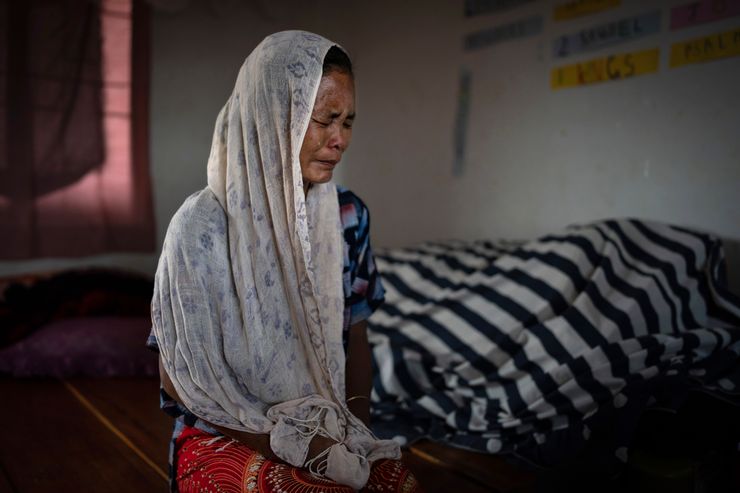
Singh’s body was burned according to Hindu rituals and the remains were buried in a grave nearby. On a recent afternoon, his wife, Lilapati Devi, and Robert trudged towards it to pay their respects. As Singh’s grave became visible from a distance, Devi began to howl and called her husband’s name. “Are you at peace, my love?” she wailed.
The anguish of victims also resonates quietly through hundreds of relief camps where displaced Kukis – who have suffered most deaths and destruction of homes and churches – are taking shelter.
Kim Neineng, 43, and her husband had enjoyed years of peace in Lailampat village. He farmed the fields. She sold the produce in the market. They were welded to each other by love.
On the afternoon of May 5, Neineng went outside her house to check on noise. Out of breath, she rushed inside and told her husband what she had seen: a Meitei mob, many of them armed, had descended on their village, screaming and hurling abuses.
Neineng’s husband knew what it meant. He asked her to escape with their four children and not look back, promising he would take care of the cattle and their home. She quickly packed her belongings and ran to a nearby relief camp.
A day later, more of her neighbors reached the shelter and told Neineng what had happened to her husband.
When the mob reached their house, the husband tried to reason with them, but they wouldn’t listen. Soon, they started beating him with iron bars. More armed men arrived and chopped off his legs. Then they picked him up and tossed him in the raging fire that had already engulfed his home.
Neighbors found his charred body on the scorched floor.
“They tortured and treated him like an animal, without any humanity. When I think of his last moments, I can’t comprehend what he must have felt,” Neineng said, barely choking out words.
No one in Neineng’s relief camp wants to return home. But she says she would still like to go one last time and visit the place where her husband was killed.
“Maybe I will just go to feel his presence. So that his soul is at peace,” she said.
Manipur’s war and its ugliness spell horror for the victims and signify something deeper: This remote region is slowly cracking apart.
Two months since the conflict began, hundreds of roadblocks and sandbag bunkers dot highways across the torn Manipur lands. Most of these imaginary borders are controlled by the warring communities. Those left unattended have been taken over by Indian forces who peep from binoculars into each side where armed bands in camouflage rev motorcycles.
Surveillance drones sometimes circle high overhead over the checkpoints. Those who belong to the wrong ethnic group cannot pass through. Convoys with food and other essential supplies are escorted by the army. There is a curfew in place.
Some villagers have set up fortifications made of bamboo around their houses, chiseling its edges in the shape of spears to keep mobs away. Others have painted their ethnicity on doors of their homes in fears that they could be burned due to mistaken identity.
Bursts of gunfire are followed by long lulls in which the armed opponents take smoke breaks and drink beer.
Yet, there are signs it could get worse as each side is vying for control of villages or seizing them back – a guerrilla tactic that sometimes leads to deadly gunfights, use of mortar shells and in one instance a car bombing that left three people critically injured.
Both Kukis and Meiteis are asking questions they thought they would never ask: Should they also pick up arms and fight?
Vaiphei, the economics teacher who has taken up arms, is certain it will be a long-drawn fight. For each one who is killed, another will take his place, he says.
___
Associated Press journalists Altaf Qadri and Shonal Ganguly contributed to this report.
MORE NEWS

G20 foreign ministers end Atlanta meeting without consensus on key issues
As Washington seeks to loosen China’s dominance over critical minerals, US Secretary of State Marco Rubio urged other members of the Group of 20 (G20) to strengthen supply chains and secure strategic trade routes as the group’s foreign ministers’ meeting drew to a close in Atlanta on Saturday. Rubio said there was a “universal recognition” among the G20 members over the importance of issues like critical minerals, supply chain security and freedom of navigation. “The first step is at least some...

Manchester United's Longest Winless Run: A Look Back
Manchester United's woes deepened with a 2-0 loss to Chelsea, stretching their winless run to nine games and leaving them 16th in the Premier League table.

Lakshya Sen Stuns Toma Junior Popov, PV Sindhu Beats Anmol Kharb To Move Into Hylo Open Final
Lakshya Sen avenged his 2025 China Open loss to Toma Junior Popov with a dominant semifinal win, as PV Sindhu outclassed youngster Anmol Kharb to set up another title shot.

Valentin Vacherot Creates Monaco History, Stuns Taylor Fritz To Reach Basel Final
Valentin Vacherot created Monegasque tennis history by stunning sixth seed Taylor Fritz in straight sets to reach the Swiss Indoors Basel final.
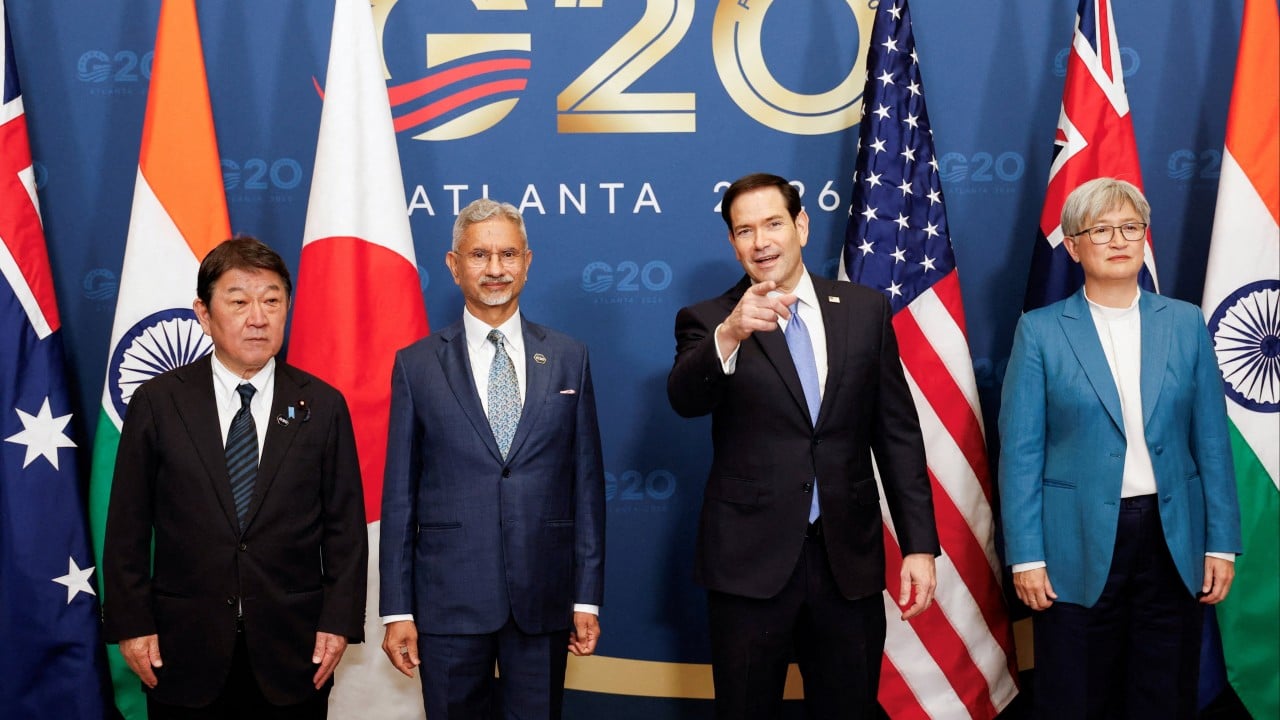
Quad not ‘anti-China’, says Rubio as first summit in two years set before Trump-Xi talks
US Secretary of State Marco Rubio said on Saturday that the Quadrilateral Security Dialogue, or the Quad, was not an “anti-China” coalition, as the grouping’s top diplomats finalised preparations for the leaders’ summit in the Philippines next month. Rubio’s statement comes just weeks before US President Donald Trump is scheduled to meet Chinese leader Xi Jinping in Shenzhen, China. “It is not an anti-China or anti-anybody coalition,” Rubio said at a press conference on the sidelines of the...

Meghalaya minister Metbah Lyngdoh resigns as UDP loses legislators to NPP, BJP
Meghalaya cabinet minister and United Democratic Party (UDP) president Metbah Lyngdoh has resigned amid a series of defections that have sharply weakened his party's strength in the Assembly. The exits include three MLAs who joined the ruling National People's Party and eight others whose merger with the BJP was recognised by the Assembly Speaker.
Court discharges former drug regulator S Eswara Reddy, three others in corruption case
The court found that the call recordings relied on by the prosecution did not attribute criminality to Reddy. None of the accused, it noted, had said in the recordings that Reddy demanded a bribe on any particular day or time to favour Bengaluru-based Biocon Biologics Ltd (BBL).
Centre releases addition instalment of tax devolution of Rs 1.09 lakh crore to states
This is in addition to the regular monthly devolution and the second additional instalment this financial year.
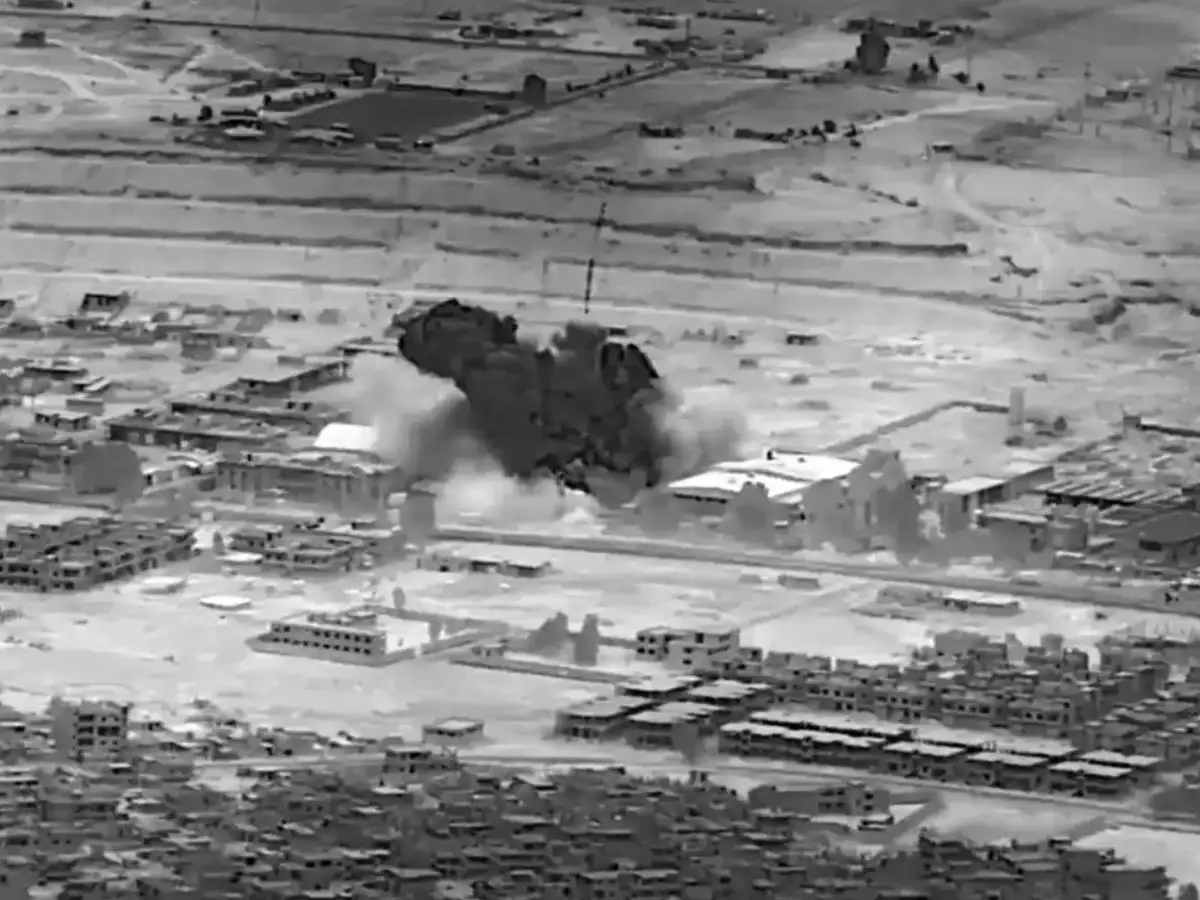
Iran targeted US air defences then hit aircraft and buildings on Mideast bases: AP analysis
An Associated Press analysis of satellite imagery and regional officials' accounts found that Iranian strikes damaged or destroyed structures at 26 US military bases and other sites across the Middle East through August. Iran initially targeted early-warning radars and aircraft infrastructure before hitting warehouses, troop accommodation and other facilities, causing billions of dollars in equipment damage.
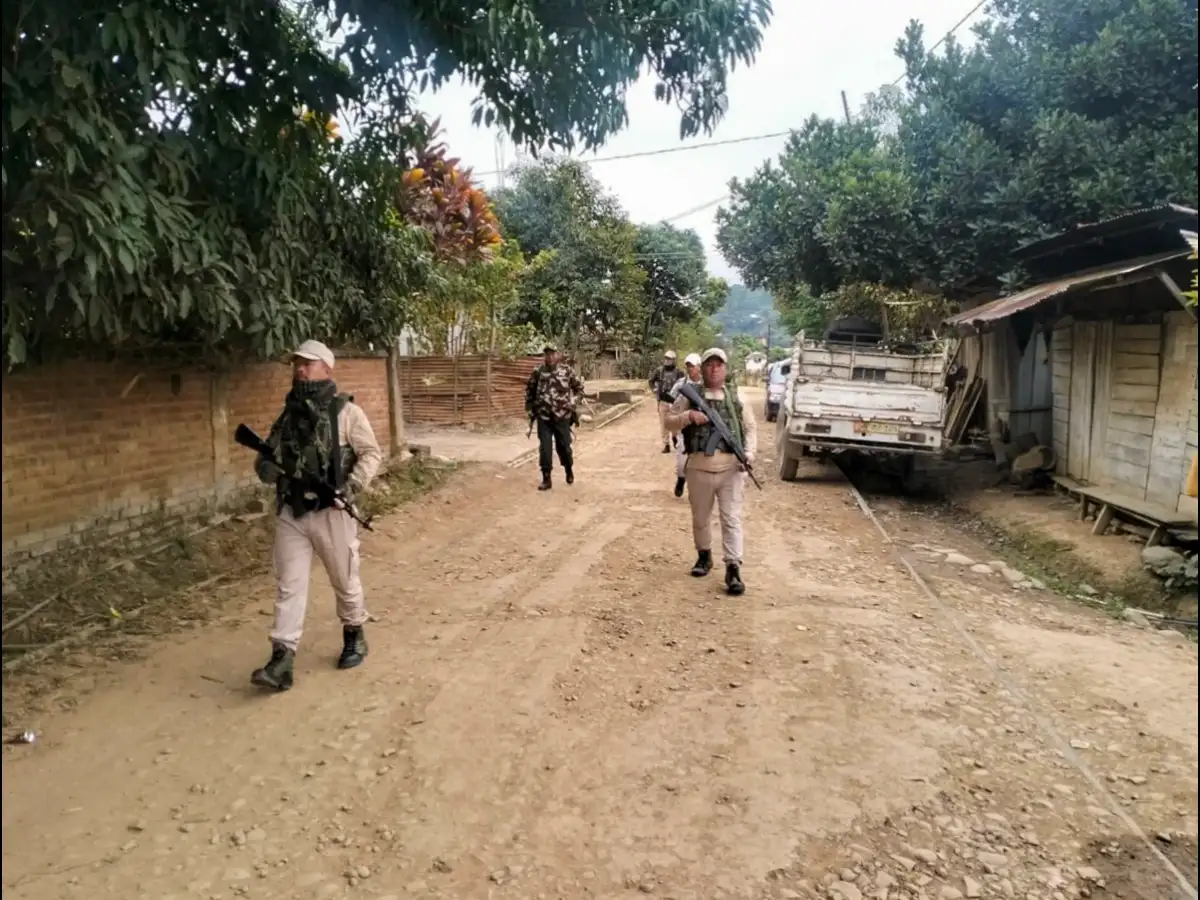
Three people killed in Noney in Manipur
KIM alleged that the act was committed by cadres of the NSCN-IM and ZUF(K) terrorist groups. This atrocity is a direct, unprovoked assault on the lives, dignity, and survival of the Kuki-Zo people in their own homeland.
Three people killed in Noney in Manipur
KIM alleged that the act was committed by cadres of the NSCN-IM and ZUF(K) terrorist groups. This atrocity is a direct, unprovoked assault on the lives, dignity, and survival of the Kuki-Zo people in their own homeland.
CCI clears five major deals across food, energy, fintech and telecom sectors
CCI has granted approval for five significant business transactions in sectors like food services and renewable energy. The merger of Sapphire Foods India Limited with Devyani International Limited aims to combine their restaurant operations in India. Aditya Birla Renewables Limited is set to acquire Solenergi Power Private Limited from Shell for approximately Rs 17,200 crore. In financial services, Prosus N.V.