
AP EXPLAINS: For 69 years, Kashmir is torn by deadly strife
Aug 17, 2016
AP EXPLAINS: For 69 years, Kashmir is torn by deadly strife
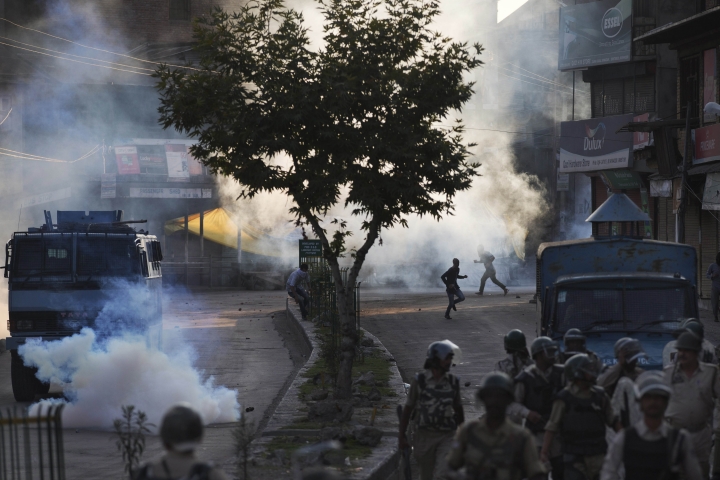
SRINAGAR, India — When news spread in early July that Indian troops had killed a charismatic commander of Indian-controlled Kashmir's biggest rebel group, the public response was spontaneous and immense. Tens of thousands of angry youths poured out of their homes in towns and villages across the Himalayan region, hurling rocks and bricks and clashing with Indian troops.
A strict curfew and a series of communications blackouts since then have failed to stop the protesters, who are seeking an end to Indian rule in Kashmir, even as residents have struggled to cope with shortages of food, medicine and other necessities. The clashes, with protesters mostly throwing rocks and government forces responding with bullets and shotgun pellets, has left more than 60 civilians and two policemen dead. Thousands of civilians have been injured and hundreds of members of various government security forces. On Wednesday, two soldiers were killed when they were ambushed by suspected rebels near the town of Baramulla, army officials said.
But Kashmir's fury at Indian rule is not new. The stunning mountain region has known little but conflict since 1947, when British rule of the subcontinent ended with the creation of India and Pakistan.
___
THE HISTORY
In 1947, the kingdom of Jammu and Kashmir was asked to join with either India or Pakistan. But Maharaja Hari Singh, the unpopular Hindu ruler of the Muslim-majority region, wanted to stay independent.
However, local armed uprisings that flared in various parts of Kashmir, along with a raid by tribesmen from northwestern Pakistan, forced Singh to seek help from India, which offered military assistance on condition that the kingdom link itself to India. The ruler accepted, but insisted that Kashmir remain a largely autonomous state within the Indian union, with India managing its foreign affairs, defense and telecommunications.
The Indian military entered the region soon after, with the tribal raid spiraling into the first of two wars between India and Pakistan over Kashmir. The first war ended in 1948 with a U.N.-brokered cease-fire. Nonetheless, Kashmir was divided between the two young nations by the heavily militarized Line of Control, with the promise of a U.N.-sponsored referendum in the future.
In Indian-controlled Kashmir, many saw the transition as the mere transfer of power from their Hindu king to Hindu-majority India. Kashmiri discontent against India started taking root as successive Indian governments breached the pact of Kashmir's autonomy. Local governments were toppled one after another, and largely peaceful movements against Indian control were suppressed harshly.
Pakistan regularly raised the Kashmir dispute in international forums, including in the U.N. Meanwhile, India began calling the region an integral part of the nation, insisting that Kashmir's lawmakers had ratified the accession to New Delhi.
As the deadlock persisted, India and Pakistan went to war again in 1965, with little changing on the ground. Several rounds of talks followed, but the impasse continued.
In the mid-1980s, dissident political groups in Indian-held Kashmir united to contest elections for the state assembly. The Muslim United Front quickly emerged as a formidable force against Kashmir's pro-India political elite. However, the United Front lost the 1987 election, which was widely believed to have been heavily rigged.
A strong public backlash followed. Some young United Front activists crossed over to Pakistan-controlled Kashmir, where the Pakistani military began arming and training Kashmiri nationalists.
By 1989, Kashmir was in the throes of a full-blown rebellion.
India poured more troops into the already heavily militarized region. In response, thousands of Kashmiris streamed back from the Pakistani-controlled portion with weapons, staging bloody attacks on Indian security forces and pro-India Kashmiri politicians. Indian soldiers, empowered with emergency laws giving them legal impunity, carried out a brutal military crackdown, leaving Kashmiris exhausted and traumatized. More than 68,000 people have been killed since then.
Kashmir rebels suffered a major setback after 9/11, when the U.S. pressured Pakistan to rein in the militants. Indian troops largely crushed the militancy after that, though popular demands for "azadi," - freedom - remain ingrained in the Kashmiri psyche.
In the last decade, the region has made a transition from armed rebellion to unarmed uprisings, with tens of thousands of civilians repeatedly taking to the streets to protest Indian rule, often leading to clashes between rock-throwing residents and Indian troops. The protests are usually quelled by force, often resulting in deaths.
___
RECENT DEVELOPMENTS
In 2008, a government decision — later revoked — to transfer land to a Hindu shrine in Kashmir set off a summer of protests. The following year, the alleged rape and murder of two young women by government forces set off fresh violence.
In 2010, the trigger for protests was a police investigation into allegations that soldiers had shot three civilians dead, and then staged a fake gun battle to make it appear that the dead were militants in order to claim rewards for the killings.
Over those three years hundreds of thousands of young men and women took to the streets, hurling rocks and insults at Indian forces. At least 200 people were killed and hundreds wounded as troops fired into the crowds, inciting further protests.
The crackdowns appear to be pushing many educated young Kashmiris, who grew up politically radicalized amid decades of brutal conflict, toward armed rebel groups. Young Kashmiri boys began snatching weapons from Indian forces and training themselves deep inside Kashmir's forests.
Despite that, the number of militants has apparently remained tiny, with security experts estimating there has not been more than 200 for the last several years.
___
ANTI-INDIA GROUPS
The All Parties Hurriyat Conference is a conglomerate of social, religious and political groups formed in 1993. It advocates the U.N.-sponsored right to self-determination for Kashmir or three-way talks that include India, Pakistan and Kashmiri leadership to resolve the dispute.
The Jammu and Kashmir Liberation Front was one of the first armed rebel groups. It favors an independent, united Kashmir. Currently led by Mohammed Yasin Malik, the group gave up armed rebellion in 1994, soon after Indian authorities released Malik from jail after four years.
Hizbul Mujahideen is Kashmir's largest and only surviving indigenous armed rebel group. Formed in 1990, the group demands Kashmir's merger with Pakistan. Its supreme commander, Syed Salahuddin, is based in Muzaffarabad, the capital of Pakistan-controlled Kashmir. The group was led in Indian Kashmir by Burhan Wani until his death on July 8, which sparked the current clashes.
Lashkar-e-Taiba is a Pakistan-based group fighting for the merger of Indian-controlled Kashmir with Pakistan. The United States lists it as a terrorist group. Its leader, Hafiz Saeed, is on a U.S. terrorist list, with a $10 million bounty on his head. He's also one of India's most wanted men. New Delhi blames the group for several deadly attacks in Kashmir and Indian cities, including the 2008 Mumbai attack that killed 166 people.
___
PRO-INDIA GROUPS
The Jammu Kashmir National Conference is a pro-India political group that has ruled Kashmir for much of the time since 1947. Its most recent leaders, Farooq Abdullah and his son Omar Abdullah, the current opposition leader in the state assembly, are seen as the strongest proponents of India in Kashmir.
The Jammu Kashmir Peoples Democratic Party emerged in the early 2000s as the strongest opponent to the National Conference, strategically using pro-separatist views for electoral gains. It came to power in 2002. It currently rules Indian-controlled Kashmir in coalition with India's ruling Hindu nationalist Bharatiya Janata Party.
___
Follow Aijaz Hussain at www.twitter.com/hussain_aijaz
MORE NEWS
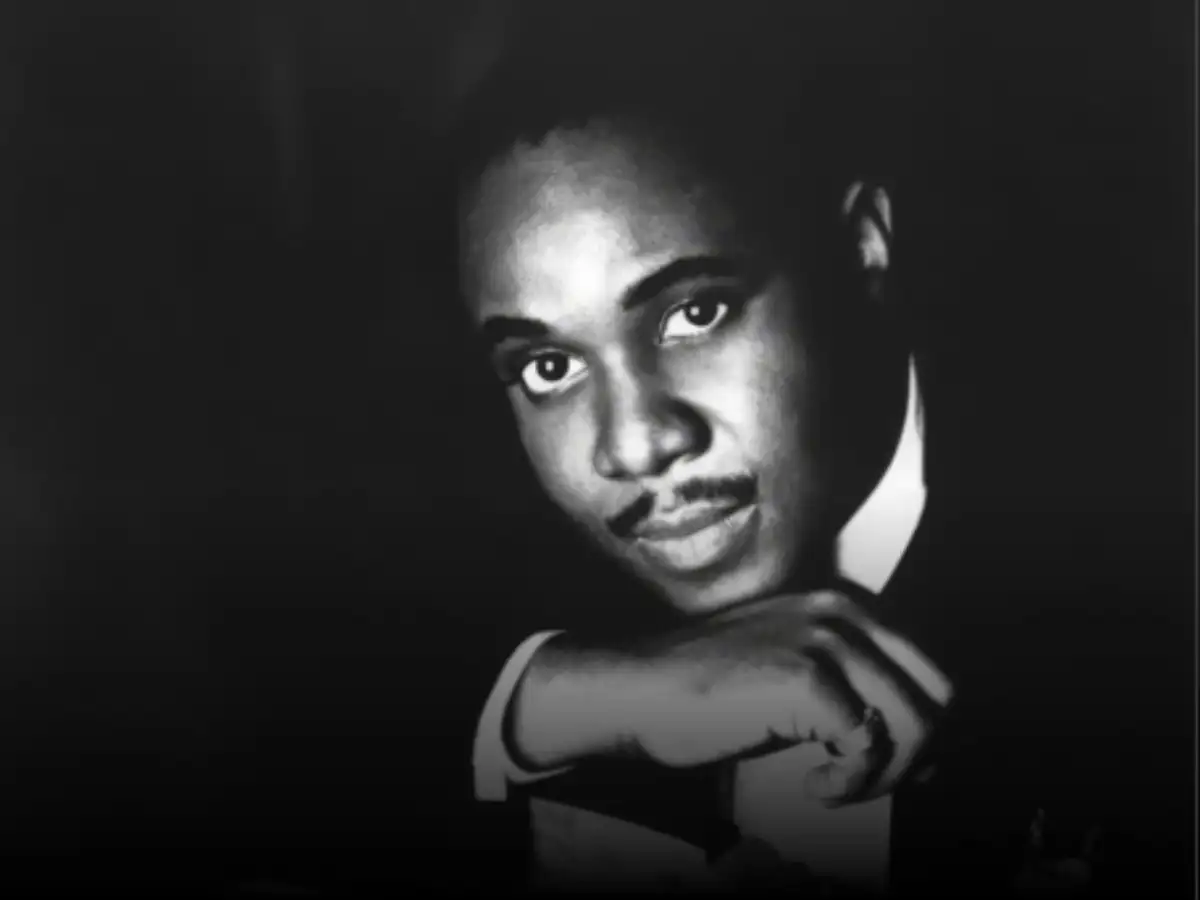
Freddie Jackson was trained as a gospel singer before becoming one of R&B's biggest stars
Freddie Jackson, the beloved R&B singer, has passed away at the age of 70 after a courageous fight with kidney disease. A native of Harlem, he captured hearts with timeless hits like 'You Are My Lady' and 'Rock Me Tonight.' His music, cherished by many, defined moments across generations. Despite health challenges, Jackson's impact remained significant.

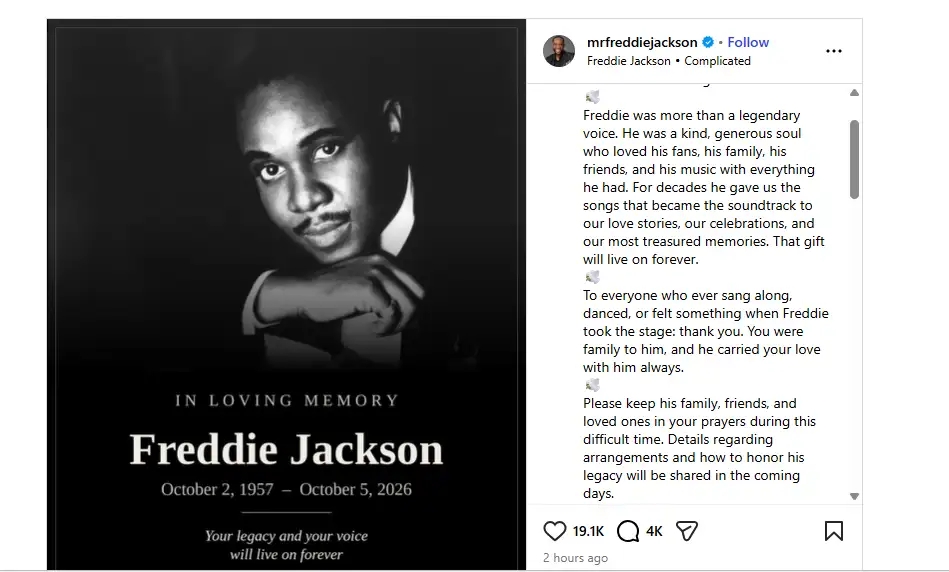
Freddie Jackson cause of death: R&B singer dies at 70 just days after his birthday-here's what is known about his death
Freddie Jackson passed away three days after celebrating his 70th birthday, as announced by his family. He was renowned for hits like 'You Are My Lady' and 'Rock Me Tonight.' Jackson's music defined the quiet storm genre and resonated with romance and celebration for many fans. His family is yet to disclose details regarding funeral arrangements and ways to honor his legacy.

Warren Buffett’s S&P 500 investment advice: How $400 a month in this fund may grow to $820,000 in 30 years
Warren Buffett advocates for investing in the S&P 500 index fund over picking individual stocks. A consistent investment of $400 each month could yield impressive returns based on historical data. After three decades, this strategy might lead to around $820,000, assuming that past annual returns continue.

Ted Lasso Season 5 has no green light yet, but Jason Sudeikis may have a bigger plan
Apple has not described Ted Lasso Season 4 as the show’s final chapter. A series finale would typically come with a clear marketing campaign around its ending. So far, that messaging is missing. It leaves the door open for speculation about the show’s future.


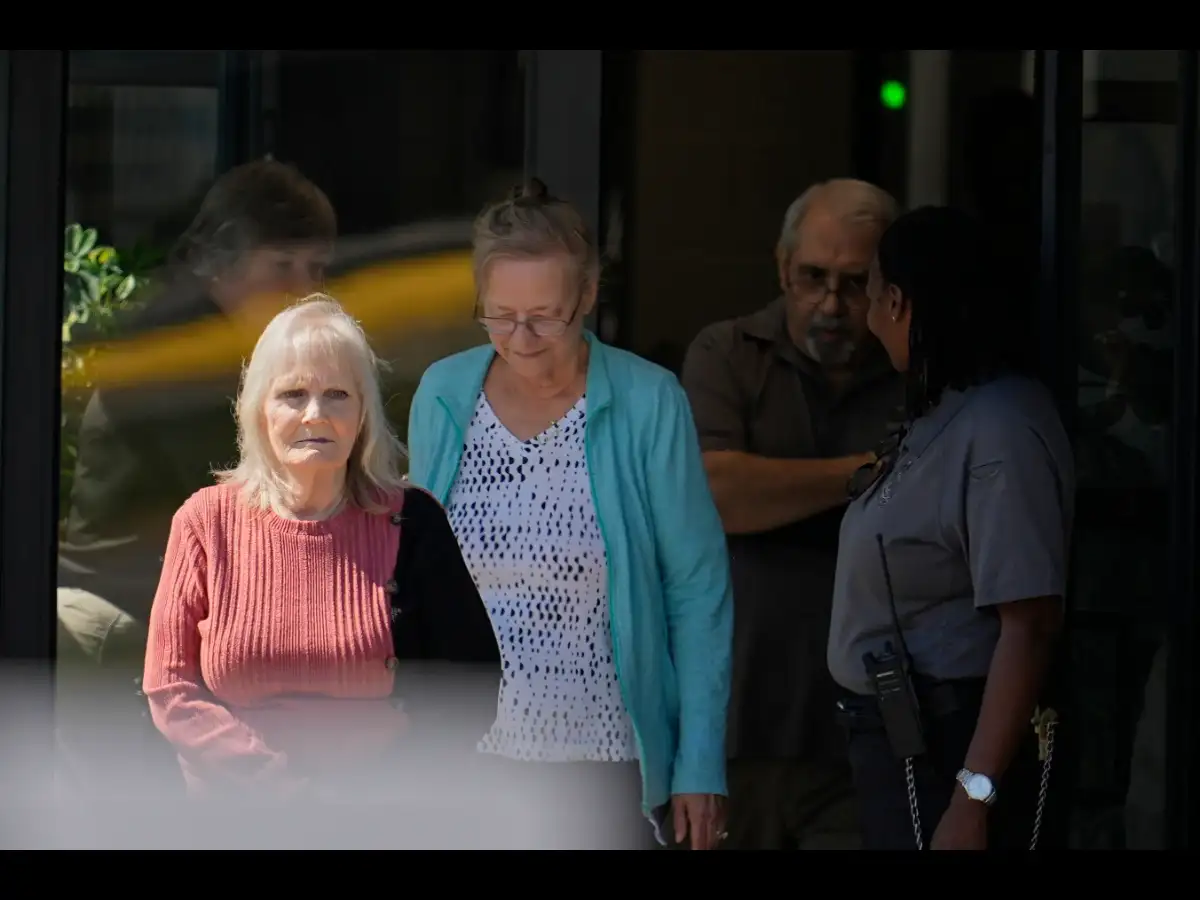
'Like a band-aid opening': Eye wittnesses reveal the unsettling sounds they heard from Christa Pike's execution chamber
Christa Pike's execution by lethal injection was marred by issues, distressing witnesses with unsettling sounds from the chamber. While her legal team asserts she was rendered unconscious and is now reliant on a ventilator, the outlook for her recovery remains uncertain following the botched procedure. Amid these complications, her lawyers are advocating for her death sentence to be commuted to life in prison.

No glue, no rope and no synthetic assembly: Woven Pavilion uses interlocking modules to explore the future of temporary nature-based architecture
Atelier DARN’s Woven is a temporary architectural pavilion in the Les Gavarres landscape of Girona, Spain, created around transformation, decay and regeneration. The structure includes wood with a biodegradable filament made from miscanthus, which is used to 3D print around 700 modular components. The pieces connect through an interlocking system that needs neither glue nor rope and avoids synthetic materials in the assembly.
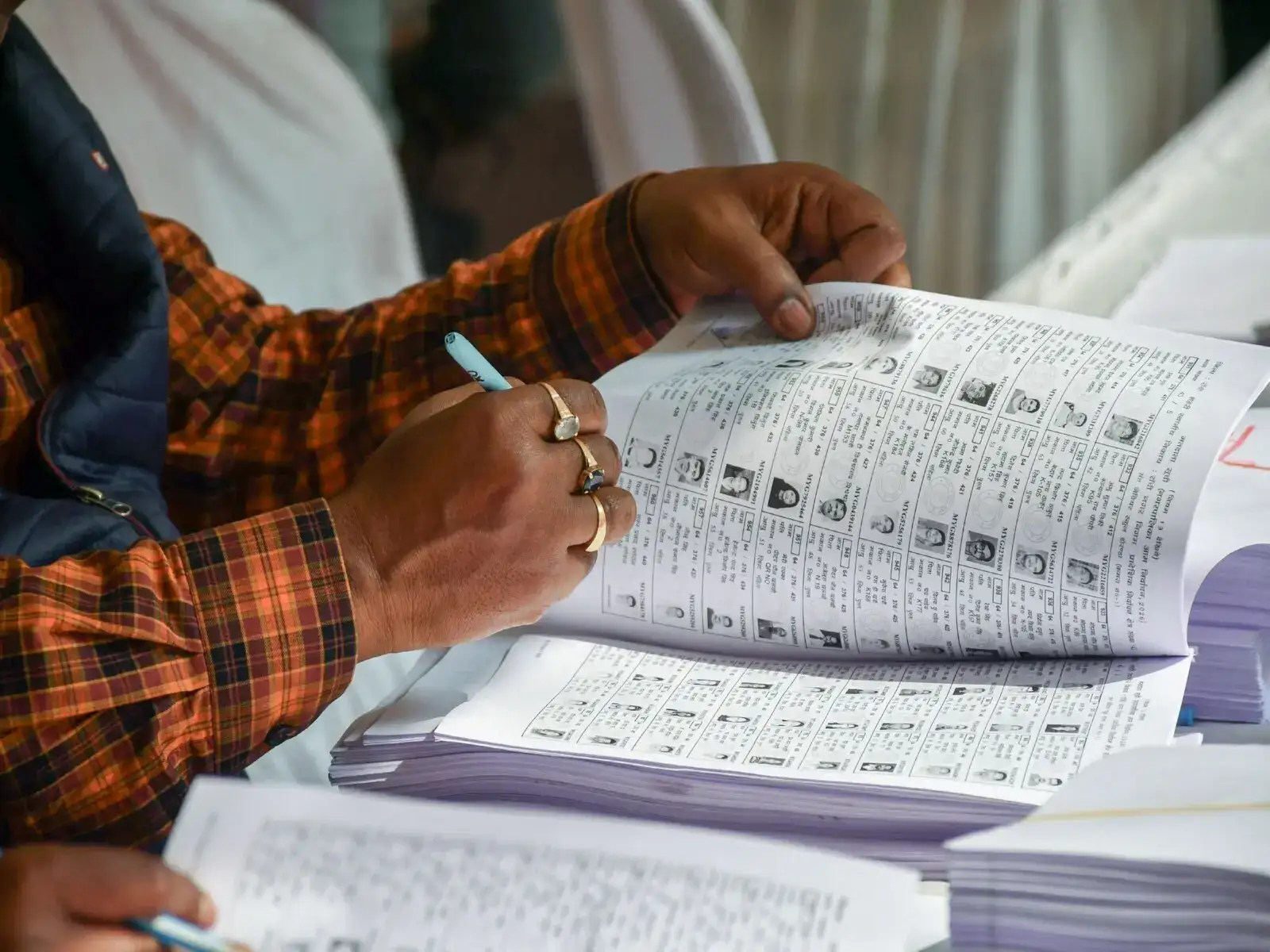
Bengal bypolls: 79 pc turnout in Nandigram, Rejinagar amid violence, intimidation claims
In the West Bengal Assembly bypolls, a robust turnout of nearly 79 percent was recorded, despite disturbing reports of violence and intimidation. Opposition parties alleged that their agents faced eviction from voting booths, heightening tensions. The arrest of AJUP chief Humayun Kabir during a confrontation sparked further unrest. While the BJP defended the voting process, Congress accused local police of bias.