
AP Exclusive: Jailed Chinese pastor's US family seeks mercy
Apr 16, 2018
The American family of a prominent Chinese Christian pastor is asking for leniency after he was sentenced to prison for missionary work as the atheist ruling Communist Party exerts greater control over believers
BEIJING — The Rev. John Sanqiang Cao paid no more than three dollars for the trip that would end up costing him his freedom.
For years, he and fellow Chinese Christian teachers would cross the river on a narrow bamboo raft from a tree-shrouded bank in southern China into neighboring Myanmar, carrying with them notebooks, pencils and Bibles. The journey that enabled the missionaries to slip between the countries — a distance no greater than 9 meters (30 feet) — always happened in broad daylight, according to a U.S.-based missionary who traveled with Cao.
The ride on March 5, 2017, was different. Cao and a teacher were on a raft returning to Yunnan province when they saw Chinese security agents waiting for them on the shore. Decades of work in China's clandestine "house" churches and unofficial Bible schools had prepared the prominent 58-year-old Christian leader for this moment. He quickly threw his cellphone into the water, protecting the identities of more than 50 Chinese teachers he had recruited to give ethnic minority Burmese children a free education rooted in Christianity.
But Cao himself could not escape. He was sentenced last month to seven years in prison for "organizing others to illegally cross the border" — a crime more commonly applied to human traffickers. His American sons and Christian colleagues — who have not been allowed contact with him since his arrest — spoke about the case for the first time to The Associated Press, arguing that the pastor's sentence should be reduced in light of his humanitarian work.
"Nothing my father organized was ever political. It was always just religious or charitable," said Ben Cao, the pastor's 23-year-old son, a U.S. citizen living in Charlotte, North Carolina. "We hope that China will be merciful, and see that my father's intentions were good."
Cao's punishment was handed down as Beijing pursues a plan to "sinicize" the country's major religions, eliminate "foreign influence" and align faiths more closely with the atheist ruling Communist Party's own doctrines. Analysts say the government increasingly views Christianity's rise in China as a threat to its rule, and may be using prominent figures such as Cao as an example to intimidate nascent movements.
The pastor's case also appears to show the party wants to extend its control over the activities of China's faithful even when they are abroad.
"This reflects the tightening environment under President Xi (Jinping) against any kind of religious independence," said Cao's longtime friend Bob Fu, a Texas-based Christian rights activist. "In the past when they talked about foreign infiltration, they were referring to the activities of foreign missionaries inside China, but that has now expanded to include Chinese missionaries going overseas."
New religious regulations implemented in February stipulate that Chinese nationals who leave the country for religious purposes without government authorization could be fined up to 200,000 yuan ($31,780). Meanwhile, leaders of churches not approved by the state have reported being prevented from leaving mainland China outright.
A U.S. State Department spokesman told the AP that Washington is "deeply concerned" about Cao's sentence and has urged China to release him as a U.S. legal permanent resident on "humanitarian grounds." Cao intends to retire and return to his family in America once he is freed, the spokesman said.
Chris Smith, a New Jersey congressman who chairs a House subcommittee on human rights, said in a statement that "Pastor Cao's name should be on President Trump's lips whenever he talks to Xi Jinping," China's president.
___
Cao was 20 years old when he met an American Christian couple who were sightseeing in his hometown in central Hunan province. They gave him his first Bible and exchanged letters with him about Christianity. Cao, the eldest son of teachers, told them that he listened to the evangelist Billy Graham's radio broadcasts and felt called to pastor the Chinese people.
So even after marrying an American woman, completing seminary studies in New York and pastoring a Chinese-American congregation in North Carolina, Cao retained his Chinese citizenship and split his time between the countries.
He became heavily involved with China's "house" churches — Protestant congregations that are not state-sanctioned but which local authorities have in many cases tolerated. Cao founded more than a dozen Bible boarding schools in central and southern China that trained teenagers from poor Christian families to become unofficial pastors. Some later became teachers at the schools Cao built in Myanmar.
Most of the schools have been raided and shut down by security agents in recent years, Cao's supporters say.
Amos Cao, the pastor's 26-year-old son, said Cao has a magnetic presence that made him a natural teacher. He loves telling self-deprecating bilingual jokes, and ran a website that explained English idioms in Chinese.
"I traveled at least 5,000 miles, mostly by train, hard-seat class or bus," Cao once described his work in a letter to supporters. "Praise the Lord, He has sustained me and kept me in good shape. I lost five pounds!"
When earthquakes struck Sichuan province in 2008, and Nepal in 2015, Cao flew in to help victims, his fellow missionaries said, buying clothes for them even as he wore the same grey jacket and shoes for years.
"My father always tried to save as much money as possible so he could give it away," Ben Cao said.
___
Christianity's rapid growth, capacity to mobilize and resilience through harsh periods of persecution make it appear as a threat to the Communist Party, analysts say, particularly given its link to Western civilization.
"I suspect (Cao) was singled out for this arrest," said Xi Lian, a scholar of Christianity in China at Duke University. Lian noted that pastors with "lower visibility" have been doing similar work along the China-Myanmar border with no repercussions, but Cao's prominence in the house church networks made him "the kind of person that may make the Chinese government nervous."
There are now more than 38 million Protestants in China, according to official estimates, and experts have predicted that the country will have the world's largest Christian population in a few decades.
A Chinese Christian teacher arrested with Cao was convicted of a lesser crime and has since been released. Cao's lawyer Liu Peifu said he believed the pastor's religious organizing was a "factor" in his sentence, which Liu has appealed.
Cao tried to get state approval for many of his projects, Ben Cao said. He handed over a primary school and health clinic he established to local authorities, and did not resist when officials asked him to halt certain undertakings.
Still, Cao was under constant surveillance. Darek Jarmola, an American teacher who leads Christian youth trips, recalled noticing someone taking pictures of him and Cao while they were having dinner in Hunan last January.
Cao shrugged it off, Jarmola said. "I haven't done anything wrong, and if I do, they can arrest me," he told Jarmola.
The pastor was frequently called in to meet with security agents who questioned him about his recruitment of Chinese volunteers to build more than a dozen schools in Myanmar's Wa state, Fu said.
"There were no secrets," Fu said. "He always believed that he operated with the government's tacit blessing."
Yunnan's Menglian County Detention Center, where Cao is being held, repeatedly declined to comment on his case. The county's religious affairs office said they were not aware of it.
"The government chose the right church to persecute," Cao once wrote in a letter describing the resilience of house churches. "Time has proven ... that God is still alive and well in China."
___
Associated Press writer Matthew Pennington in Washington contributed to this report.
MORE NEWS

'India has a new hero': Consulate General of Israel in Mumbai puts billboard hailing Capt Machchhar
Israel Consulate in Mumbai hails flydubai pilot Smit Machchhar as a hero after flight FZ1073 made a sharp emergency descent and diverted to Saudi Arabia following an alleged attempt to crash the Israel-bound aircraft.
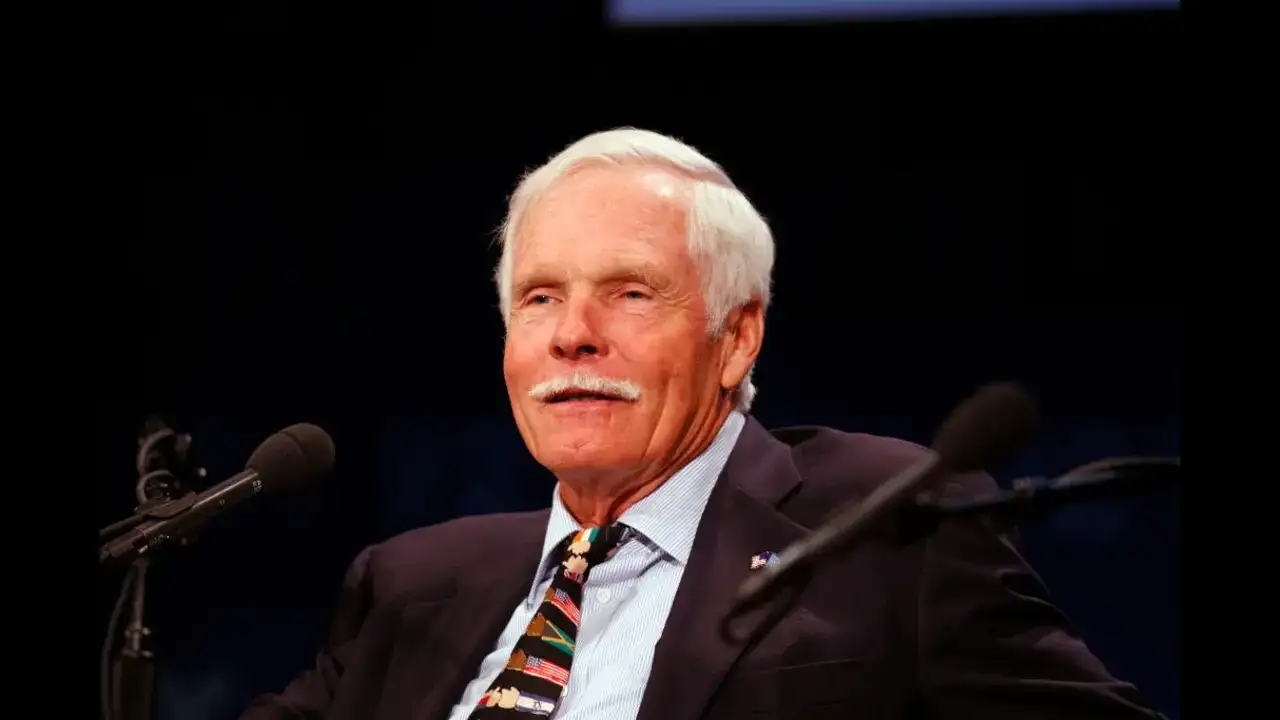
In 1987, Ted Turner bought a 22,000-acre Montana ranch; two years later, he spent $21 million on a 113,000-acre property to keep it undeveloped
Ted Turner, the founder of CNN and longtime conservationist, lived in a remarkable collection of expansive ranches and properties during his lifetime. Before his passing on May 6, 2026, at age 87, Turner spent his final years on one of his Montana ranches, where he enjoyed fishing.

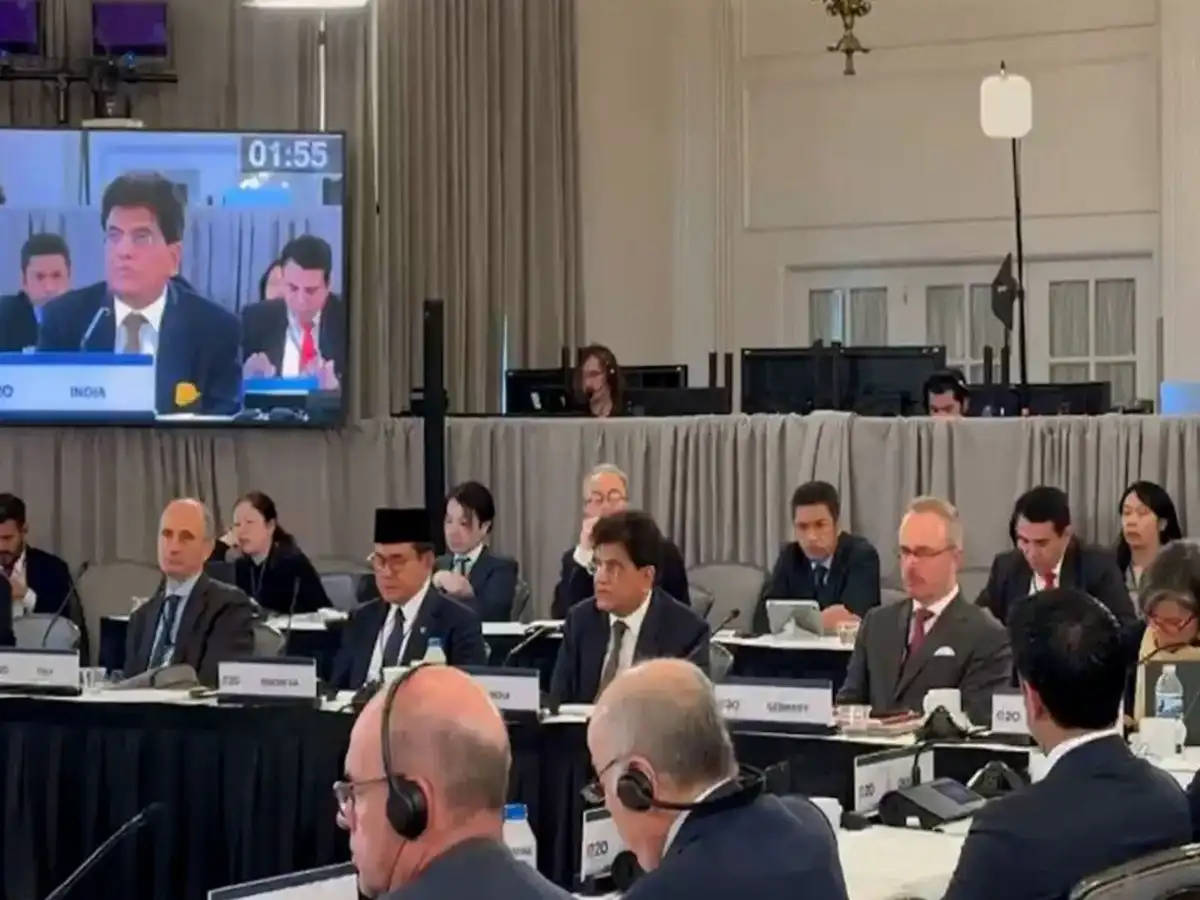
Goyal at G20: India opposes making MFN conditional on WTO obligations
Union Minister Piyush Goyal represented India at the G20 Trade Ministers' Meeting, emphasizing the importance of the Most-Favoured-Nation principle. He stated that equal trading terms are essential for both large and small traders. Goyal expressed India's commitment to addressing trade distortions through WTO-compliant measures and preserving developing countries' policy space for industrialization. India's position on forced labor in global supply chains was reiterated during the discussions.

Viral cookie chain Chip City closes in key locations; here's what went wrong
Chip City, the cookie chain famous for its adventurous flavors, has shuttered its three locations in Connecticut, reflecting a troubling trend for cookie outlets nationwide. The closures result from evolving consumer tastes and various economic pressures. The absence of any Connecticut listings on their website suggests a definitive withdrawal. However, Chip City continues to delight customers in New York, New Jersey, and Texas.

Defend, stay disciplined: Marijne's mantra powered India to women's hockey gold
Defend, stay disciplined: Marijne's mantra powered India to women's hockey gold

One faded photograph could prove Egypt’s first female pharaoh ruled like a king 5,000 years ago — and rewrite early Egyptian history
Researchers believe a digitally enhanced photograph of hieroglyphics could clarify Queen Meretneith's role in ancient Egypt. Discovered in the 1940s, the inscription may suggest she ruled as a king rather than merely as a regent. However, some Egyptologists dispute this interpretation, claiming it only references King Djer. The debate surrounding Meretneith could redefine women's political authority in ancient Egypt.


In 2010, Playboy's Hugh Hefner donated $900,000 to save land behind the Hollywood Sign from luxury homes. 16 years on, 138 acres at Cahuenga Peak remain protected in Griffith Park
In 2010, a major fundraising campaign sought to protect 138 acres at Cahuenga Peak, the land behind the iconic Hollywood Sign, from potential development. The effort required $12.5 million, but organizers were still $1 million short when Playboy founder Hugh Hefner contributed $900,000. Other major donors, that includes Tiffany & Company Foundation and Aileen Getty, also supported the campaign.

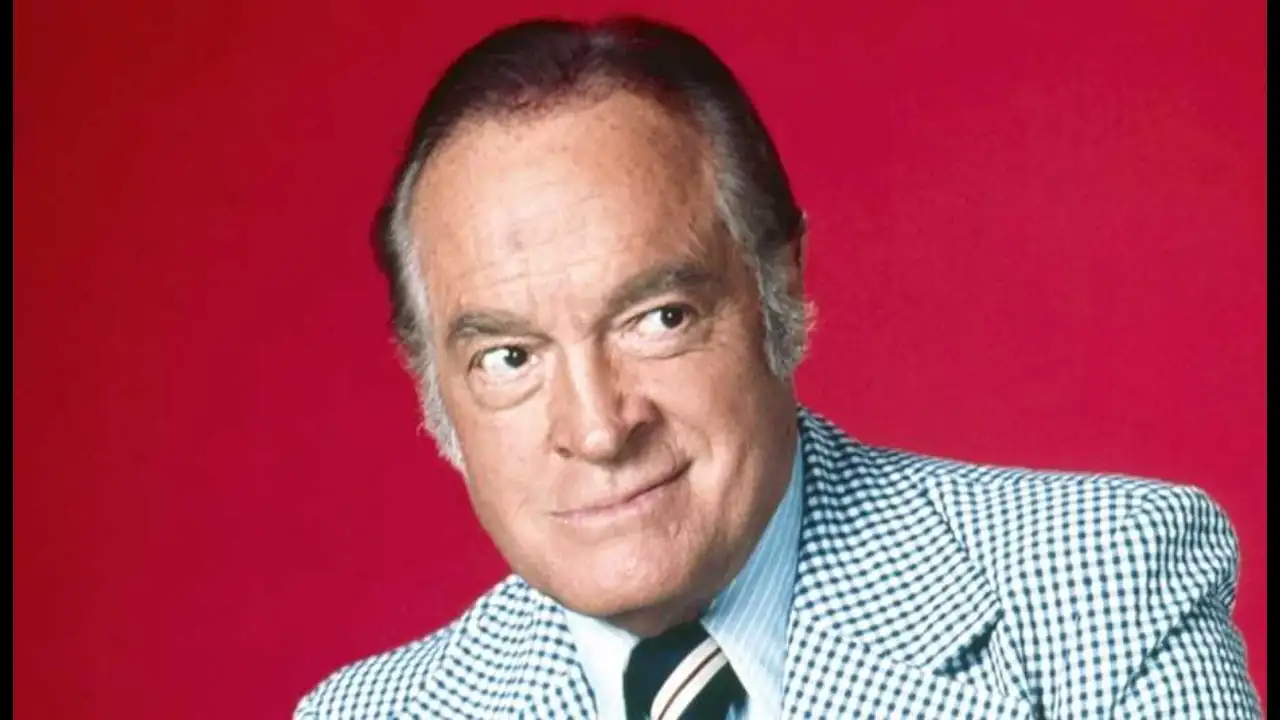
In 2013, Bob Hope's estate listed his UFO-style home for $50 million; after zero buyers, it eventually sold for $13 million
Bob Hope’s distinctive Palm Springs residence, popularly called as his “UFO house,” eventually found a new owner after years on the market. Originally listed for $50 million in 2013, the unusual estate finally sold for $13 million to billionaire Ronald Burkle, a venture capitalist and philanthropist,as per TopTenRealEstateDeals.com. Designed by architect John Lautner for Hope and his wife, Delores, in 1973, the 23,000-square-foot property features a curved structure, floor-to-ceiling windows and circular ceiling windows for stargazing.

CJP warns of Jantar Mantar 2.0 as thousands attend Mumbai protest seeking CEC's ouster
The Cockroach Janta Party's protest at Shivaji Park sought the resignation of Chief Election Commissioner Gyanesh Kumar. Party leaders accused the government of electoral fraud and deleting voters' names from the lists. Many prominent figures, including veteran actors, participated in the demonstration despite police denial of permission. Protesters emphasized the need for immediate action and a fair electoral process.