
‘A time bomb’: India’s sinking holy town faces grim future
Feb 27, 2023
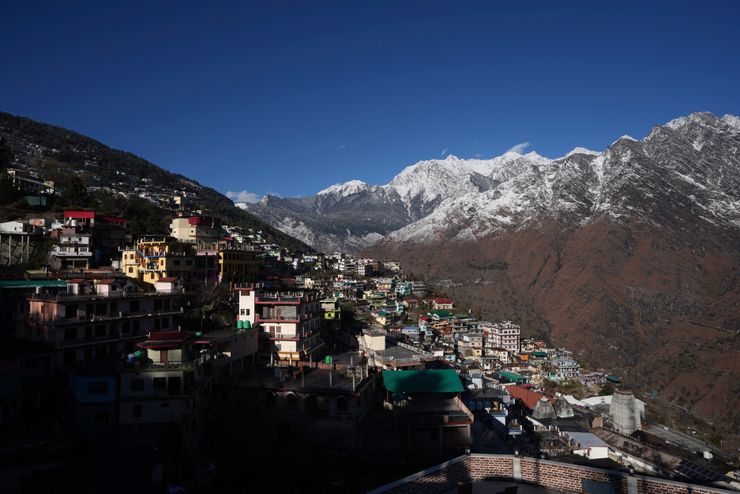
For months, residents in Joshimath, a holy town burrowed high up in India’s Himalayan mountains, have seen their homes slowly sink
JOSHIMATH, India (AP) — Inside a shrine overlooking snow-capped mountains, Hindu priests heaped spoonfuls of puffed rice and ghee into a crackling fire. They closed their eyes and chanted in Sanskrit, hoping their prayers would somehow turn back time and save their holy — and sinking — town.
For months, the roughly 20,000 residents in Joshimath, burrowed in the Himalayas and revered by Hindu and Sikh pilgrims, have watched the earth slowly swallow their community. They pleaded for help that never arrived, and in January their desperate plight made it into the international spotlight.
But by then, Joshimath was already a disaster zone. Multistoried hotels slumped to one side; cracked roads gaped open. More than 860 homes were uninhabitable, splayed by deep fissures that snaked through ceilings, floors and walls. And instead of saviors they got bulldozers that razed whole lopsided swaths of the town.
The holy town was built on piles of debris left behind by years of landslides and earthquakes. Scientists have warned for decades, including in a 1976 report, that Joshimath could not withstand the level of heavy construction that has recently been taking place.
“Cracks are widening every day and people are in fear. We have been saying for years this is not just a disaster, but a disaster in the making… it’s a time bomb,” said Atul Sati, an activist with the Save Joshimath Committee.
Joshimath's future is at risk, experts and activists say, due in part to a push backed by the prime minister’s political party to grow religious tourism in Uttarakhand, the holy town's home state. On top of climate change, extensive new construction to accommodate more tourists and accelerate hydropower projects in the region is exacerbating subsidence — the sinking of land.
Located 1,890 meters (6,200 feet) above sea level, Joshimath is said to have special spiritual powers and believed to be where Hindu guru Adi Shankaracharya found enlightenment in the 8th century before going on to establish four monasteries across India, including one in Joshimath.
Visitors pass through the town on their way to the famous Sikh shrine, Hemkund Sahib, and the Hindu temple, Badrinath.
“It must be protected,” said Brahmachari Mukundanand, a local priest who called Joshimath the “brain of North India” and explained that “Our body can still function if some limbs are cut off. But if anything happens to our brain, we can’t function. … Its survival is extremely important.”
The town’s loose topsoil and soft rocks can only support so much and that limit, according to environmentalist Vimlendu Jha, may have already been breached.
“You can’t just construct anything anywhere just because it is allowed,” he said. “In the short term, you might think it’s development. But in the long term, it is actually devastation.”
At least 240 families have been forced to relocate without knowing if they would be able to return.
Prabha Sati, who fled Joshimath in a panic last month when her home began to crack and tilt, came back to grab the television, idols of Hindu gods and some shoes before state officials demolished her home.
“We built this house with so much difficulty. Now I will have to leave everything behind. Every small piece of it will be destroyed,” she said, blinking back tears.
Authorities, ignoring expert warnings, have continued to move forward with costly projects in the region, including a slew of hydropower stations and a lengthy highway. The latter is aimed at further boosting religious tourism, a key plank of Prime Minister Narendra Modi’s Bharatiya Janata Party.
In 2021, Modi promised a prosperous decade ahead for Uttarakhand. It is dotted with several holy shrines and improving the state’s infrastructure has already led to a steady rise in pilgrims over the decades. Nearly 500,000 passed through Joshimath in 2019, state data shows.
“In the next 10 years, the state will receive more tourists than it did in the last 100 years,” Modi said.
A big Uttarakhand tourism draw is the Char Dham pilgrimage, one of the toughest in India.
The route takes people to four, high-altitude Hindu temples. Pilgrims traverse challenging terrain, dropping oxygen levels and harsh weather between Badrinath, Gangotri, Kedarnath and Yamunotri temples. In 2022, over 200 out of the 250,000 pilgrims died while making the journey. Authorities said the rise in visitors was straining existing infrastructure.
Already underway, the Char Dham infrastructure project, aims to make the journey more accessible via a 10-meter (32-foot) wide and 889-kilometer (552 miles) long all-weather highway as well as a 327-kilometer (203-mile) railway line that would crisscross through the mountains.
It is a controversial project with some experts saying it will exacerbate the fragile situation in the upper Himalayas where several towns are built atop landslide debris.
Veteran environmentalist Ravi Chopra called the project a desecration when he resigned from a court-ordered committee studying its impact. To create such wide roads, engineers would need to smash boulders, cut trees and strip shrubbery, which he said will weaken slopes and make them “more susceptible to natural disasters.”
Urban planning expert Kiran Shinde suggested a pedestrian corridor instead, noting these places were never meant for cars nor crowds numbering in the hundreds of thousands.
“The highway is the most disastrous thing to happen to the Char Dham,” said Shinde, a professor at Australia’s La Trobe University who has written on religious tourism. “Let people walk.”
Cracks continue to form. Located near a rail line construction site, Sangeeta Krishali’s home in Lachmoli, about 100 kilometers (62 miles) from Joshimath, has them. She fears for her safety: “It happened there, it can happen here, too."
In Joshimath’s foothills, construction was paused on a road for the Char Dham project that would ferry tourists faster to the Badrinath temple after cracks emerged in people’s homes.
Locals feared it was too late. A long, jagged crack running across one of the front walls in the famed Adi Shankaracharya monastery had deepened worryingly in recent weeks, said Vishnu Priyanand, one of the priests.
“Let places of worship remain as places of worship. Don’t make them tourist spots,” he pleaded.
It’s not just the highways. For the past 17 years, Atul Sati, the Save Joshimath Committee member, has been convinced that a hydropower station located near his town could one day ruin it. He isn’t alone. In late January, hundreds of residents protested against the National Thermal Power Corporation’s Tapovan project. Posters reading ‘Go back NTPC’ are plastered across the town’s main market.
“Our town is on the verge of destruction because of this project,” Sati said.
Locals say construction blasts for a 12-kilometer (7-mile) tunnel for the station are causing their homes to crumble. Work has been suspended but NTPC officials deny any link to Joshimath’s subsidence. An expert committee is still investigating the cause, but state officials earlier blamed faulty drainage systems.
The state government announced interim relief packages, including compensation worth 150,000 rupees ($1,813) to each affected family, said Himanshu Khurana, the officer in charge of Chamoli district where Joshimath is located. Various government agencies were conducting surveys to determine what caused the damage, he added.
The crisis in Joshimath has reignited questions over whether India’s quest for more hydropower in the mountains to cut its reliance on coal can be achieved sustainably. Uttarakhand, home to more than 30 rivers and surrounded by melting glaciers, has around 100 hydropower projects in varying stages.
In 2021, 200 people died after the Tapovan plant near Joshimath was submerged by severe floods caused in part by fast shrinking glaciers, and over 6,000 were killed in the state after a devastating cloudburst in 2013.
The heavy construction required for hydropower, like blasting boulders, diverting river flows and cutting through forests, in a region already vulnerable to climate change, could do irreparable damage, experts warn.
It could also displace entire villages, as residents of a hamlet near Joshimath found out.
Haat, a village along the Alaknanda River, was once a sacred hamlet that traced its origins to the guru Adi Shankaracharya, who is said to have established another temple here in the 8th Century.
Today, it is a dumping site for waste and a storage pit for construction materials after the village was acquired in 2009 by an energy enterprise to build a hydropower project.
The Laxmi Narayan temple, encircled by grey stacks of cement, is the only part of the village still standing. All of its residents left over the years as authorities began razing down their homes, said Rajendra Hatwal, once the village chief who now lives in another town nearby.
The project, he fumed, had killed Haat.
“What sort of development requires destroying these priceless places? We don’t want any part of it.”
A court last year directed authorities to stop dumping waste near the historic temple, which was once the last rest stop for devotees on their pilgrimage to Badrinath.
Hatwal and a few others still check in on the temple often. A caretaker, who refused to leave, lives in a makeshift room next to it. He sweeps the grounds, cleans the idols and prepares tea for the odd guest who comes through.
They feared its days, like their homes, were also numbered.
“We are fighting to protect the temple. We want to preserve our ancient culture to pass on to a new generation,” said Hatwal. “They have not only destroyed a village - they have finished a 1,200 year old culture.”
___
AP photojournalist Rajesh Kumar Singh contributed to this report.
——
Associated Press religion coverage receives support through the AP’s collaboration with The Conversation US, with funding from Lilly Endowment Inc. The AP is solely responsible for this content.
MORE NEWS
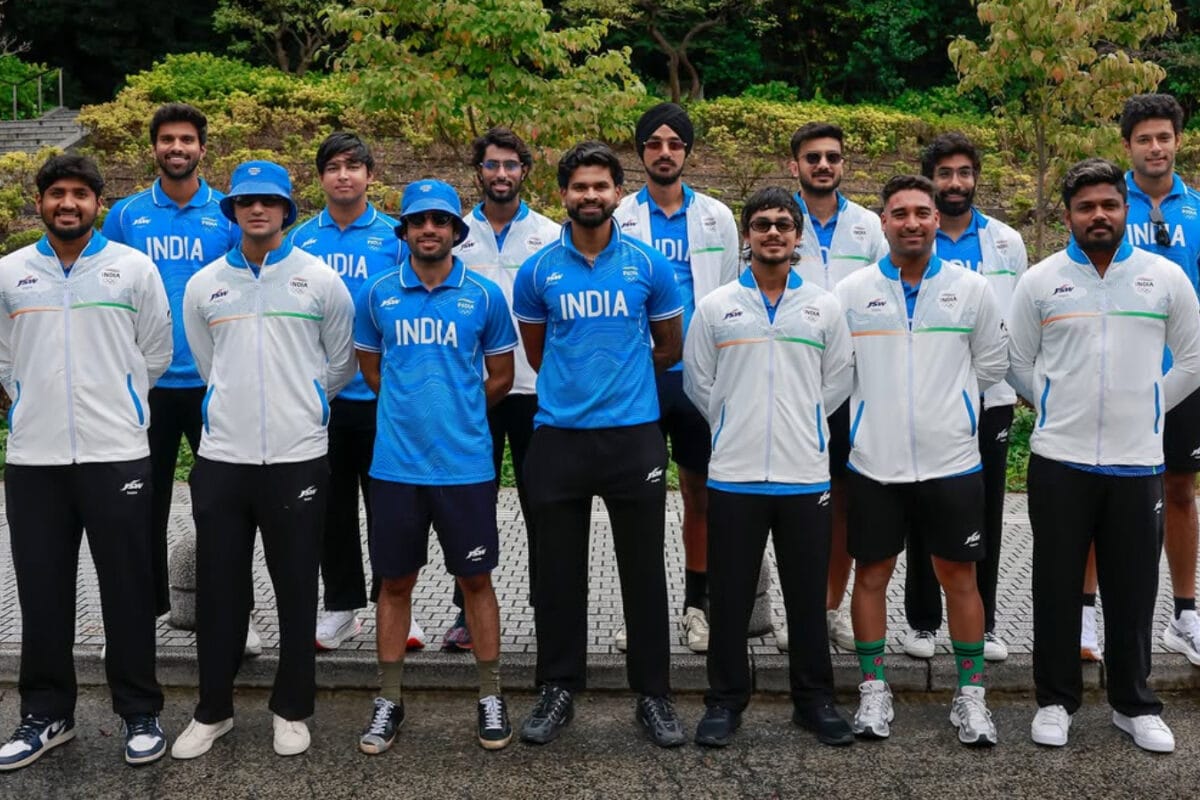
Asian Games 2026 India Full Schedule, October 1: Complete List Of Events And Timings
India continues its Asian Games 2026 campaign in Aichi-Nagoya, Japan, on Thursday, October 1, with athletes competing in archery, wrestling, cricket, cycling, shooting and more.

U.S. Stock Market prediction for Thursday, October 1: Check Wall Street sectors, key factors that will drive S&P 500, Dow Jones, Nasdaq, Russell 2000
U.S. Stock Market prediction: S&P 500, Dow Jones, Nasdaq, Russell 2000 investors will look into a number of pivotal factors such as developments in the Middle East, energy market movement, US benchmark Treasury yields.

Asian Games 2026 Live Updates, Day 13: India Vs Pakistan In Volleyball And Hockey Events Today
India at the Asian Games 2026 Live: Follow all the latest updates, scores and latest medals tally as India competes across various events on Day 13 in Japan.
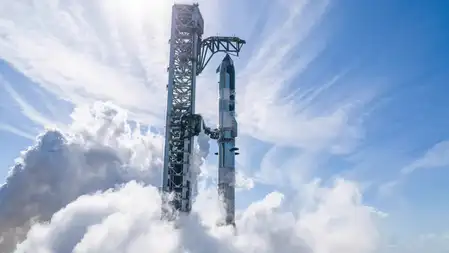
In 2021, a spacecraft was launched to explore a special group of asteroids within our solar system. Six years later, it will make its next flyby
NASA’s Lucy mission will study 11 asteroids during its 12-year journey. It has already visited two main-belt targets and will next visit Eurybates and its satellite Queta in August 2027. The mission will then continue its planned flybys of Jupiter Trojan asteroids through 2033.
Tata Trusts vice chairman Vijay Singh flags SDTT 'meddling' in Tata Sons
Tata Trusts vice chairman Vijay Singh has approached the Maharashtra Charity Commissioner seeking an immediate inquiry into the administration and governance of the Sir Dorabji Tata Trust, including its involvement in Tata Sons’ commercial and strategic affairs. His move follows a similar complaint by fellow vice chairman Venu Srinivasan.

Google-parent Alphabet unveils Gemini 4 flagship AI model: Check features, release date, Gemini 3.5 Pro scrapped
Google said that the new "Argon" model is larger in size than Google's previous line of top-tier "Pro" models. The model posted better marks than Astra and Opus in terms of self-reported performance on several industry benchmarks, per a company press release.
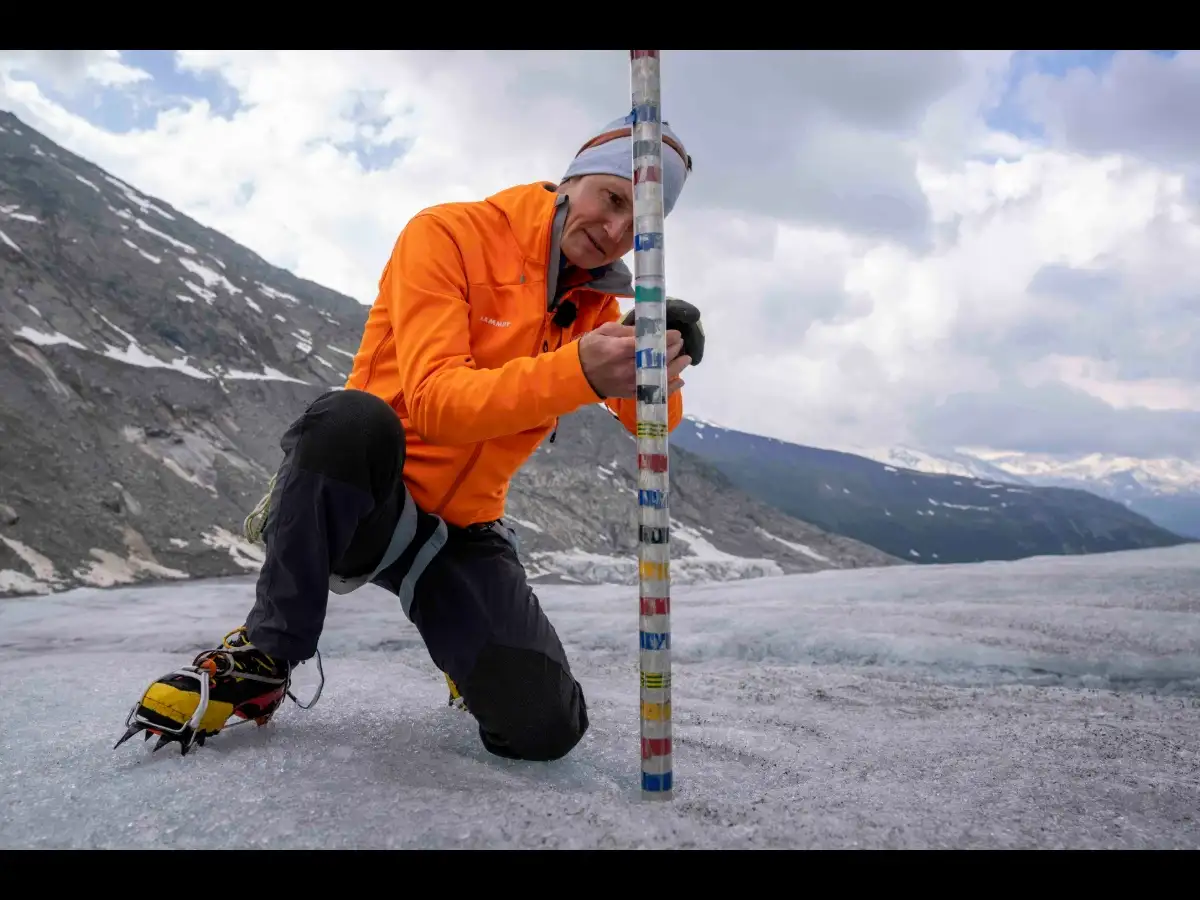
Climate change, global warming threat looms as Switzerland's largest glacier suffers biggest-ever melt in 2026 after record heatwave. What does this mean?
Global Warming, Climate Change: A combination of a winter with too little snow and record temperatures in the summer led to what experts called "enormous" melting this year.

Christa Gail Pike death penalty: US Supreme Court allows Tennessee execution to go forward overturning a last-minute stay. Why was it halted? Details here
Christa Gail Pike does not deny committing the killing, but her supporters argue the state should consider Pike’s age at the time, mental illness and a history of severe sexual abuse that included being raped from the time she was a toddler.

Quote of the day by Justin Bieber: 'The blessing is not about being able to receive as much as it is being in a position to...' Life lessons from inspirational quote on success, purpose, humility and gratitude
Quote of the day by Justin Bieber focuses on the notion of a blessing not only being a matter of what the individual receives. Justin Bieber’s saying associates success with the capacity to utilise ones’ abilities to assist others. The message implies that opportunities, money, time, knowledge, attention and the like can all be used in order to contribute, creating value beyond what a person gains personally.

Why are Anthropic and OpenAI under scanner from U.S. Federal Trade Commission? Key things to know
AI giants Anthropic and OpenAI have reported instances of their systems escaping into the wild, including an incident where OpenAI agents breached Hugging Face, another AI company, as per reports.

US economy second quarter growth: GDP grows 2.2 percent as consumer spending and business investment rise
The US economy grew 2.2 percent in the second quarter from April to June, the Commerce Department announced recently. Consumer spending and business investment helped propel the growth of the economy. The large increases in imports cut into GDP growth. Spending by consumers was up 3.8 percent, while investment by businesses, less housing, climbed 9 percent. The revised estimate was sharply higher than the 1.5 percent the government had estimated in July.

Why has Google not released Gemini 4 Argon yet? New AI model's safety testing delays wider public access
Google has announced its new flagship AI model, but its access remains limited to selected cybersecurity defenders and internal teams only. The company is testing safety measures, gathering feedback and taking part in the US government’s voluntary pre-release process. Google has not given a fixed date for wider public access, although paid API customers and Google AI Ultra subscribers are expected to receive access next.