
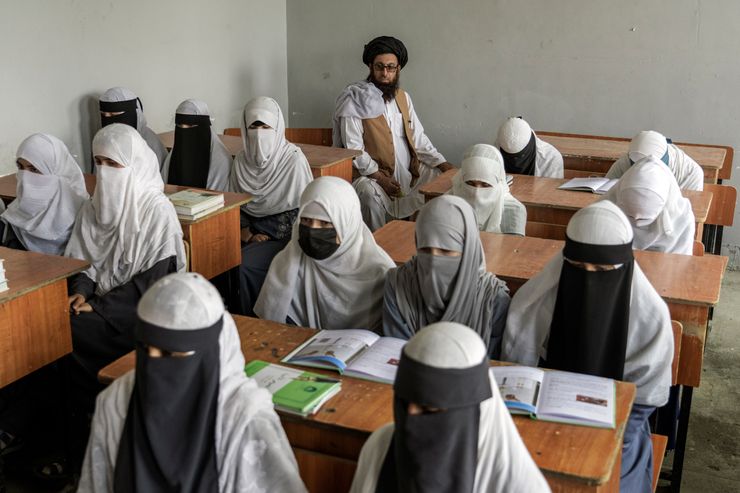
2 years ago, the Taliban banned girls from school. It’s a worsening crisis for all Afghans
Sep 18, 2023
Two years after the Taliban banned girls from school beyond sixth grade, Afghanistan is the only country in the world with restrictions on female education
ISLAMABAD (AP) — Two years after the Taliban banned girls from school beyond sixth grade, Afghanistan is the only country in the world with restrictions on female education. Now, the rights of Afghan women and children are on the agenda of the United Nations General Assembly Monday in New York.
The U.N. children’s agency says more than 1 million girls are affected by the ban, although it estimates 5 million were out of school before the Taliban takeover due to a lack of facilities and other reasons.
The ban triggered global condemnation and remains the Taliban's
biggest obstacle to gaining recognition
as the legitimate rulers of Afghanistan. But the Taliban defied the backlash and went further, excluding women and girls fromhigher education
,public spaces
like parks, and most jobs.Here’s a look at the ban on girls’ education:
WHY DID THE TALIBAN EXCLUDE GIRLS FROM HIGH SCHOOL?
The Taliban stopped girls’ education beyond sixth grade because they said it didn’t comply with their interpretation of Islamic law, or Sharia. They didn’t stop it for boys. In the past two years, they’ve shown no signs of progress in creating the conditions they say are needed for girls to return to class.
Their perspective on girls’ education partly comes from a specific school of 19th century Islamic thought and partly from rural areas where tribalism is entrenched, according to regional expert Hassan Abbas.
“The ones who went on to develop the (Taliban) movement opted for ideas that are restrictive, orthodox to the extreme, and tribal,” said Abbas, who writes extensively about the Taliban. The Taliban leadership believes women should not participate in anything social or public and should especially be kept away from education, said Abbas.
The Taliban also stopped girls’ education when they ruled Afghanistan in the late 1990s.
WHAT DO MUSLIM-MAJORITY COUNTRIES SAY ABOUT THE BAN?
There’s a consensus among clerics outside Afghanistan that Islam places equal emphasis on female and male education. “The Taliban have no basis or evidence to claim the contrary,” said Abbas. But pleas from individual countries and groups, like the Organization of Islamic Cooperation, have failed to sway the Taliban.
Syed Akbar Agha, a former Taliban front-line commander, said the insurgents espoused an Islamic system the day they entered Kabul in August 2021.
“They also gave Afghans and the outside world the idea that there would be an Islamic system in the country,” said Agha. “There is currently no (other) Islamic system in the world. The efforts of the international community are ongoing to implement democracy in Islamic countries and turn them away from the Islamic system.”
WHAT IS THE IMPACT OF THE BAN ON WOMEN?
Roza Otunbayeva
, U.N. Secretary-General Antonio Guterres' special representative for Afghanistan and the head of the U.N. mission in Afghanistan, said one of the obvious impacts of an education ban is the lack of training of aspiring health care professionals.Female medical students had their studies halted after last December’s Taliban edict banning higher education for women. Afghan women work in hospitals and clinics -- health care is one of the few sectors open to them — but the pipeline of qualified people will dry up. Afghan women cannot see male doctors, so children will also lose out on medical attention if women are their primary carers.
“Looking into the future and a scenario where nothing changes, where will the female doctors, midwives, gynecologists, or nurses come from?” Otunbayeva said in an email to The Associated Press. “In a strictly gender segregated society, how will Afghan women be able to get the most basic healthcare services if there are no female professionals to treat them?”
WHAT IS THE IMPACT ON AFGHANISTAN'S WIDER POPULATION?
The high school ban is not just about girls’ rights. It’s a worsening crisis for all Afghans.
Tens of thousands of teachers have lost their jobs. Support staff are also unemployed. Private institutions and businesses that benefited financially from girls’ education have been hit. Afghanistan has
a shattered economy
and people's incomes are plummeting. Excluding women from the job market hurts the country's GDP to the cost of billions of dollars, says UNICEF.The Taliban are prioritizing Islamic knowledge over basic literacy and numeracy with their shift toward
madrassas
, or religious schools, paving the way for a generation of children with no contemporary or secular education to improve their or the country's economic future.There are other consequences for the general population, like public health and child protection.
U.N. data says birth rates are higher among Afghan girls aged 15-19 who don't have secondary or higher education. A woman’s education can also determine if her children have basic immunization and if her daughters are married by the age of 18. The lack of women's education is among the major drivers of deprivation, says the U.N.
Aid groups say girls are at increased risk of child labor and child marriage because they're not at school, amid the growing hardships faced by families.
WILL THE TALIBAN CHANGE THEIR MINDS?
The Taliban
waged a decades-long jihad
to implement their vision of Sharia. They arenot backing down
easily. Sanctions, frozen assets, the lack of official recognition, and widespread condemnation has made little difference.Countries that have a relationship with the Taliban could make an impact. But they have different priorities, reducing the prospects of a united front on girls’ education.
Pakistan has concerns about a resurgence of militant activity. Iran and Central Asian countries have grievances about water resources. China is eyeing investment and mineral extraction opportunities.
There's a
bigger likelihood of pressure
coming from within Afghanistan.The Taliban rule of today is different from that of decades ago. Senior leaders, including the chief spokesman Zabihullah Mujahid, rely on social media for key messaging to Afghans at home and abroad.
They point to their success in eradicating narcotics and cracking down on armed groups like the Islamic State. But improving security and wiping out poppy crops will only satisfy people to a point.
While Afghans are concerned about the loss of girls' education, they have more immediate worries like earning money, putting food on the table, keeping a roof over their heads, and surviving droughts and harsh winters.
There is a desire within Afghanistan for the Taliban to have some kind of international acceptance, even if it's not recognition, so the economy can thrive.
Public opinion is much more relevant and influential today than it was during Taliban rule in the 90s, said Abbas. “Internal pressure from ordinary Afghans is going to ultimately push Kandahar in the corner and make a difference."
But it could take years for the ban's consequences to hit Afghan men and trigger a groundswell of unrest. Right now, it only affects girls and it's
mostly women
who have protested the slew of restrictions.Agha said Afghans will support the ban if the end goal is to enforce hijab, the Islamic headscarf, and finish gender mixing. But they won't if it's simply to end girls' education outright.
“I think only the nation can lead the way,” he said.
MORE NEWS

Alexander Zverev Becomes World No.1 For First Time In His Career
Alexander Zverev secured the world number one ranking for the first time by beating Tallon Griekspoor to reach the Vienna Open quarter-finals.

UN names China's Blue Bay initiative world restoration flagship
China's Blue Bay Restoration Initiative was named a World Restoration Flagship by the United Nations (UN) on Thursday during the 17th meeting of the Conference of the Parties to the Convention on Biological Diversity (COP17) in Yerevan, Armenia.

CPC Central Committee holds press conference on plenary session
CPC Central Committee holds press conference on plenary session
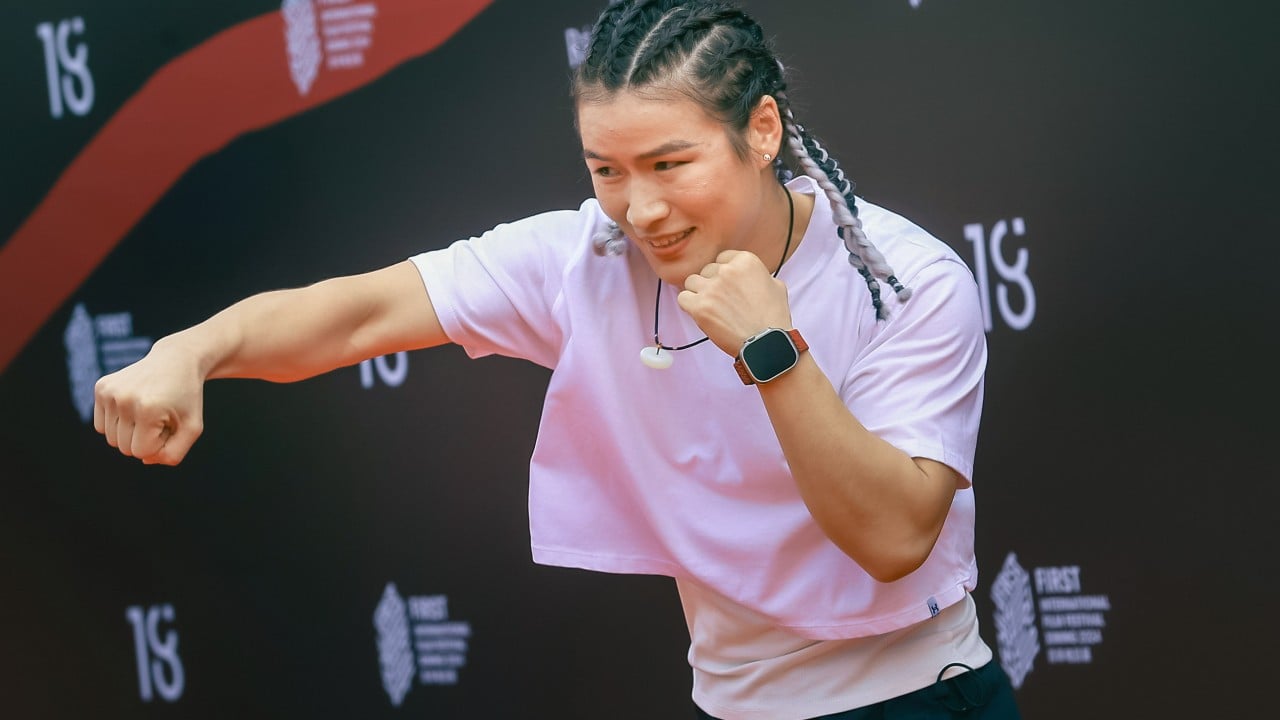
Even UFC champ Zhang Weili under pressure to find boyfriend from pushy Chinese parents
Even Asia’s first UFC world champion, Zhang Weili, cannot escape the pressure of Chinese parents pushing her to get married. A year ago, Zhang, now 37, said she was glad her family was not rushing her to marry, preferring to focus on her fighting career and leave relationships to fate. But in an interview posted on social media this week, Zhang revealed her parents grew deeply concerned about her love life during the first half of the year, saying they were “pushing really hard”. In the...

Thousands of birds take to the skies over Yellow River Delta
Thousands of birds take to the skies over Yellow River Delta

Golden hues everywhere! Autumn at its finest!
Golden hues everywhere! Autumn at its finest!
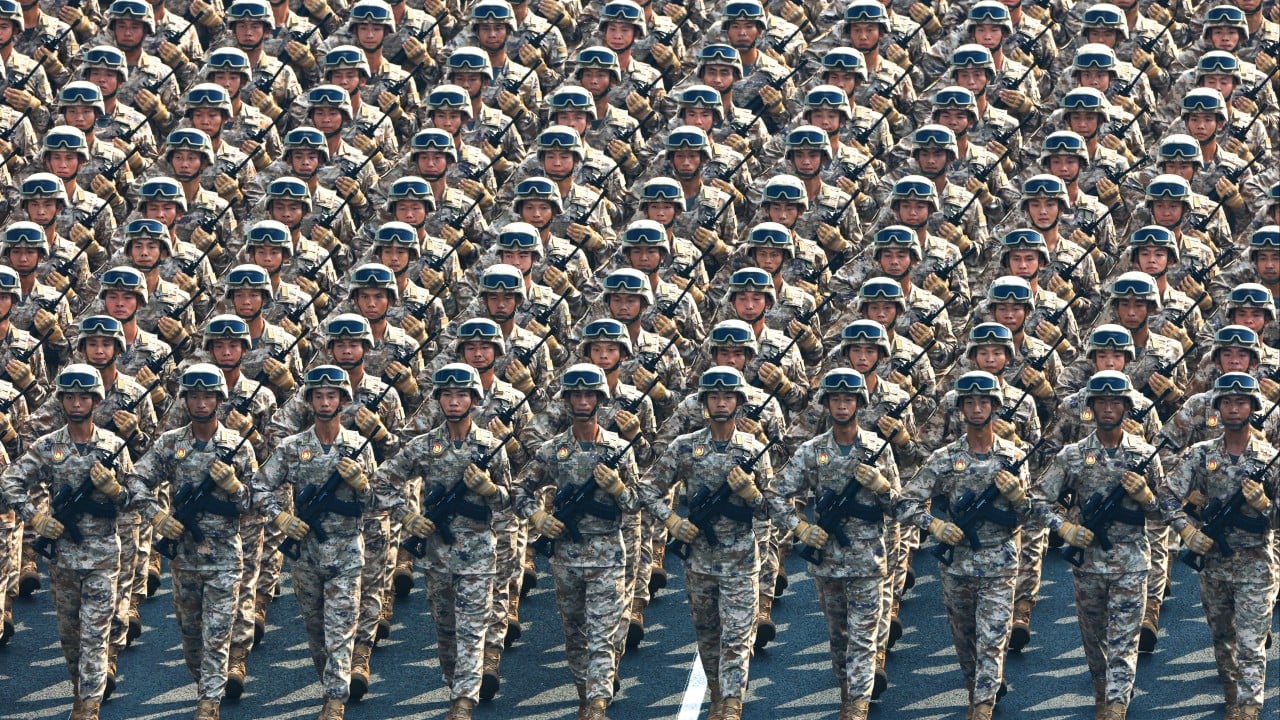
Inside the PLA’s new austerity drive: lean, mean, printing-on-both-sides machine
The People’s Liberation Army (PLA) is distributing second-hand briefcases, salvaging screws and steel bars, and reusing holiday decorations to keep costs down as part of a thrift campaign emphasising growth through frugality. It forms part of a broader cost-cutting effort in the Chinese military under Beijing’s 15th five-year plan covering 2026 to 2030, which calls for building the armed forces through “diligence and thrift” and pursuing a path of “high efficiency, low cost and...
Chinese scholars warned of challenge of ‘translating academic research into policy’
Chinese academic courses designed to deepen understanding of different countries or regions face a challenge in better informing policy and moving beyond frameworks developed in the West, a conference in Beijing has heard. Speakers said that as the country’s international engagement deepened, it needed a better understanding of the nations it engaged with, including their political systems, histories and strategic priorities. The discipline – known in China as “area studies” – draws on...

Chinese scientists dissatisfied with jobs but optimistic about future, survey says
Chinese scientists are less satisfied with their jobs than researchers in any other major country, according to a survey that also found they are more optimistic about their careers than their counterparts in the United States and Britain. Only 51 per cent of the 157 respondents from China said they were satisfied with their jobs, according to the survey published this month in the British scientific journal Nature, down 24 per cent from 2018. The survey drew 3,882 respondents from 133...

In Michigan Senate race, Trump’s softer China tone gives candidates room to look elsewhere
Two years ago, Mike Rogers stood before the Republican National Convention and warned that it was “impossible to build an EV without getting into bed with the Communist Party of China”. The former US House Intelligence Committee chairman made opposition to Chinese investment a prominent theme of his 2024 Senate bid in Michigan, which he narrowly lost to Democrat Elissa Slotkin. Now, as Rogers runs again, US President Donald Trump’s softer approach towards Beijing has given candidates more room...

Asian Champions Trophy: Harmanpreet Singh, Sukhjeet Singh Star As India Outclass China 5-2
Harmanpreet Singh and Sukhjeet Singh struck two goals each as India defeated China 5-2 to make it two victories in two games at the Asian Champions Trophy.

Teen Star Anmol Kharb Shocks Christophersen; Sindhu, Lakshya March On At Hylo Open
Anmol Kharb continued her dream run at the Hylo Open with a brilliant comeback victory over world No. 12 Line Christophersen to reach the quarter-finals.